
TL;DR

Get business pricing on tech for your team
- Business-only prices and quantity discounts
- Tax-exempt purchasing
- Multiple users, one account, clear invoices
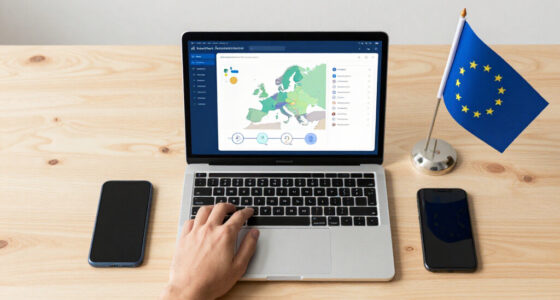
The European Court of Justice has confirmed that VPNs are lawful technical tools. This ruling clarifies their legal status and impacts how companies and users deploy privacy tools within EU law.
The European Court of Justice has officially declared that VPNs are lawful technical tools, offering a clear legal framework for their use within the European Union. This ruling provides reassurance for individuals and companies that rely on VPNs for privacy and security, marking a significant development in EU digital law.
The ruling stems from a case involving the use of VPN technology in relation to copyright enforcement and digital rights. The court emphasized that VPNs serve legitimate technical purposes, such as privacy protection and secure communications, and should not be considered inherently unlawful.
Legal experts confirm that this decision clarifies the legal status of VPNs, which have often been scrutinized or restricted under different national laws. The court’s judgment explicitly states that VPNs are lawful technical tools and cannot be banned solely on the basis of their use for circumventing geographical restrictions or other purposes.
This ruling aligns with existing EU principles on digital rights and privacy, reinforcing protections for users and providers of VPN services across member states. The decision is expected to influence future legislation and enforcement practices concerning digital tools and privacy technologies.
Legal Clarification for VPN Usage in the EU
This ruling is a decisive step in affirming the legality of VPNs, which are widely used for privacy, security, and access to information. It reduces legal uncertainty for companies offering VPN services and for users relying on them for privacy protection. The decision may influence regulatory approaches across other jurisdictions, setting a precedent for recognizing VPNs as legitimate technical tools rather than illegal circumvention devices.
For small software companies and tech providers, this clarification could ease compliance concerns and foster innovation in privacy-enhancing technologies. It also signals to courts and regulators that VPNs are integral to lawful digital activity, potentially shaping future enforcement and policy decisions.
best VPN services for privacy and security
As an affiliate, we earn on qualifying purchases.
As an affiliate, we earn on qualifying purchases.
Background on VPN Legal Status and EU Digital Law
VPNs have been subject to varying legal interpretations across the EU, with some member states attempting to restrict or ban their use, citing copyright enforcement or national security concerns. Historically, courts have struggled to classify VPNs—either as tools for privacy or as means for illegal activity.
The European Court of Justice’s recent ruling builds on prior legal clarifications around digital privacy and the right to secure communications. It also reflects ongoing debates about balancing copyright enforcement with users’ rights to privacy and free access to information.
This decision follows a series of legal cases and policy debates over the role of technical tools like VPNs in digital rights and enforcement, culminating in this landmark clarification.
“This decision provides much-needed clarity and could influence future legislation and enforcement strategies across member states.”
— EU legal expert
VPN router for secure internet access
As an affiliate, we earn on qualifying purchases.
As an affiliate, we earn on qualifying purchases.
Remaining Questions About Enforcement and Scope
While the ruling clarifies the legal status of VPNs, it is not yet clear how individual member states will implement or enforce this decision. Specific restrictions or regulations may still vary across countries, and legal challenges could arise in different jurisdictions.
It remains uncertain how this ruling will influence future legislative proposals or whether it will be challenged in higher courts. Additionally, the ruling does not specify how enforcement agencies should distinguish lawful VPN use from illegal activities, which continues to be a complex issue.
VPN subscription with EU legal compliance
As an affiliate, we earn on qualifying purchases.
As an affiliate, we earn on qualifying purchases.
Next Steps in EU Digital Privacy and Enforcement
Legal and regulatory bodies across the EU are expected to review and possibly update their policies to align with this ruling. Companies providing VPN services may see increased legal certainty, encouraging broader deployment and innovation.
Further legal cases and policy debates are likely as authorities interpret and implement the court’s decision. Monitoring how member states adapt their enforcement practices will be critical in understanding the full impact of this ruling.
Additionally, advocacy groups and privacy advocates may use this decision to push for stronger protections and clearer regulations concerning digital privacy tools in the EU.
As an affiliate, we earn on qualifying purchases.
Key Questions
What does the EU Court ruling say about VPNs?
The ruling states that VPNs are lawful technical tools essential for privacy and security, and they should not be considered inherently illegal under EU law.
How might this ruling affect VPN providers in the EU?
It provides legal clarity, reducing the risk of bans or restrictions, and may encourage more companies to offer VPN services within the EU.
Does this ruling ban or restrict VPN use?
No, it affirms the legality of VPNs as technical tools. However, individual member states may still have specific regulations or enforcement practices.
Will this ruling impact other digital privacy tools?
Potentially, as it sets a legal precedent recognizing technical tools for privacy as lawful, which could influence future policy decisions.
What are the next steps after this ruling?
EU regulators and member states are expected to review and possibly update their laws and enforcement practices to align with the court’s decision.
Source: IdeaNavigator AI
Halloween Picks
halloween
As an affiliate, we earn on qualifying purchases.