
📊 Full opportunity report: Spending The Compression Before Release: How Quantization Actually Works On Local LLMs In 2026 on ThorstenMeyerAI.com — validation score, market gap, and execution plan.
TL;DR
This article explains how recent advances in quantization, especially trained-in quantization like Kimi K3, are changing the way large models are compressed for local inference. Dynamic quantization allows for highly compressed models that retain accuracy, but also introduces new challenges and considerations.
Recent advancements in model quantization have fundamentally altered how large language models are compressed for local inference. The Kimi K3 model, trained with native 4-bit weights, exemplifies this shift, making traditional post-training quantization less relevant and raising new considerations for model deployment.
Historically, models were released at full precision, such as FP16, and then compressed afterward through post-training quantization (PTQ). However, Kimi K3 was trained directly in a low-precision format called MXFP4 (4-bit weights), which means the model was optimized during training for this precision level. This approach results in a native model size of approximately 1.4TB at 4-bit, compared to the 5.6TB FP16 size, significantly reducing storage requirements.
Furthermore, the use of trained-in quantization (QAT) means the model is inherently more robust at its native bit-depth, but less forgiving if attempts are made to reduce precision further post hoc. This contrasts with traditional models, where post-training quantization could often be applied uniformly across the model, shrinking size without retraining.
Another key development is dynamic, mixed-precision quantization, which allows most of the model’s weights to be compressed to 1 or 2 bits, while critical layers are upcast back to 8-bit for stability. This technique, exemplified by Unsploth’s Kimi K3, is considered the most significant practical innovation in the field currently, enabling highly compressed models that still perform well during inference.
Quantization is the lever that turns a model needing a datacenter into one needing a workstation. In 2026 it stopped being a simple after-the-fact shrink — and Kimi K3 is the clearest example of why.
Quantization stores the same weights at coarser precision. Fewer bits per weight means less memory and bandwidth, and slightly less accuracy. The size scales almost linearly with bit-depth.
bytes ≈ parameters × bits ÷ 8. K3 figures are Unsloth-reported for the 2.8T model.“Quantized” isn’t one thing. The format decides which hardware, which loader, and which trade-offs you get.
For years, labs shipped at FP16 and the community shrank the model afterward. Kimi K3 inverts that — and it changes the advice.
- Precision reduced after the model is trained
- Exploits the slack between FP16 and 4-bit
- “Just download a smaller quant” — the old default
- K3 ships natively at MXFP4, MXFP8 activations
- The compression was spent before release
- Can’t be squeezed further uniformly — the slack is gone
If K3 can’t be squeezed uniformly, how does a 594GB 1-bit build exist? Mixed precision — most weights at 1–2 bits, the load-bearing layers upcast to 8-bit, the whole thing measured against a lossless reference.
Both distort the simple bytes-equals-params-times-bits math, and both bite hardest on the frontier models people most want to run.
The abstractions resolve into a hard boundary. Drawn on a 512GB M3 Ultra:
Choosing a quant is choosing a point on a curve — steep at the ends, flat in the middle.
Now the frontier labs are spending the compression before you download it.
Implications of Native Quantization for Model Deployment
The shift to training-in quantization like MXFP4 fundamentally changes the landscape of model compression and deployment. It reduces the size of models before release, making large models more accessible for local inference on consumer hardware, such as Macs and GPUs with limited VRAM.
This also impacts the community's workflow, as the traditional post-training quantization process becomes less effective or even obsolete for models trained with native low-precision formats. It emphasizes the importance of training-aware techniques for achieving efficient, high-performance models at scale.

NEURAL PROCESSING UNITS: THE COMPLETE GUIDE TO AI ACCELERATION HARDWARE: TOPS Performance, Model Optimization, INT8 Quantization, and Efficient AI Inference for Embedded and Mobile Systems
As an affiliate, we earn on qualifying purchases.
As an affiliate, we earn on qualifying purchases.
Evolution of Quantization Techniques in Large Models
Until recently, most large language models were trained at full precision (FP16 or BF16) and then compressed afterward through post-training quantization methods like GPTQ or MLX. These approaches relied on the assumption that models could be uniformly quantized after training with minimal loss of accuracy.
In 2026, models like Kimi K3, trained directly with MXFP4, challenge this paradigm. These models are designed from the outset to operate at low precision, leveraging hardware-native formats optimized for acceleration on GPUs like Blackwell-class chips. This approach reduces the need for lossy post-hoc compression and improves inference efficiency on consumer hardware.
"The compression that normally shrinks a model after release was already spent during training for models like Kimi K3, fundamentally changing the workflow."
— Thorsten Meyer
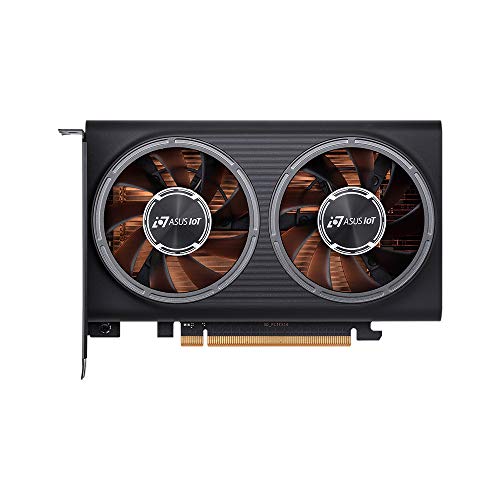
PCIe Gen3 AI Accelerator PCIe Card Based on Google Coral Edge TPU for Edge AI Inference(CRL-G18U-P3DF)
- AI Inference Support: Supports up to 8 Edge TPU modules
- Pre-trained Models: Compatible with TensorFlow Lite models
- Easy Installation: Fits PCIe Gen 3 x16 slots
As an affiliate, we earn on qualifying purchases.
As an affiliate, we earn on qualifying purchases.
Unresolved Questions About Native Quantization Compatibility
It is still unclear how universally effective native training quantization formats like MXFP4 will be across different architectures and tasks. Additionally, the long-term stability and support for these formats in various inference environments are still emerging, and the full impact on model accuracy at extreme compression levels remains under study.

Nstallmates Big Blue Universal Compression Tool
- Includes Big Blue Universal Compression Tool: Contains 1 compression tool
- Adapter Compatibility: Supports BNC, F, and RCA connectors
- Spring Loaded Design: Features spring-loaded mechanism
As an affiliate, we earn on qualifying purchases.
As an affiliate, we earn on qualifying purchases.
Future Directions in Quantization and Model Optimization
Research will likely focus on refining dynamic, mixed-precision quantization techniques and expanding hardware support for native low-precision formats. Expect further development of tools that facilitate training-aware quantization, making it easier for developers to deploy highly compressed models without sacrificing performance.

Local LLM Inference Optimization: A Comprehensive Guide to Quantization, Hardware Acceleration, and Efficient Private AI Deployment
As an affiliate, we earn on qualifying purchases.
As an affiliate, we earn on qualifying purchases.
Key Questions
What is native quantization and how does it differ from traditional methods?
Native quantization involves training models directly in low-precision formats like MXFP4, rather than applying compression after training. This results in more efficient models optimized for specific hardware and reduces the need for lossy post-processing.
How does dynamic quantization improve model compression?
Dynamic quantization selectively compresses most weights to 1 or 2 bits while upcasting critical layers back to 8-bit, balancing size reduction with stability and accuracy during inference.
Will native quantization formats work across all hardware?
Support is currently optimized for certain GPUs and hardware-native formats like MXFP4. Broader compatibility and long-term support are still under development as the technology matures.
Does training-in quantization reduce model accuracy?
When properly implemented, training-in quantization can maintain accuracy at native bit-depths. However, aggressive compression beyond the trained precision can lead to accuracy loss, especially if not supported by hardware acceleration.
Source: ThorstenMeyerAI.com