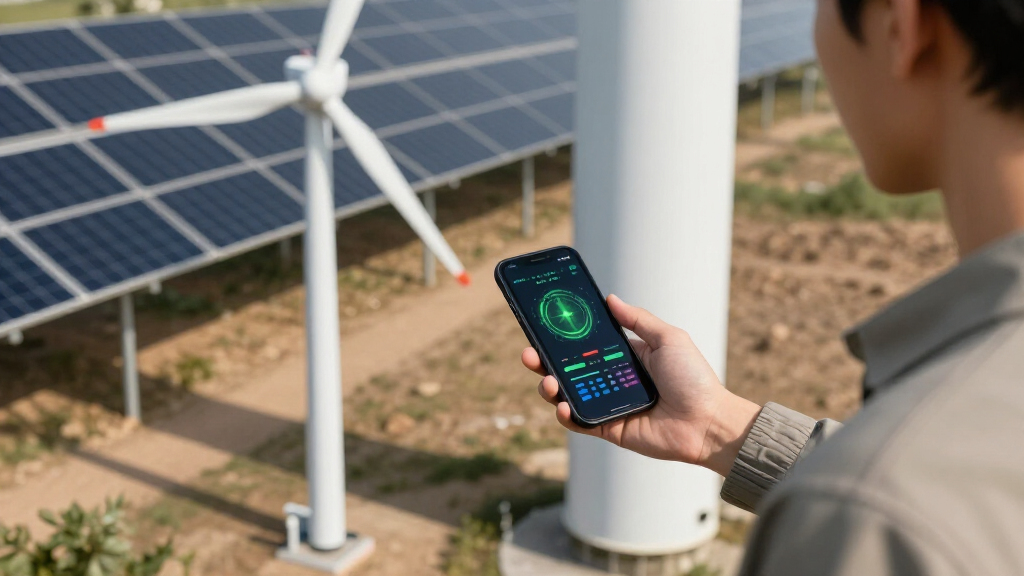

📊 Full opportunity report: Agents Per Gigawatt: The Unit Of Power Nobody Has Named Yet on ThorstenMeyerAI.com — validation score, market gap, and execution plan.

Get business pricing on tech for your team
- Business-only prices and quantity discounts
- Tax-exempt purchasing
- Multiple users, one account, clear invoices
TL;DR
The article introduces ‘agents per gigawatt’ as the emerging unit of power in the AI-driven economy, reflecting autonomous cognitive capacity constrained by energy. This new measure redefines how we assess technological and national strength amid the AI buildout.
Thorsten Meyer proposes that the traditional measure of economic power, GDP, is becoming obsolete in the era of AI and autonomous agents. Instead, he introduces agents per gigawatt as the fundamental unit for measuring a nation’s or company’s productive capacity in the AI age, emphasizing the role of energy in powering autonomous cognition.
According to Meyer, the shift from human labor to autonomous cognitive agents as the primary productive force makes energy constraints the new bottleneck. The agents per gigawatt ratio captures how many independent AI agents can be operated per unit of power, directly linking energy supply to cognitive output.
This concept reframes the current AI buildout, where datacenter expansion and hardware innovation are primarily aimed at increasing this ratio. The race for more agents per gigawatt involves improvements in chips, cooling, and infrastructure to maximize the conversion of power into autonomous cognition.
Thorsten Meyer states that this metric provides a clearer understanding of national AI sovereignty. Countries with abundant energy and local manufacturing of chips can sustain higher agents-per-gigawatt ratios, giving them a strategic advantage. Conversely, energy-importing nations face vulnerabilities in this new measure of power.
Every era measures power in whatever is scarce: land, then steel, then GDP. The binding constraint is changing again — and the new unit is how much autonomous cognition a nation or company can produce per unit of energy it can command.
▲ Opinion & analysis · not investment adviceMore agents means more tokens, which takes compute, which takes chips, which take one thing above all — power. The energy story and the AI story became the same story.
Once you hold it, the separate stories of the moment stop being separate — they’re all the same ratio, seen from different angles.
Adopting it drags three things into the open that softer framings let you avoid.
And the unit rewards concentration — unless we deliberately build against it.
Implications of Agents-Per-Gigawatt as a Power Metric
This new unit fundamentally alters how we assess technological dominance and national security. It emphasizes that energy infrastructure is now as critical as hardware and software in AI development. Countries investing in energy capacity and local chip manufacturing will likely lead in autonomous cognitive capacity, affecting global power dynamics.
Furthermore, the measure shifts the focus from traditional economic indicators like GDP to energy efficiency and hardware innovation, influencing investment, policy, and industry strategies in the AI era.
As an affiliate, we earn on qualifying purchases.
Evolution of Power Metrics in Technological Shifts
Historically, units like land, steel, and GDP have served as proxies for national power, each aligned with the dominant productive resource of its time. As AI and autonomous agents become central, the productive constraint shifts from human labor to energy and compute capacity.
Thorsten Meyer argues that this transition marks a fundamental change, where energy supply and hardware efficiency determine the maximum autonomous cognitive output, rendering traditional metrics less relevant.
This concept builds on ongoing developments: the expansion of data centers, advances in specialized chips, and the energy scramble to power AI infrastructure, all aimed at increasing agents-per-gigawatt ratios.
"The honest unit of productive capacity is not the number of chips or models but the rate at which energy is converted into intelligence."
— Thorsten Meyer
energy-efficient AI server hardware
As an affiliate, we earn on qualifying purchases.
As an affiliate, we earn on qualifying purchases.
Unresolved Questions About Agents-Per-Gigawatt Metric
While the concept of agents per gigawatt is gaining traction, it remains a theoretical framework. It is not yet widely adopted as an industry standard, and precise methods for measuring and comparing ratios across different infrastructures are still under development.
Additionally, the impact of renewable energy variability and regional energy constraints on the ratio’s applicability is not fully understood. The actual strategic implications depend on how nations and companies optimize their energy and hardware investments.
As an affiliate, we earn on qualifying purchases.
Next Steps in Developing and Applying the Metric
Industry leaders and policymakers are likely to begin formalizing measurement standards for agents-per-gigawatt. Investment trends will be closely watched to see if hardware innovations and energy infrastructure expansion translate into higher ratios.
Further research and data collection are expected to clarify how this metric correlates with AI capabilities and national security. The concept may influence future policy decisions and industry benchmarks as the AI economy matures.
AI infrastructure cooling solutions
As an affiliate, we earn on qualifying purchases.
As an affiliate, we earn on qualifying purchases.
Key Questions
What exactly is 'agents per gigawatt'?
'Agents per gigawatt' measures how many autonomous AI agents can be operated per unit of energy (gigawatt), reflecting the efficiency of converting power into cognitive work.
Why is this unit important now?
It captures the core bottleneck in AI expansion—energy supply—highlighting the importance of energy infrastructure in maintaining technological leadership.
How does this change current assessments of national power?
It shifts focus from traditional metrics like GDP to energy and hardware capacity, emphasizing energy independence and infrastructure as strategic assets.
Is this concept already being used by industry?
Not yet as a formal standard, but it is gaining attention among experts and analysts as a more accurate way to measure AI capacity.
What are the challenges in measuring agents per gigawatt?
Standardizing measurement methods, accounting for regional energy differences, and integrating data across diverse infrastructures are ongoing challenges.
Source: ThorstenMeyerAI.com
Halloween Picks
halloween
As an affiliate, we earn on qualifying purchases.