
🔍 Read the full analysis: Five Points That Became Two: What’s Wrong With The Astra Vs Fable Benchmark on ThorstenMeyerAI.com
TL;DR
A recent review of the Astra versus Fable benchmark exposes significant inaccuracies caused by index revisions and architectural differences. The widely circulated comparison is based on outdated or misinterpreted data, leading to misleading conclusions about AI performance and economics.
Recent analysis reveals that the widely circulated comparison between GPT-6 Astra and Fable 5.1 AI models is based on outdated or misinterpreted benchmark data, leading to misleading conclusions about their relative performance and economics. The core issue stems from multiple revisions to the Artificial Analysis Index and architectural differences in how the models reason, which have not been properly accounted for in the comparisons.
The initial comparison suggested Astra lagged behind Fable 5.1 in the Artificial Analysis Intelligence Index by five points, with Astra supposedly scoring 61 and Fable 66. However, recent insights show that these figures are based on different versions of the index, which were updated around Astra’s launch, causing the scores to shift or become inconsistent. For example, the latest version of the index reports Astra scoring 55-57 and Fable scoring 54-57, indicating a much narrower gap that could be within a margin of error.
Further complicating the narrative, the original comparison conflated two different metrics. The AI community widely cited Astra as being economically superior due to lower token usage—$1.67 per task versus $3.69 for Fable—implying better efficiency. Yet, the Artificial Analysis report clarifies that Astra’s higher cost stems from its architecture, which reasons in latent space without producing chains of thought in tokens, making token counts an unreliable proxy for compute or intelligence. The efficiency gains are real but limited to specific coding tasks, not general intelligence.
Additionally, Astra’s architecture involves looping or recurrent reasoning that does not manifest as token output, meaning the token-based index measures are increasingly inaccurate. The models’ reasoning processes are internalized, and the token count no longer reflects the true computational effort. As a result, the comparison based solely on token usage is fundamentally flawed, and the narrative that Astra “attacks the economics” of intelligence is misleading outside narrow contexts.
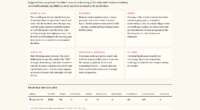
Five points that became two: what’s wrong with the Astra vs Fable benchmark
The comparison everyone is quoting — Fable 66, Astra 61, “not a rounding error” — is built on numbers that were stale when written, measuring a quantity that no longer means what it used to, aggregated in a way that hides the reversals that matter. The benchmark isn’t broken. The way it’s being read is.
Three things happened at once: the Index was revised (five became two), the architecture changed (tokens stopped being compute), and the aggregate did what aggregates do (6–1 became +2). A leaderboard position now tells you less than it ever has — and the more advanced the architecture, the less it tells you. Latent reasoning is only the first architecture to break the token proxy. So with your Astra access: ignore the Index number. Take your ten real tasks. Run both models at the effort setting you’ll actually pay for. Measure the bill including the cache line. Measure the failure rate — the 41-point hallucination drop is the one number here I’d bet money on. The benchmark can’t decide for you anymore.
Implications for AI Performance and Benchmarking
This analysis underscores the importance of accurate benchmarking in AI development and the risks of relying on outdated or misinterpreted data. The flawed comparison has led to misconceptions about Astra’s efficiency and intelligence capabilities, potentially influencing investment, research priorities, and public perception. It highlights that architectural differences—such as reasoning in latent space versus tokenized reasoning—must be carefully considered when evaluating AI models.
For users and developers, understanding these nuances is critical for making informed decisions about model deployment and improvement. The case illustrates that raw token counts are insufficient as a measure of true AI efficiency, especially as models evolve architectures that process information differently. The broader lesson is that benchmarks must adapt to architectural innovations and be transparently versioned to avoid misleading conclusions.
As an affiliate, we earn on qualifying purchases.
Revisions and Architectural Shifts in AI Benchmarking
The Artificial Analysis Index has undergone multiple updates, including version 4.1.1 to 4.2, which involved removing some metrics like GPQA Diamond and adding others such as AA-Briefcase and GDP.pdf. Each update recalibrated the scores of models against a different evaluation basket, causing the absolute numbers to shift. This means that comparisons made using different versions are not directly comparable, and the initial five-point gap between Astra and Fable is no longer valid.
Moreover, Astra’s architecture is based on a looped transformer design, allowing it to reason internally without emitting tokens for some processes. This contrasts with models like Fable, which verbalize reasoning step-by-step, making token counts a more direct measure of computational effort. The shift in how Astra reasons fundamentally alters the meaning of token-based efficiency metrics, making previous comparisons obsolete.
Experts such as Sebastian Raschka and Alan Thompson have noted Astra’s architectural differences, emphasizing that the model’s internal reasoning mechanisms are not captured by traditional token-based benchmarks. This evolving understanding calls for more nuanced and architecture-aware evaluation methods.
“The comparison between Astra and Fable is based on outdated benchmark versions, and the numbers no longer reflect their true performance or efficiency.”
— Thorsten Meyer
AI model performance evaluation software
As an affiliate, we earn on qualifying purchases.
As an affiliate, we earn on qualifying purchases.
Remaining Questions About Astra’s True Performance
It remains unclear how Astra’s internal reasoning process impacts real-world performance across diverse tasks, as current token-based benchmarks do not capture the full picture. OpenAI has not publicly disclosed detailed measurements of compute effort related to Astra’s latent loops, so the actual efficiency and cost-effectiveness are still uncertain. Additionally, the long-term implications of architectural differences on model scalability and general intelligence are still under investigation, with expert opinions diverging on how to best measure and compare these models.
As an affiliate, we earn on qualifying purchases.
Future Benchmarking and Model Evaluation Strategies
Moving forward, the AI community is expected to develop more architecture-aware benchmarking methods that account for internal reasoning mechanisms like Astra’s latent loops. OpenAI and other organizations may publish detailed performance metrics that go beyond token counts, including GPU-seconds, energy consumption, and latency measurements. Further independent analyses are likely to scrutinize Astra’s real-world efficiency and capabilities, clarifying its position in the AI landscape. Meanwhile, the debate over how to fairly compare models with different architectures will continue.
AI token usage efficiency calculator
As an affiliate, we earn on qualifying purchases.
As an affiliate, we earn on qualifying purchases.
Key Questions
Why are the original Astra vs Fable benchmark numbers misleading?
The numbers are based on different versions of the Artificial Analysis Index, which were updated around Astra’s launch, causing the scores to shift. Additionally, the comparison conflates token-based efficiency with architectural differences, making the original figures inaccurate for assessing true performance or cost-effectiveness.
What is the main reason Astra’s token count does not reflect its actual compute effort?
Astra’s architecture reasons internally in latent space and uses looping mechanisms that do not produce tokens during reasoning, so token counts do not accurately measure the model’s computational effort or intelligence.
Will future benchmarks better capture Astra’s architecture?
Yes, experts expect new evaluation methods that incorporate hardware metrics like GPU-seconds and energy use, which will better reflect Astra’s internal reasoning processes and overall efficiency.
How does this analysis affect the perception of Astra’s capabilities?
It suggests that Astra may be more cost-efficient in specific coding tasks but does not necessarily outperform other models in general intelligence, especially when using token-based metrics that are no longer fully applicable.
What should researchers focus on to improve AI benchmarking?
They should develop metrics that account for architectural differences, internal reasoning mechanisms, and real compute effort, moving beyond token counts to achieve fairer, more accurate comparisons.
Source: ThorstenMeyerAI.com