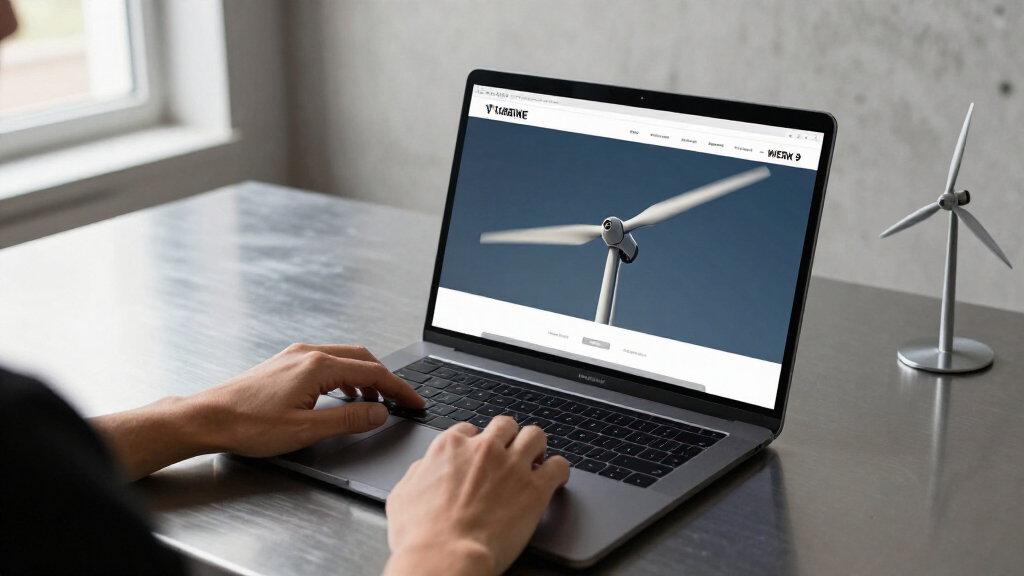

🔍 Read the full analysis: The Scroll-Driven SVG Rotor In FABLE/175’s “TURBINE — WERK 9” on ThorstenMeyerAI.com

Get business pricing on tech for your team
- Business-only prices and quantity discounts
- Tax-exempt purchasing
- Multiple users, one account, clear invoices
TL;DR
FABLE/175’s “TURBINE — WERK 9” presents an interactive field guide in which scrolling drives an SVG rotor, connecting movement through the page with the project’s industrial setting. The available project description does not identify the people behind the work or provide technical specifications for the animation.
FABLE/175’s “TURBINE — WERK 9”, the original project analysis, is presented as a live, interactive field guide that uses a scroll-driven SVG rotor to connect a visitor’s movement through the page with the mechanics of the setting. The project offers an example of a browser experience built around an input familiar to nearly every web user—scrolling—rather than describing a new product launch or a technical breakthrough.
The project description frames the page as a place to explore rather than a conventional brochure. As visitors scroll, a rotor constructed from SVG vector paths moves in response, giving the page’s navigation a visual link to the industrial subject. The interaction is described as part of a broader field-guide format, intended to give exploration a sense of direction.
The presentation says a full case study covers how the team shaped the rotor’s motion, organized the visual system and translated a physical-feeling space into a browser experience. It does not provide those production details in the project summary, however. The description also invites readers to visit a live version; it does not state when the project launched or identify the tools, code or accessibility practices used to build it.
The central design idea is to make the act of moving down the page feel related to the object represented on it. The project description characterizes the experience as responsive while retaining the clarity of a designed object. That is a description of the intended effect, not a published evaluation or measured result.
Scroll Becomes Part of the Machine
The project illustrates a design choice with practical relevance for web teams: a familiar browser gesture can carry meaning when it is tied closely to the subject of a page. Here, the scroll input is presented as more than a way to move between sections; it also drives the visual motif at the center of the experience. That connection may help visitors understand the page as a designed environment rather than a stack of disconnected content.
For readers interested in interactive design, the example is useful because it pairs a relatively straightforward user action with vector-based motion and a clear editorial frame. It also points to a question for designers: whether an animation strengthens orientation and understanding, or simply decorates the experience. The project description explains the concept but supplies no usability research, performance measurements or evidence about how visitors respond, so those effects cannot be established from the available information.
The distinction matters for anyone considering similar interactions. A scroll-linked animation can shape the rhythm of a page, but its value depends on implementation, device performance and whether people can still access the content comfortably. The available description does not say how TURBINE handles reduced-motion preferences, keyboard navigation or small screens.
As an affiliate, we earn on qualifying purchases.
A Field Guide in the Browser
“TURBINE — WERK 9” is presented under the name FABLE/175 as an interactive field guide. The framing suggests a project that uses a browser interface to evoke movement through a physical or industrial-feeling space. The description does not explain what “WERK 9” refers to, where the setting is located, or whether the page documents a real site, a conceptual environment or a commissioned design project.
The project’s promotional description highlights the combination of a browser, constructed SVG paths and scrolling as the mechanism behind the experience. It positions the work as relevant to people interested in AI tools and automation, but does not describe an AI system or claim that artificial intelligence generated the rotor or other design elements. The emphasis is on the interaction and visual system, not on a stated AI feature.
The project page points readers to a fuller design teardown for more about the team’s process. Until those details are available, the clearest account is limited to the stated concept: a live page, a field-guide structure and a rotor animation connected to scrolling.
“What if a web page behaved less like a brochure and more like a machine you could walk around?”
— Project description on ThorstenMeyerAI.com
As an affiliate, we earn on qualifying purchases.
Build Details Still Unpublished
The project description does not name individual designers, developers or a commissioning organization. It also does not provide a launch date, the rotor’s technical implementation, browser-support details or performance data. Although it refers readers to a full case study, the summary alone does not establish what specific decisions the team made or how the interaction behaves under different conditions.
It is also unclear whether the rotor responds continuously to scroll position, advances in discrete steps, or changes in some other way. The description gives no measurements of visitor engagement and no evidence that the design improves comprehension or accessibility. Those outcomes should not be treated as confirmed effects of the project.
As an affiliate, we earn on qualifying purchases.
Case Study May Add Detail
The project presentation directs readers to a full design teardown and a live room. The case study is the clearest stated avenue for learning how the rotor’s motion was shaped and how the visual system was organized. No publication date for additional material is given, so it is not possible to say when further implementation details will appear.
For now, readers can assess the experience through the live project, while treating claims about its design intent as descriptions rather than measured results. A fuller account would clarify the build approach, accessibility provisions and how the interaction performs across devices.
Source: ThorstenMeyerAI.com
As an affiliate, we earn on qualifying purchases.
Key Questions
What is “TURBINE — WERK 9”?
It is presented as a FABLE/175 interactive field guide built around an industrial visual theme and a rotor that responds to page scrolling.
How does the rotor interact with the page?
The project description says the SVG rotor moves in response to scrolling. It does not specify whether the motion is continuous, step-based or controlled by another scroll-linked method.
Does the project use artificial intelligence?
The presentation targets readers interested in AI tools and automation, but it does not say that AI powers or generated the experience.
Who created the project, and when did it launch?
The available description identifies the project as FABLE/175 but does not name individual creators or give a launch date.
Where can readers find more information?
ThorstenMeyerAI.com points readers to a full design teardown and a live version of the project. The summary does not specify when further technical details will be published.
Source: ThorstenMeyerAI.com
Fall Picks
fall essentials
As an affiliate, we earn on qualifying purchases.