📊 Full opportunity report: Use An A-to-F Safety Grade To Compare Contractors on IdeaNavigator AI — validation score, market gap, and execution plan.

Get business pricing on tech for your team
- Business-only prices and quantity discounts
- Tax-exempt purchasing
- Multiple users, one account, clear invoices
TL;DR
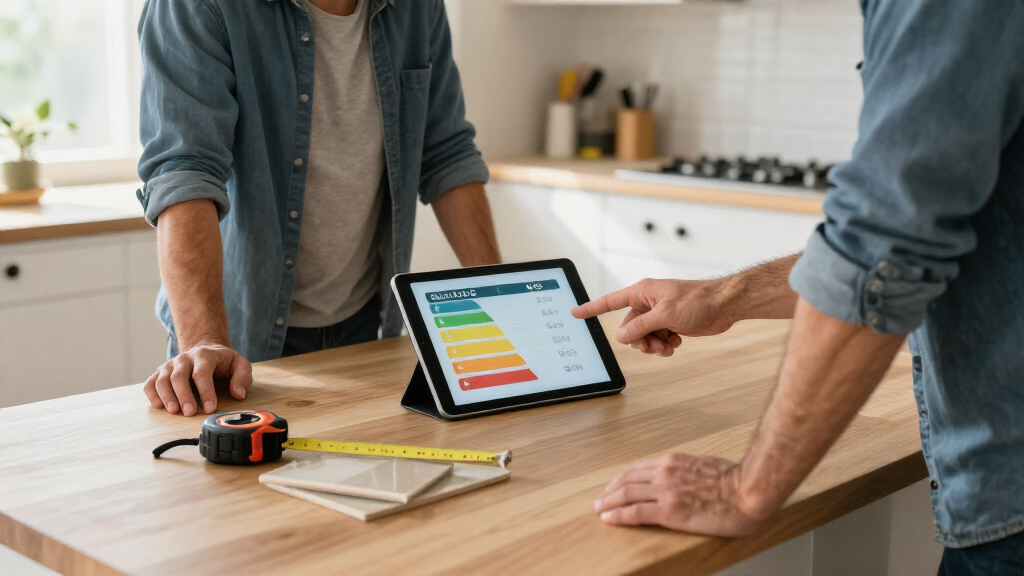
IdeaNavigator AI has proposed an A-to-F safety grade that would help homeowners check contractors before hiring for major renovations. The concept would combine license status, proof of insurance and public complaint or disciplinary records, but it remains an idea: its grading method, accuracy and willingness-to-pay have not been validated.
IdeaNavigator AI has proposed a service that would give contractors an A-to-F safety grade based on license status, proof of insurance and public complaint or disciplinary records, aimed at homeowners preparing to hire for a major renovation. The proposal describes a potential product, not a launched service or a tested grading system.
The proposed lookup would accept a contractor’s name or license information and return a grade assembled from public-record signals. The problem it aims to address is that homeowners may find it difficult to verify whether a contractor is properly licensed, insured or linked to serious complaints before signing a contract. The proposal frames the current decision as one often made with limited information or on personal impressions.
IdeaNavigator AI suggests charging a fee per report, with a small-batch package for homeowners comparing multiple bids. It identifies major renovation customers as the initial audience rather than describing a broad service for every kind of home-improvement purchase. No price, grade formula, record coverage standard or operating company is specified in the proposal.
To test the idea, the proposal recommends manually grading 50 contractors across three states using public records, then asking homeowners who are actively hiring whether they would pay for a report before signing. That is a suggested validation plan; there is no reported result showing that the checks have been completed or that homeowners have agreed to pay.
A Check Before Signing Renovation Contracts
A contractor can be responsible for expensive, safety-sensitive work, while a homeowner may have limited experience interpreting licensing databases, insurance documents or disciplinary records. A well-sourced report could make some of that information easier to compare before a deposit is paid or work begins. The proposal’s central promise is simplifying scattered records, not independently guaranteeing a contractor’s work or financial reliability.
If developed, the service could give homeowners another input alongside references, written bids and direct verification with licensing authorities. An A-to-F label would also make comparison quick, but it could carry more certainty than the underlying records justify. Readers would need to know what each grade measures, how missing information is treated and whether a low grade reflects a confirmed violation, an unresolved complaint or simply a lack of accessible records.
The idea also raises practical questions about consumer protection and fairness. Records can be incomplete, outdated or difficult to match to a contractor with a common name. A grade that is inaccurate or lacks an explanation could mislead customers and harm a contractor’s reputation. Those risks make transparent sourcing, correction procedures and clear limits on what the grade means central to the product’s usefulness.
home renovation contractor hiring checklist book
As an affiliate, we earn on qualifying purchases.
As an affiliate, we earn on qualifying purchases.
Public Records as the Proposed Input
The proposal argues that online access to state license-board and court records makes a contractor-screening tool more feasible. But making records available online does not by itself make them complete, current or easy to interpret. The service would have to identify relevant records across jurisdictions and distinguish information that bears on safety from unrelated or unverified material.
The proposed first step is deliberately narrow: focus on homeowners about to hire for a major renovation, use public information to review a small group of contractors, and test whether people making that decision will pay. That approach could establish whether the information is practically useful before a larger service is built. The proposal does not identify the three states, explain how the sample of 50 would be selected or set out a standardized scoring rubric.
home improvement contractor license and insurance verification guide
As an affiliate, we earn on qualifying purchases.
As an affiliate, we earn on qualifying purchases.
The Grade and Its Evidence Are Unset
The proposal does not say how grades would be calculated, which records would count as serious complaints, or how much weight license status and insurance proof would receive. It also does not specify how the service would confirm insurance, handle records that cannot be found, or communicate information that is disputed or under appeal.
There is no evidence provided that the proposed 50-contractor review has taken place, that homeowners have tested a report, or that customers are willing to pay. The accuracy, state-by-state coverage, update frequency and process for correcting errors remain unknown. No launch date, price or provider is identified.
home renovation project contract template homeowner
As an affiliate, we earn on qualifying purchases.
As an affiliate, we earn on qualifying purchases.
A Three-State Test Could Follow
The next step described in the proposal is to review 50 contractors in three states using public records and then test the report with homeowners who are currently choosing a contractor. That work could show whether the relevant information can be assembled consistently and whether a letter grade helps people make a decision. It could also test the proposed pay-per-report and comparison-pack models.
No schedule or completed milestone has been announced. Before the concept could support hiring decisions, its developers would need to publish how the grade works, how records are checked and updated, and how contractors or homeowners can correct errors. Until then, the A-to-F grade remains a proposed screening tool rather than an established measure of contractor safety.
Source: IdeaNavigator AI
contractor bid comparison worksheet for home renovation
As an affiliate, we earn on qualifying purchases.
As an affiliate, we earn on qualifying purchases.
Key Questions
Is an A-to-F contractor safety grading service available now?
The information describes a proposed product. It does not establish that a service has launched or that a grading system is in use.
What information would the proposed grade use?
The suggested lookup would consider a contractor’s license status, proof of insurance and public complaint or disciplinary signals. The proposal does not provide detailed rules for scoring those factors.
Has the proposed grading method been tested?
No test results are reported. The suggested validation is to manually review 50 contractors across three states and ask active home-improvement shoppers whether they would pay for reports.
Would a high grade guarantee that a contractor is safe or reliable?
No guarantee is described. A grade based on public records would be a screening aid, and the proposal does not establish that it can predict work quality, completion or safety.
Source: IdeaNavigator AI
Halloween Picks
halloween
As an affiliate, we earn on qualifying purchases.