
AI coding assistants can help with planning, coding, testing, and prototyping, but learning resources vary in how much they teach about the work around generated code. My best overall pick is AI-Assisted Programming: Better Planning, Coding, Testing, and Deployment, because its scope covers more of the software lifecycle than prompt- or tool-specific guides. AI Coding Assistants: A Beginner’s Guide is a strong starting point for readers comparing familiar tools, while Agentic Coding with Claude Code is better suited to developers focused on agent workflows. The main tradeoffs are beginner accessibility versus technical depth, and broad guidance versus advice tied to a particular tool or team. Read on for the full breakdown and help matching a guide to your goals.

Get business pricing on tech for your team
- Business-only prices and quantity discounts
- Tax-exempt purchasing
- Multiple users, one account, clear invoices
Key Takeaways
- The broadest development workflow earns the overall lead: AI-Assisted Programming covers planning, coding, testing, and deployment, while several other titles focus on a tool, technique, or audience.
- Tool-specific books make narrower choices clearer: the Codex CLI and Claude Code titles center on agent workflows, making them more focused than the cross-tool beginner guide.
- Beginner resources are not interchangeable: Coding with AI For Dummies and the non-developer Vibe Coding playbook address different starting points—general orientation versus building without programming experience.
- Prompting is one piece of the workflow: Prompt Engineering Mastery has a distinct focus, but readers seeking software-development guidance may need broader coverage of testing and deployment too.
- Team scale changes what matters: the enterprise and operating-model titles focus on systematizing AI-assisted work, a different need from individual learning or fast prototyping.
| Vibe Coding Mastery: A Guide to AI-Powered Prototyping and Creative Development |  | Best for Creative Prototyping | Format: Not specified | Primary focus: AI-powered prototyping | Workflow approach: Conversational coding | VIEW LATEST PRICE | See Our Full Breakdown |
| AI Coding in 300 Questions: Learn AI-Assisted Software Development and Coding Agents |  | Best for Interview Preparation | Format: Not specified | Organization: Question-based guide | Question count: 300 | VIEW LATEST PRICE | See Our Full Breakdown |
| Agentic Coding with OpenAI Codex CLI: Build Intelligent Agent Workflows |  | Best for Codex CLI Workflows | Format: Not specified | Primary tool: OpenAI Codex CLI | Primary topic: Agentic engineering | VIEW LATEST PRICE | See Our Full Breakdown |
| Prompt Engineering Mastery: A Beginner-to-Advanced Guide |  | Best for Cross-Tool Prompting | Format: Book | Series: AI Skillup Book 1 | Experience range: Beginner to advanced | VIEW LATEST PRICE | See Our Full Breakdown |
| AI Coding Assistants: A Beginner’s Guide to Codex, Claude Code, Copilot, and Cursor |  | Best for Comparing Beginner Tool Options | Format: Not specified | Audience: Beginners | Guide status: Unofficial guide | VIEW LATEST PRICE | See Our Full Breakdown |
| Vibe Coding: The Non-Developer’s Playbook for Building Real Products with Claude, Code, Cursor, and AI Without Learning to Program | 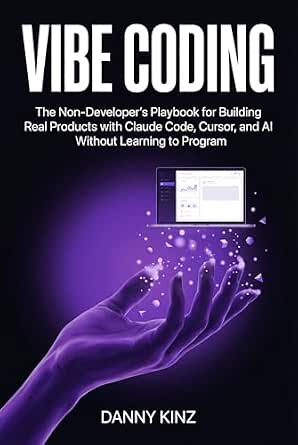 | Best for Non-Technical Builders | Format: Practical guide | Intended audience: Non-developers | Programming knowledge required: No programming knowledge required | VIEW LATEST PRICE | See Our Full Breakdown |
| Beyond Vibe Coding: From Coder to AI-Era Developer |  | Best for Developers Rethinking Their Workflow | Format: Book | Topic: Software development in the AI era | Intended audience: Coders and developers | VIEW LATEST PRICE | See Our Full Breakdown |
| The Claude Code Operating Model: Build Scalable AI Coding Systems |  | Best for Scalable Claude Code Systems | Format: Guide | Primary tool: Claude Code | Focus: Building scalable AI coding systems | VIEW LATEST PRICE | See Our Full Breakdown |
| Agentic Coding with Claude Code: The Everyday Developer’s Guide |  | Best for Day-to-Day Claude Code Work | Format: Guide | Primary tool: Claude Code | Topic: Agentic coding | VIEW LATEST PRICE | See Our Full Breakdown |
| Enterprise Vibe Coding for Agentic Engineering: Ship Production-Ready Applications with Hypervelocity Engineering and Proven Agentic Methods |  | Best for Enterprise Agentic Engineering | Format: Practical guide | Focus: Enterprise agentic engineering | Goal: Building production-ready applications | VIEW LATEST PRICE | See Our Full Breakdown |
| AI-Assisted Programming: Better Planning, Coding, Testing, and Deployment |  | Best for End-to-End Workflow Planning | Format: Book | Subject: AI-assisted programming | Stated coverage: Planning, coding, testing, and deployment | VIEW LATEST PRICE | See Our Full Breakdown |
| Coding with AI For Dummies |  | Best for Series-Oriented Learners | Series: For Dummies | Subject: Coding with AI | Format: Not provided | VIEW LATEST PRICE | See Our Full Breakdown |
| AI coding assistant | Format | ASIN |
|---|---|---|
| Vibe Coding Mastery: A Guide t | Not specified | — |
| AI Coding in 300 Questions: Le | Not specified | — |
| Agentic Coding with OpenAI Cod | Not specified | — |
| Prompt Engineering Mastery: A | Book | — |
| AI Coding Assistants: A Beginn | Not specified | — |
| Vibe Coding: The Non-Developer | Practical guide | B0GTX1Q751 |
| Beyond Vibe Coding: From Coder | Book | B0G1P9472N |
| The Claude Code Operating Mode | Guide | 1808082710 |
| Agentic Coding with Claude Cod | Guide | 1806022591 |
| Enterprise Vibe Coding for Age | Practical guide | 1808087399 |
| AI-Assisted Programming: Bette | Book | 1098164563 |
| Coding with AI For Dummies | Not provided | 1394249136 |
More Details on Our Top Picks
Vibe Coding Mastery: A Guide to AI-Powered Prototyping and Creative Development
Vibe Coding Mastery is the most fitting pick here for readers who want to explore ideas through conversational coding and low-code workflows rather than start with a tool-by-tool manual. Its focus on AI-powered prototyping makes it distinct from Agentic Coding with OpenAI Codex CLI, which is centered on building structured agent workflows and delivery automation. The exploratory approach may suit designers, founders, and curious beginners who want to turn concepts into rough software quickly. The tradeoff is that the available description does not identify specific tools, projects, or technical prerequisites, so I can’t tell how actionable its guidance is for a particular stack. Readers seeking interview practice or broad coding-agent coverage may find AI Coding in 300 Questions a clearer fit.
Pros:- Focuses on AI-assisted prototyping and creative development.
- Covers conversational coding workflows.
- Includes low-code approaches that may suit readers with limited programming experience.
Cons:- The available product information does not name tools, languages, or example projects.
- The scope appears exploratory, so readers seeking advanced agent engineering may need a more technical guide.
Best for: Designers, founders, and non-specialist creators who want an introduction to conversational coding and AI-assisted prototypes.
Not ideal for: Developers seeking detailed instructions for a named coding assistant, a defined curriculum, or concrete production engineering practices.
- Format:Not specified
- Primary focus:AI-powered prototyping
- Workflow approach:Conversational coding
- Development approach:Creative development
- Additional topic:Low-code development
- Intended approach:Exploratory software creation
Our verdict“Choose this guide if your priority is experimenting with AI-assisted prototypes, not mastering a specific coding agent.”
AI Coding in 300 Questions: Learn AI-Assisted Software Development and Coding Agents
AI Coding in 300 Questions stands apart by organizing AI-assisted development around questions, with coding agents and technical interview preparation both in scope. That structure may help readers test what they know or review concepts in short sessions, unlike Vibe Coding Mastery, whose emphasis is exploratory prototyping. The interview angle also gives it a more career-oriented role than Agentic Coding with OpenAI Codex CLI, which focuses on a particular tool and workflow topics. The tradeoff is that the description does not reveal the questions’ level, answer depth, or whether they include hands-on exercises. It may be useful as a knowledge review, but readers who need a guided project path or practical, tool-specific setup instructions should look for those details before choosing it.
Pros:- Covers AI-assisted software development in a question-based format.
- Includes coding-agent topics.
- Adds technical interview preparation to the learning scope.
Cons:- The product information does not describe answer depth or question difficulty.
- No projects, exercises, or named tools are specified in the available description.
Best for: Developers and job seekers who want question-led review of AI-assisted software development and coding-agent concepts alongside interview preparation.
Not ideal for: Beginners who need a step-by-step first project or practitioners seeking detailed instructions for a specific coding assistant.
- Format:Not specified
- Organization:Question-based guide
- Question count:300
- Primary topic:AI-assisted software development
- Additional topic:Coding agents
- Career focus:Technical interview preparation
Our verdict“Pick this for question-led concept review and interview preparation rather than a tool-specific coding walkthrough.”
Agentic Coding with OpenAI Codex CLI: Build Intelligent Agent Workflows
Agentic Coding with OpenAI Codex CLI is the most specialized option in this group: it focuses on building agent workflows with a named coding tool rather than introducing AI coding assistants broadly. Its coverage of MCP, hooks, and delivery automation points toward readers who want to connect agent behavior to repeatable engineering processes. That makes it a sharper fit for workflow design than AI Coding in 300 Questions, which takes a broader, question-led approach, or Vibe Coding Mastery, which centers on prototyping. The specialization is also the main tradeoff: readers who use other assistants or are still learning basic coding concepts may get less value. The available description does not specify projects or prerequisites, so the practical depth is difficult to gauge.
Pros:- Names OpenAI Codex CLI as its central tool.
- Covers agentic engineering alongside MCP and hooks.
- Includes delivery automation, connecting agent workflows to software delivery.
Cons:- Its Codex CLI focus may be limiting for readers choosing among several assistants.
- The available information does not identify example projects or required skill level.
Best for: Developers already interested in OpenAI Codex CLI who want to explore agent workflows, MCP, hooks, and delivery automation.
Not ideal for: Beginners seeking a general introduction to multiple coding assistants or developers who do not plan to use Codex CLI.
- Format:Not specified
- Primary tool:OpenAI Codex CLI
- Primary topic:Agentic engineering
- Workflow topic:Intelligent agent workflows
- Integration topic:MCP
- Automation topic:Hooks
- Delivery topic:Delivery automation
Our verdict“Choose this guide if you want to build Codex CLI agent workflows, not compare coding assistants across the field.”
Prompt Engineering Mastery: A Beginner-to-Advanced Guide
Prompt Engineering Mastery is the broadest, least coding-specific choice in this set. It covers prompt work across coding assistants, chatbots, image generators, and agents, which may help readers build transferable habits instead of focusing on a single product. That breadth separates it from Agentic Coding with OpenAI Codex CLI, which targets a particular tool and engineering workflow, and from AI Coding Assistants: A Beginner’s Guide to Codex, Claude Code, Copilot, and Cursor, which is more directly centered on coding products. The drawback is that the available information does not detail its chapters or coding-specific examples. Readers who want assistant setup, coding exercises, or tool comparisons may need a more narrowly focused guide; the listed beginner-to-advanced range alone does not establish how deeply each level is covered.
Pros:- Addresses coding assistants alongside chatbots, image generators, and agents.
- Aims to serve beginner through advanced readers.
- Prompting concepts may transfer across multiple AI tool categories.
Cons:- The available description does not specify coding examples or chapter contents.
- Its cross-tool scope may leave less room for detailed coding-assistant workflows.
Best for: Readers who want prompt-writing guidance that applies across coding assistants and other generative AI tools.
Not ideal for: Developers seeking a coding-only manual with named workflows, hands-on projects, or detailed coverage of one assistant.
- Format:Book
- Series:AI Skillup Book 1
- Experience range:Beginner to advanced
- Primary topic:Prompt engineering
- Tool category:AI chatbots
- Tool category:Coding assistants
- Additional tool categories:Image generators and agents
Our verdict“Choose this for broad prompt-writing coverage across AI tools, but choose a coding-focused guide for hands-on development workflows.”
AI Coding Assistants: A Beginner’s Guide to Codex, Claude Code, Copilot, and Cursor
AI Coding Assistants: A Beginner’s Guide has the clearest assistant-comparison premise in this group: it names Codex, Claude Code, Copilot, and Cursor and is aimed at beginners. That makes it a more direct starting point for choosing among coding tools than Prompt Engineering Mastery, whose scope extends to image generators and general chatbots, or Agentic Coding with OpenAI Codex CLI, which concentrates on one tool. Its key limitation is the thin product information: the guide is described as unofficial, and no chapter plan, practical exercises, or tool-selection framework is provided. Beginners may value the multi-tool scope, but should not assume it offers authoritative documentation or detailed comparisons without further content information.
Pros:- Names four coding assistants, offering a wider starting scope than the Codex CLI-specific guide.
- Is expressly intended for beginners.
- Focuses on coding assistants rather than AI prompting across unrelated tool categories.
Cons:- It is identified as an unofficial guide, so it is not a substitute for official product documentation.
- The available information does not describe chapters, examples, or practical exercises.
Best for: New programmers and AI-curious learners who want an introductory overview of Codex, Claude Code, Copilot, and Cursor in one guide.
Not ideal for: Readers who need official tool documentation, advanced agent engineering, or evidence of a detailed hands-on curriculum.
- Format:Not specified
- Audience:Beginners
- Guide status:Unofficial guide
- Assistant covered:Codex
- Assistant covered:Claude Code
- Assistant covered:Copilot
- Assistant covered:Cursor
Our verdict“Pick this if you are a beginner comparing several named coding assistants, and verify the contents if you need hands-on instruction.”
Vibe Coding: The Non-Developer’s Playbook for Building Real Products with Claude, Code, Cursor, and AI Without Learning to Program
Vibe Coding is the clearest fit here for people who want to turn an idea into a working product without first learning conventional programming. Its step-by-step approach and coverage of Claude, Code, and Cursor make AI coding assistants feel like tools for building, not just autocomplete for developers. Compared with Beyond Vibe Coding, which is framed around a coder’s shift into AI-era development, this book targets entrepreneurs, marketers, and creatives starting from a nontechnical base. That focus is also its limit: experienced developers may find the guidance too introductory, and workflows tied to named tools can date as those products change. I’d choose it for guided first projects rather than durable engineering depth or advanced agent architecture.
Pros:- Makes advanced AI coding tools approachable for readers without programming backgrounds
- Offers actionable, step-by-step product-building workflows
- Covers Claude, Code, and Cursor in one guide
- Centers on creating real-world products rather than only explaining AI concepts
Cons:- Can feel too basic for readers who already develop software
- Tool-specific instructions may age as platforms and interfaces change
- The focus on building without learning programming may leave readers wanting more engineering fundamentals
Best for: Entrepreneurs, marketers, and creatives who want step-by-step guidance using AI coding tools to build an initial real-world product without programming experience.
Not ideal for: Experienced developers seeking advanced software architecture, or readers who want tool-agnostic guidance that is less tied to specific AI platforms.
- Format:Practical guide
- Intended audience:Non-developers
- Programming knowledge required:No programming knowledge required
- Tools covered:Claude, Code, and Cursor
- Approach:Step-by-step workflows
- Focus:Building real-world products with AI
- Example audiences:Entrepreneurs, marketers, and creatives
- ASIN:B0GTX1Q751
Our verdict“Choose this guide if you are a nontechnical builder who wants structured help turning an idea into a product with AI coding assistants.”
Beyond Vibe Coding: From Coder to AI-Era Developer
Beyond Vibe Coding is positioned for an existing coder who wants to adapt their work as AI changes software development, rather than for a newcomer looking for a first guided build. That framing separates it from Vibe Coding: The Non-Developer’s Playbook, which prioritizes accessible, step-by-step product creation without programming knowledge. The title suggests a shift from simply prompting for code toward a broader AI-era developer practice, but the available product information gives no details about tools, methods, examples, or technical depth. I’d treat it as a potentially relevant perspective piece, not a confirmed hands-on manual. That information gap makes it harder to judge whether it offers concrete AI-assistant workflows or stays at a conceptual level.
Pros:- Targets developers adapting their practice rather than people learning to code from scratch
- Frames AI-era software development as a change in the developer’s approach
- Offers a distinct perspective from beginner-oriented guides such as Vibe Coding
- May suit readers seeking a broader view of the shift beyond a single named tool
Cons:- Available product information does not specify methods, tools, or examples
- Technical depth and suitability for day-to-day coding work cannot be established from the supplied details
- Readers looking for a clearly documented hands-on assistant workflow may prefer a more specific guide
Best for: Software developers curious about how their role and workflow may change in the AI era, who are comfortable checking the book’s contents before buying.
Not ideal for: Nontechnical founders seeking explicit beginner instructions, or developers who need verified examples, tool coverage, and implementation details.
- Format:Book
- Topic:Software development in the AI era
- Intended audience:Coders and developers
- Positioning:Moving from coder to AI-era developer
- Named tools:Not specified in the supplied product information
- Topics or methods:Not specified in the supplied product information
- Description detail:No further description provided
- ASIN:B0G1P9472N
Our verdict“Consider it if you are an experienced coder exploring the AI-era developer role, but verify its contents if you need concrete, tool-specific instruction.”
The Claude Code Operating Model: Build Scalable AI Coding Systems
The Claude Code Operating Model is the most systems-oriented pick in this group. Rather than focusing on an individual developer’s everyday use of an assistant, it covers skills, MCP, hooks, agent orchestration, and SDK patterns—components relevant to building repeatable Claude Code workflows. That makes it a more specialized choice than Agentic Coding with Claude Code: The Everyday Developer’s Guide, whose title points toward routine development work. The breadth of system topics is appealing for teams looking beyond one-off prompts, but the product details do not establish how much implementation guidance or example code the book provides. It is best suited to readers already comfortable with technical concepts; someone seeking an introductory tour of AI coding assistants may find its scope too narrow and advanced.
Pros:- Covers several building blocks for Claude Code systems, including skills, MCP, and hooks
- Includes agent orchestration as a topic, beyond basic code generation
- SDK patterns point toward programmatic ways to shape AI coding workflows
- Focuses on scalable systems rather than isolated assistant interactions
Cons:- Narrowly centered on Claude Code rather than a range of coding assistants
- Available details do not specify example projects or the depth of implementation guidance
- The systems focus may be too technical for beginners or casual AI-assisted coding
Best for: Developers or technical leads designing repeatable Claude Code workflows who want to explore tool extension, integrations, and agent orchestration.
Not ideal for: Newcomers who need a general introduction to AI coding assistants, or readers seeking a verified, step-by-step beginner project guide.
- Format:Guide
- Primary tool:Claude Code
- Focus:Building scalable AI coding systems
- Topics:Skills, MCP, hooks, agent orchestration, and SDK patterns
- Intended use:Designing AI coding workflows and systems
- Audience level:Technical readers building AI coding systems
- ASIN:1808082710
Our verdict“Pick this if you are building repeatable Claude Code systems and want coverage of orchestration and integration patterns.”
Agentic Coding with Claude Code: The Everyday Developer’s Guide
Agentic Coding with Claude Code is framed around using an AI coding assistant in everyday software development, making it a more practical-sounding choice for individual developers than The Claude Code Operating Model. The distinction matters: the latter explicitly lists system-building topics such as MCP, hooks, and agent orchestration, while this guide’s title emphasizes day-to-day agentic coding. However, no further description or specifications are provided, so the actual workflows, technical level, and examples remain unclear. I’d place it on a shortlist for developers who want a Claude Code-centered companion to routine work, while avoiding assumptions about specific features or coverage. Readers who need documented system architecture or a clearly defined project path may prefer a book with more supplied detail.
Pros:- Focuses on agentic coding with a named coding assistant
- Targets everyday software development rather than only large-scale system design
- Offers a distinct audience from non-developer guides such as Vibe Coding
- May appeal to developers seeking practical Claude Code guidance
Cons:- The supplied description does not identify particular workflows or technical topics
- No example projects, tool integrations, or specifications are provided
- Its practical depth cannot be confirmed from the available product information
Best for: Software developers interested in applying Claude Code to regular coding tasks who want a guide positioned around everyday development.
Not ideal for: Readers who need confirmed coverage of integrations, SDKs, or agent orchestration, or beginners needing a clearly described learning path.
- Format:Guide
- Primary tool:Claude Code
- Topic:Agentic coding
- Intended audience:Everyday software developers
- Stated focus:Using agentic coding in software development
- Additional topics:Not specified in the supplied product information
- Description detail:No further product description provided
- ASIN:1806022591
Our verdict“Choose this if you want a Claude Code guide aimed at everyday developer work, but check the contents first if you need specific technical coverage.”
Enterprise Vibe Coding for Agentic Engineering: Ship Production-Ready Applications with Hypervelocity Engineering and Proven Agentic Methods
Enterprise Vibe Coding for Agentic Engineering is aimed at developers who need AI-assisted work to reach production, not just generate a prototype. Its focus on enterprise scenarios, agentic methods, and production-ready applications distinguishes it from Vibe Coding: The Non-Developer’s Playbook, which is built around accessible product creation without programming knowledge. A framework that pairs practical examples with rapid development techniques may help teams think beyond isolated prompts, but the technical emphasis makes this a poor starting point for beginners. The description also leaves the exact methods and implementation details unspecified, so readers should not assume a particular tool stack or enterprise process. I’d choose it for technically experienced teams exploring agentic delivery, not for casual experimentation or general assistant overviews.
Pros:- Centers on production-ready applications rather than prototypes alone
- Connects agentic engineering concepts with practical code examples
- Addresses real-world enterprise development scenarios
- Presents a framework for faster development cycles
Cons:- May be too specialized for beginners unfamiliar with agentic methods
- Dense technical material can create a steep learning curve
- The supplied details do not name specific tools or explain the methods in depth
Best for: Experienced developers and engineering teams exploring agentic methods for shipping production-ready applications in enterprise settings.
Not ideal for: First-time coders, nontechnical founders, or readers seeking a broad introduction to multiple AI coding assistants.
- Format:Practical guide
- Focus:Enterprise agentic engineering
- Goal:Building production-ready applications
- Methods:Hypervelocity engineering and agentic methods
- Approach:Theory with real-world examples
- Intended setting:Enterprise environments
- Stated benefit:Accelerating development cycles
- ASIN:1808087399
Our verdict“Choose this if you already have software development experience and want an enterprise-focused guide to agentic application delivery.”
AI-Assisted Programming: Better Planning, Coding, Testing, and Deployment
This book’s stated scope spans planning, coding, testing, and deployment, making it a fit for readers who want to think about AI as support across a software project rather than only as a code generator. Compared with AI Coding in 300 Questions, whose title points to a question-led learning format, this book signals a lifecycle-oriented approach. That breadth may help developers connect AI assistance to work before and after implementation, though the available product information does not describe its methods, tools, or level of technical detail. I’d choose it when the goal is to explore AI-assisted workflows across several stages; readers seeking a clearly identified tool-specific guide, such as Agentic Coding with OpenAI Codex CLI, may prefer a more narrowly focused title. The sparse details make it hard to judge depth or suitability for beginners.
Pros:- Covers multiple stages of software development according to the supplied description
- Keeps AI-assisted programming as its central subject
- The lifecycle framing may help readers think beyond code generation
- Could suit developers seeking workflow-level context rather than a single-tool manual
Cons:- The available product data gives no detail on specific tools, techniques, or examples
- No skill level or depth is provided, making fit difficult to judge
- The broad scope may be less useful to readers seeking focused instruction for a particular coding assistant
Best for: Developers who want a book framed around using AI throughout planning, implementation, testing, and deployment, rather than only writing code.
Not ideal for: Readers who need confirmed tool coverage, sample projects, a stated skill level, or detailed chapter information before choosing a guide.
- Format:Book
- Subject:AI-assisted programming
- Stated coverage:Planning, coding, testing, and deployment
- Product title:AI-Assisted Programming: Better Planning, Coding, Testing, and Deployment
- ASIN:1098164563
- Specific tools listed:Not provided
Our verdict“Choose this book if you want a lifecycle-wide introduction to AI-supported development and can accept limited detail about its contents.”
Coding with AI For Dummies
Coding with AI For Dummies is the more approachable-sounding pick for readers who prefer learning through an established introductory book series. Its title clearly centers on coding with AI, but the supplied information does not confirm its audience level, teaching style, tools, or project coverage. That leaves less to judge than with AI-Assisted Programming: Better Planning, Coding, Testing, and Deployment, which at least names several stages of a development workflow. I’d favor this title if familiarity with the For Dummies series is part of how you choose learning material; I wouldn’t assume that it covers a particular assistant or provides hands-on exercises without more information. Compared with tool-specific guides in the roundup, its broad title may be less useful when you need instructions for one named coding agent.
Pros:- Focuses on coding with AI, according to the title and supplied description
- Part of the For Dummies series, a recognizable learning-book format
- May appeal to readers who prefer series-based instructional material
- Its broad subject can serve readers exploring AI-assisted coding
Cons:- No details are provided about tools, examples, or chapter contents
- The intended skill level and teaching approach are unspecified
- Less clearly differentiated than the workflow-focused AI-Assisted Programming title
Best for: Readers who already like the For Dummies learning series and want a guide centered on coding with AI.
Not ideal for: Developers seeking confirmed instruction for a named assistant, agent workflow, or specific development task, since the supplied description does not identify any.
- Series:For Dummies
- Subject:Coding with AI
- Format:Not provided
- Product title:Coding with AI For Dummies
- ASIN:1394249136
- Specific tools listed:Not provided
Our verdict“Pick this if the For Dummies series suits your learning preferences, but seek a tool-specific guide if you need actionable instructions for a particular assistant.”

How We Picked
I compared these 12 books as learning resources for people choosing how to work with AI coding tools, rather than treating them as interchangeable software products. The main criteria were audience fit, practical scope across the development process, clarity about workflows, and how specifically each title addresses coding assistants, code agents, or AI-supported development. I also considered whether the book’s stated focus appears useful for a particular job, such as learning fundamentals, prototyping, using a named agent, or organizing engineering at team scale.
The ranking favors resources with a clear path from AI assistance to usable software practices, which puts AI-Assisted Programming first for its lifecycle-wide scope. More specialized books rank lower overall not because a focused tool guide lacks value, but because it serves a narrower reader. Beginner, non-developer, and enterprise-focused titles receive distinct roles so readers can choose by experience and setting; titles with overlapping aims are separated by their stated audience or workflow focus. These are book recommendations, so the ranking reflects the scope and positioning described by each title, not hands-on testing of the books or the tools.
| AI coding assistant | Format |
|---|---|
| Vibe Coding Mastery: A Guide t | Not specified |
| AI Coding in 300 Questions: Le | Not specified |
| Agentic Coding with OpenAI Cod | Not specified |
| Prompt Engineering Mastery: A | Book |
| AI Coding Assistants: A Beginn | Not specified |
| Vibe Coding: The Non-Developer | Practical guide |
| Beyond Vibe Coding: From Coder | Book |
| The Claude Code Operating Mode | Guide |
| Agentic Coding with Claude Cod | Guide |
| Enterprise Vibe Coding for Age | Practical guide |
| AI-Assisted Programming: Bette | Book |
| Coding with AI For Dummies | Not provided |
Factors to Consider When Choosing AI Coding Assistants
Choose a guide by the work you need to do after the AI produces code, not only by the assistant named on the cover. The right resource should match your current skill level, the kind of projects you build, and how much responsibility you want to take for reviewing the result.
Match the guide to your starting point
Decide whether you need tool breadth or depth
Cross-tool guides can help you compare assistants and build habits that survive changes in the software landscape. A book focused on Codex CLI or Claude Code can give a more concentrated account of that tool’s agent workflow, but its guidance may not transfer cleanly to another environment. A common mistake is choosing a tool-specific resource before knowing whether you will use that tool regularly. If your workplace or project has already settled on an assistant, depth may be the more useful choice. If you are still comparing options, favor principles and workflows that apply across tools.
Check how much of the development lifecycle it covers
Code generation is only one part of turning an idea into a working application. Planning, reading changes, running tests, deployment, and maintenance all affect whether AI assistance saves effort or shifts it elsewhere. A prompt-focused book can sharpen instructions without teaching how to validate a feature or keep it working. Before choosing, ask which parts of your own workflow are weakest and look for coverage there. Paying for breadth makes sense when you need a start-to-finish method; a focused guide is more useful when you already have the surrounding process in place.
Treat agent autonomy as a responsibility tradeoff
Agentic tools can carry out several steps in a row, which can reduce repetitive work but also make it harder to spot a mistaken assumption before it spreads. Readers should look for guidance on setting boundaries, checking proposed changes, and recovering when an agent takes the wrong path. More autonomy does not automatically mean less work; it can increase the need for review and clear instructions. Beginners may benefit from learning supervised, small-step workflows before handing off larger tasks. Developers with established review practices may be ready for deeper agent patterns.
Separate solo prototyping from production and team needs
A fast personal prototype and a maintainable team application have different standards for testing, security, documentation, and ownership. Vibe-coding resources can suit experimentation, while enterprise-oriented material speaks to coordination and repeatable engineering practices. Do not assume a method that gets a demo running will also support a production release or a team handoff. If other people will depend on the result, prioritize resources that address review, reliability, and shared processes. If the goal is personal exploration, a lighter, more creative approach may be a better fit.
Check whether the book’s focus will age well
AI tools and their interfaces change quickly, so instructions tied to a specific command or feature can date faster than general workflow advice. Tool-specific detail can still be valuable when it matches your current setup, but it is wise to pair it with durable lessons about testing, code review, and problem decomposition. A title covering several named assistants may offer useful orientation, though broad coverage can leave less room for any one tool. Consider whether you need immediate help with a particular environment or a set of practices you can carry to the next one. That distinction can matter more than how many tools a book mentions.
Frequently Asked Questions
Which kind of guide should I choose if I have never written code?
Start with a resource written for beginners or non-developers, then check whether it explains how to judge and test the code an assistant creates. A guide aimed at building without learning to program may help you prototype, but it should not be treated as a substitute for understanding what you are shipping. If you want a broader introduction to the tools and their differences, a beginner’s overview may suit you better. Choose based on whether your first goal is to understand the landscape or make a working project. Either way, expect to learn basic debugging and review as you go.
Should I choose a general AI coding book or one focused on Claude Code or Codex CLI?
Pick a general guide if you are still comparing tools or want practices that can carry across assistants. A Claude Code or Codex CLI resource makes more sense when you already expect to use that environment and need a focused agent workflow. Tool-specific instructions can be more actionable, but they may require adjustment if your setup changes. Before committing, check whether the book’s focus matches the tools you can actually access and use. If that is uncertain, begin with broader development principles and add a specialized guide later.
Is a prompt engineering guide enough to help me build software with AI?
Prompting can improve how clearly you describe a task, but it does not cover every skill needed to build reliable software. You also need ways to inspect generated changes, run tests, handle errors, and understand deployment choices. A prompt-focused resource can be a useful supplement if unclear instructions are your main obstacle. For a fuller development path, choose material that treats prompting as one part of planning and implementation. Avoid expecting better prompts alone to fix gaps in testing or code review.
When does an enterprise-focused AI coding guide make sense for an individual developer?
It can be useful if you work on systems where several people share code, review work, and need consistent processes. The team-scale focus may help you think about repeatable workflows, but it can feel removed from the needs of someone building a small personal project. An individual developer preparing to lead AI-assisted work may still value its operating-model perspective. Compare its organizational emphasis with a practical guide to everyday coding or agent use. Choose it when coordination and standards are part of your actual problem, not just because the title sounds advanced.
How can I tell whether a book will help with production code rather than quick prototypes?
Look for explicit attention to testing, review, deployment, maintenance, and the handling of failures—not just rapid feature generation. A book centered on vibe coding or prototyping may be a good fit for exploration, yet it may not cover the safeguards needed for a service other people rely on. If you are building for production, check whether the resource discusses how to verify outputs and maintain the resulting code. A lifecycle-wide guide is often a better starting point than one limited to prompts or initial builds. Match the book’s stated scope to the consequence of a bug in your project.
Conclusion
Best overall: I recommend AI-Assisted Programming for readers who want guidance across planning, coding, testing, and deployment. Best value in breadth: its lifecycle-wide scope makes it the strongest single starting point in this lineup, while best for beginners depends on your goal: choose AI Coding Assistants: A Beginner’s Guide to orient yourself across tools, or Coding with AI For Dummies for an introductory approach. For a focused agent workflow, pick Agentic Coding with Claude Code or the Codex CLI guide to match the tool you intend to use. Best premium or team-scale direction: the enterprise vibe-coding and Claude Code operating-model titles suit readers seeking structured processes for larger efforts; for prompt-specific study, choose Prompt Engineering Mastery. If you are building a first prototype without coding experience, the non-developer Vibe Coding playbook is the more targeted choice. Match the book to the job you need to do next, and favor broader workflow coverage when you need more than generated code.
Halloween Picks
halloween
As an affiliate, we earn on qualifying purchases.