
📊 Full opportunity report: Develop Your On-Camera Delivery With Practice For Business Owners on IdeaNavigator AI — validation score, market gap, and execution plan.

Get business pricing on tech for your team
- Business-only prices and quantity discounts
- Tax-exempt purchasing
- Multiple users, one account, clear invoices
TL;DR
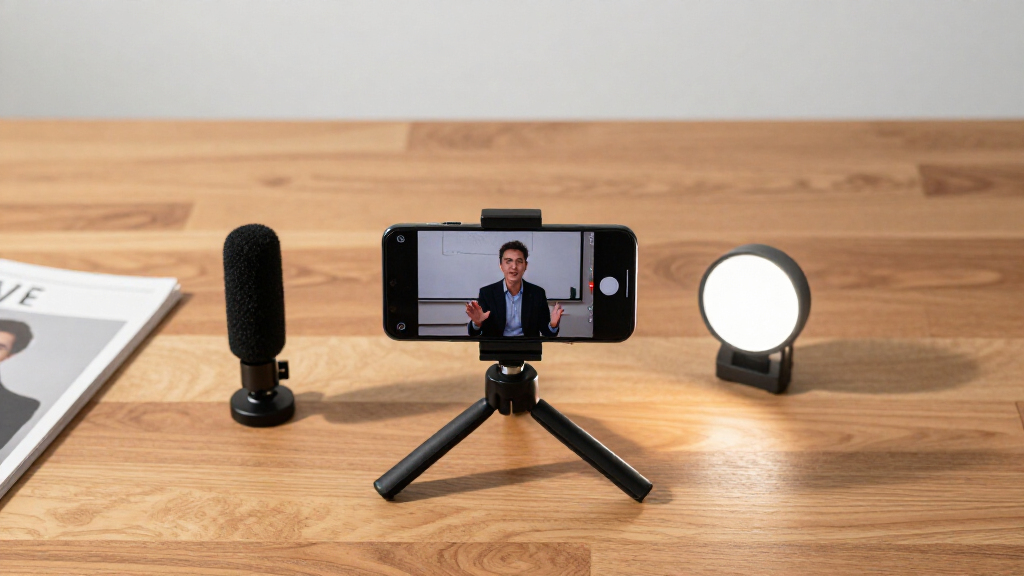
IdeaNavigator AI has outlined a proposed practice app for business owners who want to make videos but freeze when recording. The concept uses brief daily exercises and feedback on delivery, but it has not been established as a launched product or tested service; its suggested validation is a 100-owner cohort compared with a waitlist.
IdeaNavigator AI has proposed a practice app to help business owners who know video could support their marketing but freeze when they try to record. In its concept description, the company proposes two-minute daily exercises and feedback on speaking pace, filler words, eye line and energy; it reports no product launch, completed trial or measured results.
IdeaNavigator AI describes the intended audience as business owners who want to use video but get stuck in the recording process. Its concept identifies stumbling, self-criticism and repeated takes as barriers that can keep owners from publishing. The proposal argues that general public-speaking courses may not address the distinct experience of speaking alone to a camera.
The proposed minimum viable product would offer daily, two-minute prompts, beginning with reading prepared material and gradually moving toward speaking more freely. The concept says the app would analyze delivery, including pace, filler words, eye line and energy, then show changes over time. Exercises would eventually lead users toward recording real business content, with confidence streaks intended to mark continued practice.
For validation, IdeaNavigator AI proposes a 30-day cohort of 100 business owners and a comparison with a waitlist control. The concept identifies whether participants publish their first real video by day 45 as the main outcome. It also outlines a consumer subscription and a team tier for agencies coaching clients, but provides no pricing, trial results or evidence of customer demand.
IdeaNavigator AI · Proposed concept
Develop Your On-Camera Delivery With Practice
A proposed practice app for business owners who freeze when recording. The concept pairs brief daily exercises with delivery feedback, with a planned test focused on whether owners publish a real video.
01 / The audience
A narrow use case for video coaching
Knowing video could help marketing does not always make recording easy. The proposal focuses on the solo-camera moment, where every stumble can prompt another take.
Business owners
People who want to use video for their business but get stuck when it is time to record.
The recording loop
Stumbling, self-criticism and repeated takes can make it harder to finish and publish content.
Practice for the camera
The concept treats speaking alone to a camera as a distinct skill from live public speaking.
02 / Proposed workflow
From practice to published video
Short prompts build gradually toward business content. The steps describe a proposed product flow, not a verified coaching method.
Read
Begin with prepared material in a brief daily exercise.
Speak more freely
Progress toward less scripted, more spontaneous delivery.
Review delivery
Possible feedback covers pace, filler words, eye line and energy.
Record real content
Apply practice to a business video; confidence streaks would track continued effort.
03 / Validation plan
A proposed day-45 test
IdeaNavigator AI outlines a cohort compared with a waitlist. The description does not say that recruitment or testing has begun.
Business owners in a 30-day cohort
Compare participants with a waitlist control, according to the proposed validation plan.
Did owners publish a first real video?
The concept emphasizes publishing behavior rather than only app activity or a confidence rating.
Evidence status: No trial results establish that the app increases publishing. The outline does not specify group selection, outcome verification or whether the test is underway.
04 / What remains unknown
Product details are unreported
The proposal describes a workflow, but key product, technical and commercial details remain open.
No launch reported
No product name, release schedule, sign-up details or completed trial is provided.
Measures not defined
No model, scoring method, accuracy data or user testing is described for pace, filler words, eye line or energy.
Revenue ideas only
A consumer subscription and an agency team tier are proposed; pricing and customer demand are unknown.
05 / Key questions
What the concept does—and does not—tell us
Is the app available now?
No availability is reported. The description presents a product concept and proposed test, with no launch date or sign-up details.
Who is it designed for?
Business owners who want to make video but struggle with nerves, repeated takes or self-criticism while recording alone.
What might practice include?
Two-minute daily prompts moving from reading toward spontaneous speaking, with proposed feedback on delivery and progress over time.
Has it been shown to help owners publish?
No results are provided. The 100-owner cohort and day-45 publishing measure are plans, not a completed evaluation.
From Practice to Published Video
The proposal focuses on a specific gap between knowing video may be useful and actually publishing it. For a small business owner, a tool that helps turn recording practice into a finished post could address a practical marketing bottleneck. IdeaNavigator AI’s suggested day-45 measure emphasizes publishing behavior, rather than only app activity or a user’s confidence rating.
That distinction matters because feedback scores and streaks are not, by themselves, proof that owners become more effective communicators or produce content that serves their businesses. A controlled test could offer an early indication of whether structured practice changes publishing behavior compared with waiting, though the concept description does not explain how groups would be selected, how outcomes would be verified, or whether the trial is underway. The proposed team tier could offer agencies a way to coach multiple clients, but remains a business model idea rather than a demonstrated service.
Products Worth Considering

DJI Mic 3 Wireless Microphone System (2 Transmitters, 1 Receiver, Charging Case)

Bose QuietComfort True Wireless Earbuds with Active Noise Cancellation, Black

Bose QuietComfort Wireless Noise-Cancelling Headphones, Petal Pink
As an affiliate, we earn on qualifying purchases.
A Narrow Use Case for Video Coaching
IdeaNavigator AI frames the concept against pressure on businesses of many sizes to use video in marketing. Its description identifies a problem beyond knowing what to say: some owners struggle with the solo-recording setting, where there is no audience in the room and every stumble can prompt another take. The proposal distinguishes that situation from conventional public-speaking training, which may focus on live delivery instead.
The concept also relies on the possibility of using multimodal AI to assess delivery and return private feedback. The outline names pace, filler words, eye line and energy as possible measures, but does not specify a model, explain how measurements would be calculated, or report accuracy or user testing. The central product idea is therefore a proposed workflow, not evidence that automated feedback can reliably improve on-camera performance.
Product and Trial Details Unreported
IdeaNavigator AI reports no launch or trial results. Its available description does not identify a product name, release schedule, price or technical implementation. It also does not say whether the proposed 100-person cohort has recruited participants or begun collecting data.
Key questions include how the app would handle recorded video and user privacy, how it would account for different speaking styles, and whether scores would be useful across varied businesses and recording conditions. The suggested comparison with a waitlist is a plan, not a completed evaluation; no results establish that the app would cause more owners to publish. The proposed subscription and agency tier likewise remain unvalidated.
The Proposed Day-45 Test
In its concept description, IdeaNavigator AI identifies a 30-day cohort with 100 owners and a comparison with a waitlist control as the proposed next step. The outline calls for measuring how many participants publish a first real video by day 45. It gives no start date, recruitment process, evaluation protocol or publication schedule for results.
If the test proceeds, useful details would include how a published video is counted, whether the comparison groups are similar, and what happens after the measurement period. Until those details and results are available, the app should be understood as a proposed product concept, not a proven coaching tool or a currently available service.
Source: IdeaNavigator AI
Key Questions
Is the on-camera practice app available now?
No availability is reported. IdeaNavigator AI presents a product concept and a proposed test, but gives no product name, launch date or sign-up details.
Who is the proposed app for?
IdeaNavigator AI says it is aimed at business owners who want to make video but struggle with nerves, repeated takes or self-criticism when recording alone.
What would the exercises and feedback include?
According to the concept description, the proposed app would use two-minute daily prompts, moving from reading toward more spontaneous speaking. Feedback would cover pace, filler words, eye line and energy, with progress displayed over time.
Has the app been shown to help owners publish videos?
No results are provided. IdeaNavigator AI proposes evaluating a 100-owner, 30-day cohort against a waitlist and counting first published videos by day 45; its description does not say that this study has taken place.
How might the concept make money?
IdeaNavigator AI outlines a consumer subscription with an additional team tier for agencies coaching clients. Pricing and demand have not been reported.
Source: IdeaNavigator AI