TL;DR

Get business pricing on tech for your team
- Business-only prices and quantity discounts
- Tax-exempt purchasing
- Multiple users, one account, clear invoices
Google says Google.org will provide $6 million to The Asia Foundation and the Tech for Good Institute for scam-resilience work in Asia Pacific. The company also outlined Android protections and anti-scam partnerships, but the announcement does not specify funding allocations, a full program timetable or measurable targets.
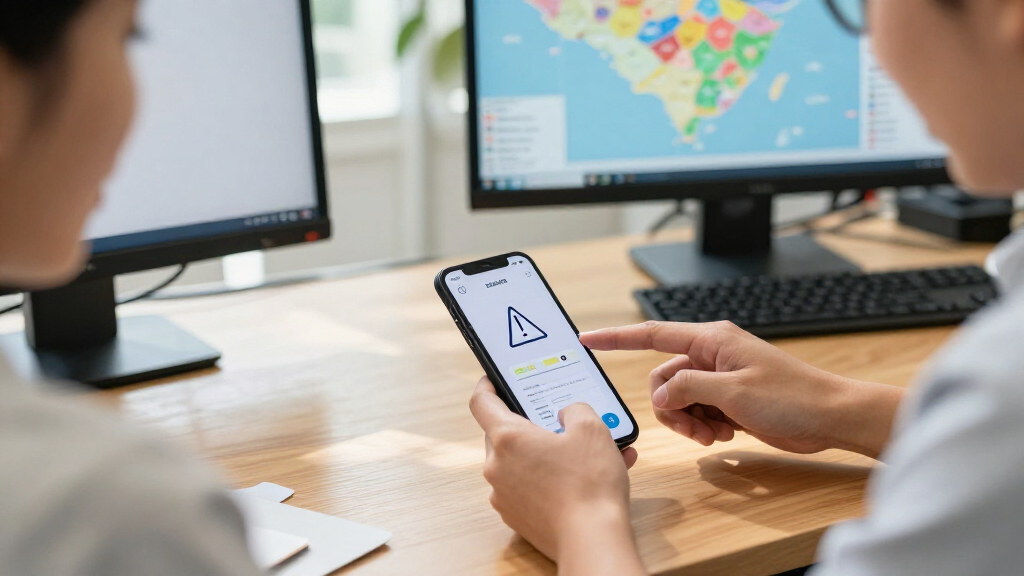
Google.org has announced $6 million in funding for The Asia Foundation and the Tech for Good Institute to support scam-prevention work across Asia Pacific, as Google also outlined new and existing device protections and industry partnerships. The initiatives are intended to help individuals and small businesses recognize scams and improve coordination against organized fraud, though the company has not provided a detailed spending breakdown or impact targets.
Google said the funded work will include community training on scam resilience, development of AI-powered defense prototypes and information for policymakers working on stronger protections. The announcement did not say how the $6 million will be divided between the two organizations, when each activity will begin or how results will be measured.
The company also described protections it says are available or in development. Android launched Fake Call Detection, designed to identify AI-driven impersonation calls, and Google said Pixel scam detection can flag potential scams in several popular messaging apps. Google said it plans to bring that Pixel feature to additional Android users later this year, without naming a release date or markets. It is also expanding Android developer verification for apps distributed outside Google Play.
On coordination, Google said it signed the Industry Accord Against Online Scams and Fraud with industry peers and helped establish the Japan Anti-Scam Alliance. Google.org also helped launch a global philanthropic collaboration focused on scams. Separately, Google said its Be Scam Ready educational game, already available in Singapore, Thailand and Taiwan, is expanding to Indonesia, Japan, Malaysia, the Philippines and Vietnam.
Funding Local Scam Defenses
The announcement combines consumer-facing technology with training and cooperation, addressing scams as a problem that can cross platforms and national borders. Local education may help people identify impersonation and other fraud attempts, while shared threat information could help organizations coordinate responses. Those are the stated aims; the announcement does not provide evidence yet that the programs have reduced scam losses.
The scale cited by Google underscores the stakes, but should be read as a reported estimate rather than an audited measure of the new initiatives’ impact. Google referenced a recent United Nations report estimating that scam losses across East Asia, Southeast Asia, Australia and New Zealand reached up to $114.1 billion in 2025. It also said more than 40% of ASEAN consumers were reported to have experienced scams. The company did not give further methodological detail in the announcement.
Products Worth Considering

DJI Osmo Mobile 7P Phone Gimbal with Mic Mini Transmitter, Infinity Black

LG UltraGear 27GX704A-B 27-inch QHD OLED Gaming Monitor

LG UltraGear 32GX850A-B 32-inch 4K UHD Glossy OLED Gaming Monitor
As an affiliate, we earn on qualifying purchases.
Google’s Existing Regional Efforts
The funding builds on Google.org support for local groups including Bamboo Builders in Singapore and the Taiwan FactCheck Center, which Google said provide specialized local training. It also complements Scam Ready ASEAN, an initiative of the ASEAN Foundation that Google describes as bringing scam-prevention resources to millions across the region.
Google’s announcement frames these projects as part of a broader response involving technology companies, public institutions, nonprofits and governments. Its account describes the company’s own products and partnerships; it does not independently evaluate their reach or effectiveness. The stated expansion of Be Scam Ready adds five countries to its existing availability in Singapore, Thailand and Taiwan.
““Tackling these highly organized networks requires a unified effort.””
Funding and Rollout Details
The announcement does not specify how the $6 million will be split, when the funded projects will start or which communities will receive training first. It also gives no evaluation plan, performance measures or expected number of participants. The timing for bringing Pixel scam detection to additional Android users is described only as later this year.
Google did not provide independent evidence that its products or partnerships have reduced fraud. Details of the threat-intelligence sharing under the industry accord, including participants and operational arrangements, are also absent from the supplied report. The United Nations estimate and consumer figure are cited without enough methodological detail here to assess how they were calculated.
Program Launches and Expansion
The next visible steps are the start of the programs funded through The Asia Foundation and the Tech for Good Institute, and the planned rollout of Be Scam Ready in five additional countries. Google has also said Pixel scam detection will reach more Android users later this year, but has not announced a date or availability list.
Further announcements may clarify the funding schedule, local partners, training coverage and how the organizations will assess results. Until those details are released, the $6 million commitment and the named product and partnership plans are confirmed as announcements, while their reach and effect remain to be established.
Key Questions
What did Google announce for scam prevention in Asia Pacific?
Google.org announced $6 million in funding for The Asia Foundation and the Tech for Good Institute to support community scam-resilience work, AI-powered defense prototypes and policy insights.
Which countries will get the Be Scam Ready game?
Google said the educational game is expanding to Indonesia, Japan, Malaysia, the Philippines and Vietnam. It is already available in Singapore, Thailand and Taiwan, according to the company.
What Android protections did Google describe?
Google cited Android Fake Call Detection for potential AI-driven impersonation calls, Pixel scam alerts for some messaging apps and expanded developer verification for apps distributed outside Google Play. It said Pixel protection would reach additional Android users later this year, without giving a date.
How will the $6 million be divided?
The announcement names The Asia Foundation and the Tech for Good Institute as recipients but does not state the amount each will receive or provide a detailed budget.
Is there evidence yet that the programs have reduced scams?
The announcement describes planned and existing measures but does not report an evaluation showing that they have reduced scam activity or losses. Their impact remains unclear.
Source: blog.google