
🔍 Read the full analysis: What Google’s Four AI Chips This Year Say About Nvidia Dependence on ThorstenMeyerAI.com

Get business pricing on tech for your team
- Business-only prices and quantity discounts
- Tax-exempt purchasing
- Multiple users, one account, clear invoices
TL;DR
Google announced two new eighth-generation TPU systems on November 9, bringing its announced total for 2026 to four. The variants target confidential inference and long-context workloads, but are not available yet, and Google’s performance figures have not been independently tested.
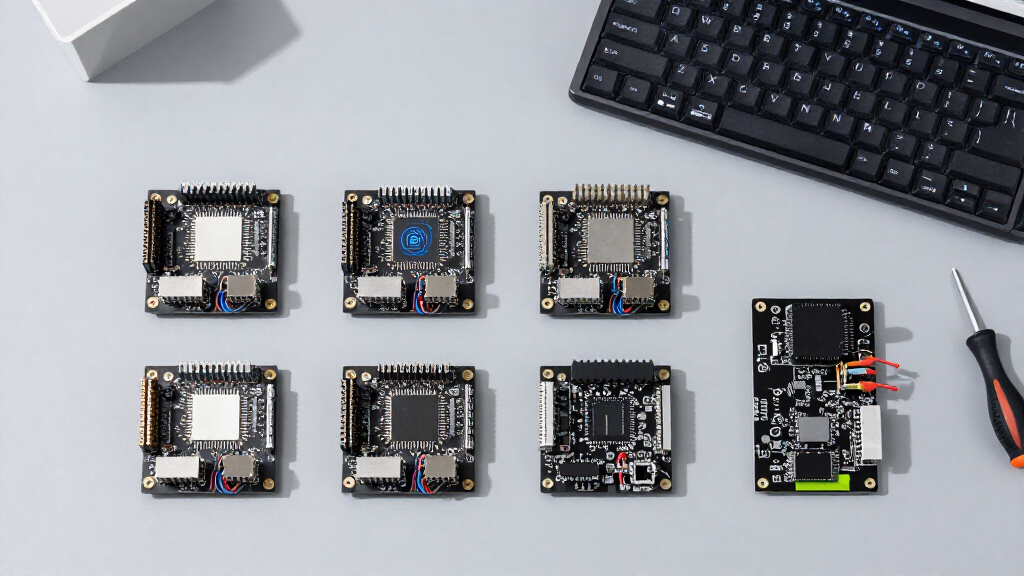
Google announced two new versions of its eighth-generation AI chips on November 9, bringing its 2026 TPU lineup to four systems and sharpening its bid to give cloud customers an alternative to Nvidia GPUs. The TPU 8tx is designed for confidential computing, while the TPU 8i Max targets workloads that need to handle very long inputs; neither is available yet.
The two additions build on chips Google introduced at its Cloud Next conference in April: TPU 8t for training AI models and TPU 8i for inference, the process of generating responses from trained models. Google says the new systems use existing silicon in different configurations rather than entirely new chip designs. Google chief technologist for AI and infrastructure Amin Vahdat told Bloomberg the variants respond to customer requests.
Google describes the TPU 8tx as a system for secure, confidential inference, aimed at regulated businesses and governments. It says the system protects data and model weights while they are being used, and claims up to two times lower latency than TPU 8t with a near-zero performance penalty. The company says the system uses the same silicon as TPU 8t and pairs it with fifth-generation AMD EPYC processors.
The TPU 8i Max combines two TPU 8i chips in one package. Google says that configuration doubles compute, on-chip SRAM and high-bandwidth memory bandwidth compared with TPU 8i, without increasing the existing rack footprint. The company has positioned it for large context windows, including applications that process extensive codebases or long video. It has not published absolute performance figures for either new system.
Google’s Four AI Chips and Nvidia Dependence
Google expanded its eighth-generation TPU lineup to four systems in 2026. The new variants target confidential inference and long-context workloads, but their availability and real-world performance remain unproven.
Two targeted additions
Google says both systems reconfigure existing silicon to address customer requests.
TPU 8tx
Designed to protect data and model weights during use, including for regulated businesses and governments.
TPU 8i Max
Combines two TPU 8i chips in one package for workloads such as extensive codebases and long video.
From two systems to four
The April lineup split training and inference; the new variants add specialized configurations.
Another route to AI compute
TPUs could give cloud customers another option, though switching platforms takes work.
- More choice in how companies obtain computing capacity.
- Oracle’s planned cloud offering could make TPUs available beyond Google Cloud.
- Specialized configurations address distinct customer workloads.
- Pricing, supply and regional availability.
- Independent performance on customer workloads.
- Engineering effort and software changes needed to move from Nvidia GPUs.
A Second Route to AI Compute
For companies building or running AI services, a credible alternative to Nvidia could create more choice in how they obtain computing capacity. Google says nearly 100 customers use TPUs, while Alphabet has described a supply-constrained environment. Oracle plans to offer Google TPUs through its cloud starting in calendar year 2027, potentially making them available beyond Google Cloud.
That does not mean customers can quickly replace Nvidia hardware. Moving workloads between chip platforms can require engineering work, software changes and testing, and hardware availability alone does not establish that a system is more cost-effective. Google’s announcement signals a broader strategy: instead of waiting years for a wholly new processor design, it can reconfigure a chip system around particular customer needs. Whether this improves access or bargaining power will depend on availability, price and real-world performance.
Products Worth Considering

Apple MacBook Air 13.6-inch Laptop with M5 Chip, 16GB Memory, 512GB SSD, Midnight

Sony WH-1000XM5 Premium Noise Cancelling Wireless Headphones – Midnight Blue

DJI Mini 4K Drone with 4K UHD Camera
As an affiliate, we earn on qualifying purchases.
From Two Systems to Four
Google introduced TPU 8t and TPU 8i in April 2026, splitting its eighth-generation family between training and inference. Google says the TPU 8t can connect into superpods of up to 9,600 chips. Its published specifications include 216 GB of high-bandwidth memory and 12.6 petaflops of peak FP4 compute. Google lists TPU 8i at 288 GB of high-bandwidth memory and 10.1 petaflops, with more on-chip SRAM and memory bandwidth than TPU 8t.
The distinction reflects different workload demands: training involves developing models, while inference serves model outputs to users. For long prompts and concurrent requests, moving data through memory can be a limiting factor, not just raw compute. Google says its new 8i Max configuration is designed to address that pressure. The company also points to TorchTPU, along with support for the open-source inference engines vLLM and SGLang, as part of its effort to make TPU adoption easier for developers.
Google claims its base TPU 8t offers up to a 2.7-times performance-per-dollar improvement over the previous generation for large-scale training, and that TPU 8i offers up to an 80% improvement for inference. Those are company-reported comparisons, not independent tests of the new systems. Google’s chip pace has also accelerated: Bloomberg reported that the company previously released a new AI processor about every two years.
“This is the first time we have introduced four TPU systems in a single year.”
— Google, in its November 9 announcement
Availability and Benchmarks Remain Open
The new variants are listed by Google as coming soon, and Vahdat told Bloomberg they are expected in 2027. Google has not announced prices or the regions where they will be offered. It also has not released independent benchmarks or absolute specifications for TPU 8tx and TPU 8i Max, so their practical performance and cost compared with Nvidia systems remain unknown.
Google’s figures, including its latency and performance-per-dollar claims, come from the company. The source material does not establish how those results were measured or whether they will hold across customer workloads. It is also unclear how much engineering effort customers will need to move existing software from Nvidia GPUs to TPUs, despite Google’s software compatibility work.
Watch for 2027 Cloud Rollouts
The next concrete milestones are Google’s rollout of the two systems in 2027 and Oracle’s planned start of TPU cloud offerings in the same calendar year. Customers will need published pricing, regional availability and tests on their own workloads to judge whether the chips can reduce dependence on Nvidia in practice.
Until those details emerge, Google’s announcement confirms an expanded product strategy, not a proven shift in market share. The key test will be whether the specialized systems can be obtained at scale and deliver useful performance for the tasks Google is targeting.
Key Questions
What did Google announce?
Google announced TPU 8tx for confidential inference and TPU 8i Max for workloads with very long inputs. They join the TPU 8t and TPU 8i systems announced in April.
Are the new TPUs available now?
No. Google lists both new variants as coming soon. Vahdat told Bloomberg they are expected in 2027; Google has not announced prices or regions.
Has Google shown that the new chips outperform Nvidia GPUs?
No independent comparison is included in the source material. Google’s performance and latency figures are vendor claims, and the new variants have not been independently tested.
Why is Google making specialized TPU versions?
The company says the systems address specific customer needs: confidential computing for regulated workloads and more memory and compute for long-context inference. Reconfiguring existing silicon can be faster than designing an entirely new chip, according to Google.
Could this reduce dependence on Nvidia?
It could offer buyers another source of AI compute, especially as Oracle plans to offer Google TPUs in its cloud from 2027. The degree of any shift remains unclear because pricing, supply, independent performance and migration costs are not yet known.
Source: ThorstenMeyerAI.com