AI transcription software can turn meetings, interviews, and dictation into searchable text, but the right choice depends on how you capture audio and what you need to do with the transcript. My best overall pick is HiDock H1E for buyers who want meeting capture paired with a useful desktop hub; CortexaNote stands out for clinical workflows, while Express Scribe Pro suits people who manually transcribe recordings with a foot pedal. The main tradeoffs are automated convenience versus hands-on control, dedicated recording hardware versus software, and specialized workflow features versus broad flexibility. Some products in this lineup are transcription tools, while others are recorders or accessories that support transcription rather than replace it. Read on for the full breakdown and guidance on matching each option to your work.

Get business pricing on tech for your team
- Business-only prices and quantity discounts
- Tax-exempt purchasing
- Multiple users, one account, clear invoices
Key Takeaways
- The lineup spans different kinds of tools: HiDock H1E, the voice recorders, and Fieldy 3 focus on capturing audio, while Express Scribe and Philips SpeechExec are software for managing playback and transcription work.
- HiDock H1E is the broadest meeting-focused option: its note-taking role and docking features may suit a desk-based workflow better than a standalone recorder, but buyers who only need transcript editing may not need the added hardware.
- Express Scribe Pro is the hands-on transcription choice: its Infinity foot pedal bundle supports controlled playback, a different need from automatic meeting transcription or summaries.
- Specialized workflows can outrank feature breadth: CortexaNote’s stated EHR import focus is relevant to clinicians, while general-purpose recording tools may require extra steps to fit clinical documentation.
- Several entries overlap or have limited supplied detail: the two Express Scribe listings and three Express Scribe-branded listings need careful version and bundle comparison, and recorder claims should be checked for supported languages, export options, and transcription terms before purchase.
| Express Scribe Pro Transcription Software with Infinity IN-USB-3 USB Foot Pedal |  | Best for Hands-Free Desktop Transcription | Included items: Express Scribe Professional user license and Infinity IN-USB-3 USB transcription foot pedal | Hardware interface: USB 3.0 | Compatible devices: Personal computer | VIEW LATEST PRICE | See Our Full Breakdown |
| HiDock H1E AI Meeting Note-Taker and 8-in-1 Docking Station |  | Best for Meeting Transcription at a Desk | Transcription languages: 75 | Storage: 32 GB | Battery life: 4 hours | VIEW LATEST PRICE | See Our Full Breakdown |
| AI VoiceWriter Dictation and Writing Assistant with USB Dongle |  | Best for Dictation and AI-Assisted Editing | Dictation languages: 33 | Languages with AI features: Chinese, English, Japanese, Korean, French, German, Spanish, Italian, and Swedish | Compatible operating systems: Windows 10 or later, macOS 13 or later, iOS 15 or later, and Android 9.0 or later | VIEW LATEST PRICE | See Our Full Breakdown |
| Yunseity AI Voice Hub USB Adapter for Transcription and Translation |  | Best for Lightweight Plug-and-Play Voice Tools | Connectivity: USB | Setup: Plug and play; no drivers required | Compatible devices: PCs, Chromebooks, Android tablets, and gaming consoles | VIEW LATEST PRICE | See Our Full Breakdown |
| OLZO AI Voice Recorder with Transcription and Summaries |  | Best for Long-Session Recording and Flexible Exports | Storage: 16 GB | Maximum recording time: Up to 45 hours | Maximum single recording: Up to 10 hours | VIEW LATEST PRICE | See Our Full Breakdown |
| Vobot AI Voice Recorder with Transcription, Summaries, and NFC Business Card |  | Best for Calls and In-Person Meetings | Microphone system: Bone-conduction mic for calls plus dual noise-reduction mics for meetings | Microphone pickup range: Up to 16 ft | Transcription languages: 145 | VIEW LATEST PRICE | See Our Full Breakdown |
| Philips SpeechExec Transcribe Software, 2-Year Subscription, Version 11.5 |  | Best for Dictation Workflows | Product type: Transcription software kit | Subscription term: 2 years | Software version: 11.5 | VIEW LATEST PRICE | See Our Full Breakdown |
| Tupuniu AI Voice Recorder with 64GB Storage and Transcription |  | Best for Multilingual On-Device Recording | Storage: 64 GB | Display: 1.3-inch OLED | Connectivity: Bluetooth 5.0 and USB-C | VIEW LATEST PRICE | See Our Full Breakdown |
| CortexaNote AI Voice Recorder for Clinicians with One-Click EHR Import |  | Best for Clinical Documentation | Model: N1 | Microphone: Built-in dual MEMS array; stereo operation | Storage: 64 GB | VIEW LATEST PRICE | See Our Full Breakdown |
| AI Voice Recorder with Auto Transcription and Real-Time Translation |  | Best for Long Recording Sessions | Storage: 32 GB | Microphones: One bone-conduction mic and four omnidirectional microphones | Microphone pickup range: Up to 5 meters | VIEW LATEST PRICE | See Our Full Breakdown |
| Fieldy 3 Wearable AI Voice Recorder, Black |  | Best Wearable AI Transcription | Form factor: Wearable; watch or pendant | Microphone: Built-in mono, noise-filtering | Languages: 100+ | VIEW LATEST PRICE | See Our Full Breakdown |
| Express Scribe Transcription Software |  | Best for Variable-Speed Manual Transcription | Playback: Variable speed with constant pitch | Supported media: Audio and video | File compatibility: Most formats, including encrypted dictation files | VIEW LATEST PRICE | See Our Full Breakdown |
| Express Scribe Transcription Software | | Best for Keyboard-First Transcription | Playback: Variable speed with constant pitch | Supported media: Audio and video | File compatibility: Most formats, including encrypted dictation files | VIEW LATEST PRICE | See Our Full Breakdown |
| Express Scribe Pro Transcription Software for PC and Mac |  | Best for Established File-Delivery Workflows | Compatibility: PC and Mac | Playback: Variable speed with constant pitch | Supported media: Audio and video | VIEW LATEST PRICE | See Our Full Breakdown |
More Details on Our Top Picks
Express Scribe Pro Transcription Software with Infinity IN-USB-3 USB Foot Pedal
This kit suits people who transcribe existing recordings at a desk and want physical control over playback. The Infinity USB foot pedal lets you pause, rewind, and manage audio without taking your hands off the keyboard, while Express Scribe Pro adds variable-speed playback, multichannel control, video support, and file management. That workflow is different from the OLZO AI Voice Recorder, which records meetings and produces AI transcripts and summaries rather than focusing on manual transcription control. The tradeoff is that this is not an AI transcription service: the included software helps you work through audio, but the description does not promise automated speech recognition. You’ll also need a computer with USB, and the supplied weight details conflict. Pick it for hands-on accuracy and playback control, not automatic transcripts.
Pros:- Foot pedal supports hands-free audio playback control.
- Variable-speed playback helps transcribers work at a pace suited to the recording.
- Supports multichannel control, video playback, and file management.
- Professional user license is included without a subscription.
Cons:- Does not list AI speech recognition or automatic transcript generation.
- Requires a computer with a USB connection.
- Product information gives conflicting foot pedal weights.
Best for: Professional transcribers who work from audio or video files on a computer and want hands-free playback control.
Not ideal for: Buyers who need automatic speech-to-text, meeting summaries, or a portable recording device rather than desktop transcription tools.
- Included items:Express Scribe Professional user license and Infinity IN-USB-3 USB transcription foot pedal
- Hardware interface:USB 3.0
- Compatible devices:Personal computer
- Supported audio formats:MP3, WAV, WMA
- Software features:Variable-speed playback, multichannel control, video playback, and file management
- Subscription:Not required
- Warranty:1 year
Our verdict“Choose this kit for manual, computer-based transcription where a responsive foot pedal matters more than AI-generated text.”
HiDock H1E AI Meeting Note-Taker and 8-in-1 Docking Station
The HiDock H1E is the most meeting-focused option here: it combines recording, transcription in 75 languages, and AI-generated summaries with an 8-in-1 dock for a computer workspace. VoiceMarks give users a way to flag important moments while recording, and bidirectional noise cancellation is aimed at clearer calls. Compared with the OLZO AI Voice Recorder, HiDock adds substantial desk connectivity, including Ethernet and a 4K HDMI output; OLZO instead emphasizes a standalone recorder, longer stated recording capacity, and a broad export list. HiDock’s tradeoff is that recording and transcription need to be activated in the HiNotes app, and advanced functions such as speaker identification require a Pro membership. Its four-hour battery life also makes it less suited to long stretches away from power. I’d shortlist it for app-based meeting notes integrated into a docked work setup.
Pros:- Transcribes in 75 languages and generates AI meeting summaries.
- VoiceMarks help flag useful moments for later review.
- Combines HDMI, Ethernet, USB-C, and USB-A connectivity in one dock.
- Noise cancellation is designed for clearer two-way calls.
Cons:- Recording and transcription must be activated in the HiNotes app.
- Speaker identification and cross-platform note management require a Pro membership.
- Listed battery life is four hours, limiting use away from a power source.
Best for: Remote and hybrid workers who want meeting transcripts and summaries alongside a multiport computer dock.
Not ideal for: People who need a standalone recorder with long battery endurance or access to every feature without a Pro membership.
- Transcription languages:75
- Storage:32 GB
- Battery life:4 hours
- Digital recording time:1,000 hours
- Docking ports:4K@60Hz HDMI, 1Gbps Ethernet, 3 USB-C 3.2, 2 USB-A 3.2, and DC-In
- USB data transfer:Up to 5Gbps
- Microphone and audio:Built-in mono microphone with noise cancellation; MP3 recording
- Data privacy:GDPR compliant; customer data is not used to train AI
Our verdict“Choose HiDock if you want AI meeting notes built into a connected desk setup and can work within its app and membership limits.”
AI VoiceWriter Dictation and Writing Assistant with USB Dongle
VoiceWriter is aimed at people who want to speak text directly into desktop apps, then refine that text with AI proofreading, rewriting, and formatting. Its 33-language dictation support and phone-as-microphone option give it a different job from the HiDock H1E, which focuses on capturing meetings and producing summaries. VoiceWriter’s appeal is the writing loop: dictate into a text field and use editing tools without treating every recording as a separate meeting file. The tradeoff is that its AI features cover only nine listed languages, fewer than its dictation languages, and setup depends on compatible desktop and mobile operating systems. The listed digital recording time is under an hour, so this is not a long-session recorder like the OLZO AI Voice Recorder. I’d choose it for drafting and editing by voice, not archiving extended conversations.
Pros:- Dictation can enter text into desktop apps with text fields.
- AI tools support proofreading, rewriting, and formatting.
- A mobile app can use a phone microphone for desktop dictation.
- Supports dictation in 33 languages and is described as including lifetime updates.
Cons:- AI features are listed for only nine languages, fewer than the dictation languages.
- Requires compatible desktop and mobile operating systems.
- Listed digital recording time is less than one hour.
Best for: Writers and office workers who dictate into desktop apps and want AI help polishing text in supported languages.
Not ideal for: Users who need long-form meeting recording, broad AI editing language coverage, or a recorder that works independently of a computer and phone.
- Dictation languages:33
- Languages with AI features:Chinese, English, Japanese, Korean, French, German, Spanish, Italian, and Swedish
- Compatible operating systems:Windows 10 or later, macOS 13 or later, iOS 15 or later, and Android 9.0 or later
- Compatible devices:Laptop and desktop
- Hardware interface:USB
- Microphone form factor:Lavalier
- Digital recording time:Less than 1 hour
- Warranty:1 year
Our verdict“Pick VoiceWriter for voice-driven drafting and editing, but choose a dedicated meeting recorder for lengthy captured conversations.”
Yunseity AI Voice Hub USB Adapter for Transcription and Translation
Yunseity takes a pared-back approach: plug in a USB adapter for real-time voice-to-text, multilingual translation, document conversion, and access to ChatGPT and DeepSeek AI. Its driver-free setup and support for PCs, Chromebooks, Android tablets, and gaming consoles make it broader in stated device reach than AI VoiceWriter, which lists specific operating-system versions and pairs desktop dictation with a mobile app. But Yunseity provides much less detail about how the transcription works: supported languages, connection requirements, and operating-system compatibility are not specified. That makes it hard to judge whether it will fit a particular device or language workflow before purchase. Unlike the HiDock H1E, it is not presented as a recorder with storage and meeting-summary features. I’d treat it as a compact voice-tool adapter for buyers comfortable with those unanswered compatibility questions.
Pros:- Offers real-time voice-to-text and multilingual voice translation.
- Plug-and-play setup is described as requiring no drivers.
- Lightweight design is suited to portable use.
- Lists compatibility with PCs, Chromebooks, Android tablets, and gaming consoles.
Cons:- Supported transcription and translation languages are not specified.
- Operating-system and connection requirements are not detailed.
- Does not list onboard storage or recording duration.
Best for: People who want a lightweight USB voice-to-text and translation tool for a compatible PC, Chromebook, or Android tablet.
Not ideal for: Buyers who need confirmed language coverage, detailed system compatibility, onboard recording, or documented meeting-summary functions.
- Connectivity:USB
- Setup:Plug and play; no drivers required
- Compatible devices:PCs, Chromebooks, Android tablets, and gaming consoles
- Voice features:Real-time transcription, multilingual translation, and AI integration
- Document feature:Document conversion
- Item weight:1.45 ounces
- Package dimensions:4.72 x 1.97 x 0.79 inches
Our verdict“Consider Yunseity for a simple, portable USB voice tool only if its unspecified language and device requirements fit your setup.”
OLZO AI Voice Recorder with Transcription and Summaries
OLZO is the strongest fit in this group for capturing longer conversations on a dedicated device, then turning them into searchable material with speaker labels, summaries, and customizable templates. It records for up to 45 hours, has 16 GB of storage, and supports syncing over Wi-Fi or Bluetooth, with exports including text, subtitles, PDF, Markdown, and audio formats. Compared with the HiDock H1E, OLZO is more recorder-oriented and offers a broader stated language count—over 100 languages with translation—while HiDock adds a computer dock and specific 4K and Ethernet ports. OLZO’s allowance of 1,200 transcription and summary minutes per month is a meaningful limit for frequent users, and it does not support direct phone-call recording. The device also lacks a headphone jack. I’d favor it for in-person interviews, lectures, and meetings where flexible exports matter.
Pros:- Provides AI transcripts, summaries, speaker labels, and customizable templates.
- Supports over 100 languages with translation.
- Offers up to 45 hours of recording and 16 GB of storage.
- Syncs over Wi-Fi or Bluetooth and exports several text, document, and audio formats.
Cons:- Does not support direct phone-call recording.
- Monthly transcription and summary allowance is 1,200 minutes.
- No headphone jack is included.
Best for: Interviewers, students, and meeting-heavy professionals who want a standalone recorder with AI transcripts, summaries, and multiple export options.
Not ideal for: People who need direct phone-call recording, a headphone jack, or more than the stated monthly transcription and summary allowance.
- Storage:16 GB
- Maximum recording time:Up to 45 hours
- Maximum single recording:Up to 10 hours
- Monthly transcription and summary allowance:1,200 minutes
- Language support:Over 100 languages with translation
- Microphones:Built-in dual ECM stereo microphones; pickup range up to 20 ft (6 m)
- Connectivity:Wi-Fi 802.11 b/g/n, Bluetooth 5, and USB-C
- Export formats:.txt, .srt, .pdf, .md, .m4a, and .mp3
- Warranty:1 year
Our verdict“Choose OLZO for recording and organizing in-person conversations with AI, provided its monthly processing allowance covers your workload.”
Vobot AI Voice Recorder with Transcription, Summaries, and NFC Business Card
The Vobot is the clearest fit here for people who need one recorder to cover both phone calls and face-to-face meetings. Its hybrid three-microphone setup pairs a bone-conduction mic for calls with two noise-reduction mics for room audio, a more purpose-specific approach than the Tupuniu recorder’s built-in microphone. It can transcribe live in 145 languages, then turn recordings into summaries, action items, and mind maps, which gives busy users more than a raw transcript to sort through.
The slim aluminum device attaches to a phone with its magnetic ring, and its stated 30-hour recording time suits frequent use. The tradeoff is ongoing service access: the included 600 AI minutes per month last for the first year, while extra transcription requires a subscription or minute packs. Call recording also requires consent, and buyers who want a standalone recorder with a display may prefer Tupuniu.
Pros:- Dedicated microphone setup for phone calls and in-person conversations.
- Live transcription in 145 languages with summaries, action items, and mind maps.
- Compact aluminum body attaches to a phone using the included magnetic ring.
- Supports sentence-level replay and exports including MP3, PDF, and DOCX.
Cons:- Transcription beyond the included first-year monthly allowance requires a paid plan or minute packs.
- Call recording requires obtaining consent.
- Mono microphone operation offers less channel separation than a stereo recorder.
Best for: People who regularly record both phone conversations and in-person meetings and want transcripts plus follow-up notes.
Not ideal for: Buyers who need transcription without ongoing plan costs, or who want an onboard screen to manage recordings.
- Microphone system:Bone-conduction mic for calls plus dual noise-reduction mics for meetings
- Microphone pickup range:Up to 16 ft
- Transcription languages:145
- Included AI minutes:600 per month for the first year
- Recording time:Up to 30 hours
- Storage:8 GB; stores about 60,000 minutes of audio
- Dimensions and weight:0.16 × 2.15 × 3.37 in; 33.4 g
- Export formats:MP3, PDF, DOCX, and more
Our verdict“Choose the Vobot if capturing calls as well as room conversations matters more than avoiding a paid transcription plan.”
Philips SpeechExec Transcribe Software, 2-Year Subscription, Version 11.5
Philips SpeechExec is the outlier in this group: it is a workflow tool for dictation and transcription teams, not a pocket recorder that captures meetings and generates AI summaries. It organizes files and documents as work moves between authors and transcriptionists, while status monitoring helps users see where a job sits. That makes it more relevant to an established office process than the Vobot or Tupuniu, both of which focus on capturing audio and producing automated notes.
The two-year subscription and defined Windows environment may suit a team standardizing its dictation handoff, but buyers should not mistake it for an all-purpose AI meeting assistant. The provided details do not describe automatic speech recognition, language support, or summary generation. Its Windows 10 Pro or Enterprise 64-bit requirement also rules out many individual users and mixed-device teams. I would choose it for file coordination, not for recording or AI-generated meeting notes.
Pros:- Organizes dictation files and corresponding documents.
- Supports handoffs between authors and transcriptionists.
- Lets users monitor work status.
- Provides a defined two-year subscription period.
Cons:- Requires Windows 10 Pro or Enterprise, 64-bit.
- Product details do not specify automated transcription, summaries, or supported languages.
- Does not provide the portable audio-capture hardware included with Vobot and Tupuniu.
Best for: Windows-based offices that already exchange dictation files between authors and transcriptionists and need workflow status tracking.
Not ideal for: Individuals seeking live AI transcription, meeting summaries, mobile recording, or support outside Windows 10 Pro or Enterprise 64-bit.
- Product type:Transcription software kit
- Subscription term:2 years
- Software version:11.5
- Supported operating system:Windows 10 Pro or Enterprise, 64-bit
- Workflow:Dictation file and document organization between authors and transcriptionists
- Status monitoring:Tracks work status
- Country of origin:Austria
Our verdict“Pick SpeechExec when dictation handoffs and status tracking are the need, not automatic meeting transcription.”
Tupuniu AI Voice Recorder with 64GB Storage and Transcription
Tupuniu suits buyers who want a standalone recorder with a screen and a wide set of language tools. It combines real-time transcription and translation with summaries, mind maps, speaker identification, and live interpretation subtitles. Its listed support for 255 languages gives it a broader language range than Vobot’s 145, while the 1.3-inch OLED display and 64 GB of storage make recording and file handling feel more device-centered than Vobot’s phone-attached design.
That breadth comes with a meaningful limit: the recorder is listed for 10 hours of battery life and digital recording time, so it is less suited to long sessions than Vobot’s stated 30 hours or the other recorder’s 50-hour claim. The first-year transcription allowance is 600 minutes monthly, and professional dictionaries or unlimited transcription need a paid plan. I would favor Tupuniu for multilingual conversations and local controls, but not for marathon recording days.
Pros:- Supports 255 languages, including live interpretation subtitles.
- Combines transcription, translation, summaries, mind maps, and speaker identification.
- 64 GB storage and a 1.3-inch OLED display support standalone use.
- Bluetooth 5.0 and USB-C transfer with PDF, TXT, DOCX, and SRT exports.
Cons:- Listed battery life and digital recording time are both 10 hours.
- Monthly transcription allowance is limited to 600 minutes during the first year.
- Professional dictionaries and unlimited transcription require a paid plan.
Best for: Multilingual interviewers and travelers who want a screen-equipped recorder with transcription, translation, and speaker identification.
Not ideal for: People recording long events or seeking unlimited transcription without a paid plan.
- Storage:64 GB
- Display:1.3-inch OLED
- Connectivity:Bluetooth 5.0 and USB-C
- Transcription allowance:600 minutes per month for the first year
- Language support:255 languages
- Battery life:10 hours
- Digital recording time:10 hours
- Export formats:PDF, TXT, DOCX, and SRT
Our verdict“Choose Tupuniu for broad language coverage and an onboard display, but look to Vobot or the 50-hour recorder for longer sessions.”
CortexaNote AI Voice Recorder for Clinicians with One-Click EHR Import
CortexaNote earns a distinct place for clinical documentation, where a general meeting transcript is not enough. It turns recorded visits into structured SOAP note drafts using 144 specialty templates and medical lexicons, with a one-click import path for compatible EHR workflows. That is a more focused clinical output than the general summaries from Vobot or Tupuniu, and its dual MEMS microphones are designed to capture voices across an exam room.
Offline recording and 64 GB of local storage can help when connectivity is unreliable, while AES-128 encryption adds a stated security measure. Still, the AI draft is not a finished medical record: clinicians must review it, and EHR import depends on workflow compatibility. Its listed recording time is eight hours, shorter than the Vobot’s 30-hour claim, and the device has no headphone jack. I’d choose it for clinical note structure, not general-purpose meeting transcription.
Pros:- Creates structured SOAP note drafts with 144 specialty templates and medical lexicons.
- Supports offline capture with 64 GB of local storage.
- Dual MEMS microphones are designed for voices across an exam room.
- Offers one-button recording and AES-128 encryption.
Cons:- AI-generated notes require clinician review.
- One-click EHR import is limited to compatible workflows.
- Eight-hour recording time and no headphone jack may limit some workflows.
Best for: Clinicians who want visit recordings converted into specialty-specific SOAP note drafts and can review notes before adding them to compatible EHR workflows.
Not ideal for: General meeting users, clinicians whose EHR workflow is unsupported, or anyone expecting AI drafts to be ready for filing without review.
- Model:N1
- Microphone:Built-in dual MEMS array; stereo operation
- Storage:64 GB
- Recording time:8 hours
- Note templates:144 specialty templates
- Encryption:AES-128
- EHR workflow:One-click import to compatible workflows
- Connectivity and compatibility:USB Type-C; laptop and smartphone
Our verdict“Choose CortexaNote for clinical SOAP-note drafting when its EHR workflow fits and clinician review is part of the process.”
AI Voice Recorder with Auto Transcription and Real-Time Translation
This card-sized recorder stands out on claimed continuous recording time: up to 50 hours, more than the Vobot’s 30-hour figure and far beyond the Tupuniu’s listed 10 hours. Its 32 GB of local storage and standalone recording mean it can capture audio without a phone or Wi-Fi connection; transcription and AI meeting summaries come later through the companion app. The combination of one bone-conduction mic and four omnidirectional microphones gives it a different capture setup from Vobot’s call-and-meeting-focused hybrid system.
For multilingual use, it offers real-time translation in 140-plus languages, plus NFC business card sharing and multilingual group chats. The tradeoff is app dependence: transcription, summaries, and several translation features require the companion app, so this is not a fully self-contained transcription workstation. Voice cloning also requires at least 30 seconds of source audio. I’d shortlist it for long capture sessions, not for buyers who want transcripts without app-mediated features.
Pros:- Claims up to 50 hours of continuous recording.
- Records standalone without Wi-Fi or a smartphone connection.
- Supports transcription, AI meeting summaries, templates, and translation through the companion app.
- Slim 40 g design includes Bluetooth, Wi-Fi, and NFC connectivity.
Cons:- Transcription, summaries, and several translation features require the companion app.
- Voice cloning needs at least 30 seconds of recorded or uploaded audio.
- Uses a nonstandard included battery.
Best for: People who need long standalone recordings for meetings, interviews, or travel and are comfortable using a smartphone app for transcripts and summaries.
Not ideal for: Users who need transcription and summaries directly on the recorder or want to avoid companion-app dependence.
- Storage:32 GB
- Microphones:One bone-conduction mic and four omnidirectional microphones
- Microphone pickup range:Up to 5 meters
- Continuous recording time:Up to 50 hours
- Approximate recording capacity:Up to 2,270 hours
- Translation languages:140+
- Connectivity:Bluetooth 5, Wi-Fi, and NFC
- Dimensions and weight:54 × 86 × 5.3 mm; 40 g
Our verdict“Pick this recorder for long standalone capture sessions if you are willing to use its companion app for AI transcription and summaries.”
Fieldy 3 Wearable AI Voice Recorder, Black
Fieldy 3 is the most hands-off option here: it captures conversations, then turns them into searchable, speaker-labeled transcripts, summaries, and action items. That makes it a better fit for people who want organized notes without manually controlling playback, unlike Express Scribe, which helps you transcribe existing files but does not provide AI-generated notes. Its wearable form, silent haptic alerts, and calendar and task integrations suit recurring meetings and conversations on the move. Support for 100+ languages also gives it broader language coverage than the other products in this group. The tradeoffs are meaningful: the free plan allows 150 transcription minutes per month, and its listed digital recording time is six hours at 16 kHz. It stores text rather than audio, which may suit some privacy preferences but limits access to original recordings.
Pros:- Creates searchable transcripts, speaker-labeled notes, summaries, and action items.
- Supports more than 100 languages.
- Wearable design, noise-filtering microphone, and silent haptic alerts support discreet capture.
- Syncs with Google and Outlook calendars and supported task apps.
Cons:- The free Basic plan is capped at 150 transcription minutes per month; more access requires an optional subscription.
- Digital recording time is listed as six hours at 16 kHz.
- Stores text rather than audio, so users cannot retain original recordings through the stated storage approach.
Best for: People who attend frequent in-person or online meetings and want searchable AI notes, action items, and calendar-linked follow-up.
Not ideal for: People who need to archive and replay original audio, or who transcribe more than 150 minutes monthly without a paid plan.
- Form factor:Wearable; watch or pendant
- Microphone:Built-in mono, noise-filtering
- Languages:100+
- Connectivity:Bluetooth
- Memory:1 GB
- Battery life:168 hours
- Digital recording time:6 hours at 16 kHz
- Free plan:150 transcription minutes per month, AI chat, and reminders
- Privacy:HIPAA-compliant; encrypted in transit and at rest; stores text, not audio
Our verdict“Choose Fieldy 3 for wearable, AI-generated meeting notes and follow-up, but skip it if preserving original audio or avoiding subscription limits matters most.”
Express Scribe Transcription Software
Express Scribe is a playback tool, not an AI transcription service, so it belongs on this list for people who want control over manual transcription rather than automated notes. Variable-speed playback with constant pitch lets you slow difficult passages without making voices sound unnaturally low, while foot-pedal support and hotkeys reduce interruptions as you type in another application. Compared with Fieldy 3, it does not capture conversations or generate searchable transcripts, summaries, or action items; its strength is helping a transcriber work through recordings already on hand. It handles audio and video, including many formats and encrypted dictation files. The main tradeoff is that the product depends on a separate transcription workflow, and foot-pedal control works only with compatible professional USB controllers.
Pros:- Variable-speed playback maintains constant pitch.
- Plays both audio and video files.
- Supports many formats, including encrypted dictation files.
- Hotkeys and compatible USB foot pedals can control playback while typing elsewhere.
Cons:- Does not provide the AI transcription, summaries, or action-item features offered by Fieldy 3.
- Foot-pedal compatibility is limited to supported professional USB controllers.
Best for: Transcriptionists who type transcripts themselves and want variable-speed playback with hotkey or compatible foot-pedal control.
Not ideal for: People seeking automatic speech-to-text, AI summaries, or a device that records and organizes meetings.
- Playback:Variable speed with constant pitch
- Supported media:Audio and video
- File compatibility:Most formats, including encrypted dictation files
- Playback controls:Compatible professional USB foot pedals and hotkeys
- Platform:Download
- Workflow:Playback while typing in other software
Our verdict“Pick Express Scribe when you transcribe recordings manually and need precise playback control, not when you want AI to produce the transcript.”
Express Scribe Transcription Software
This Express Scribe listing suits keyboard-first manual transcription: playback controls can be triggered with shortcuts while you type in another program, with compatible USB pedals available for hands-free use. Variable speed that keeps pitch constant helps when a recording is hard to follow, and support for both audio and video gives it more range than a basic audio player. It fills a different role from Fieldy 3, which creates AI transcripts and meeting summaries; Express Scribe is for people who prefer to produce and edit the transcript themselves. That focus is also its limit: it is built around transcription playback, not general media use, and it does not generate text automatically. Buyers comparing it with the other Express Scribe listing should note that both descriptions center on the same playback workflow and similar controls.
Pros:- Variable-speed playback preserves constant pitch.
- Supports audio and video files.
- Keyboard shortcuts let users control playback while typing in another application.
- Compatible USB foot pedals offer an alternate control method.
Cons:- Designed for transcription playback rather than general-purpose media use.
- Does not automatically transcribe speech or create AI meeting notes.
Best for: Keyboard-focused transcribers who work in a separate text editor and want playback shortcuts without relying on a foot pedal.
Not ideal for: Meeting participants who want automated transcripts, AI summaries, or a general-purpose media player.
- Playback:Variable speed with constant pitch
- Supported media:Audio and video
- File compatibility:Most formats, including encrypted dictation files
- Controls:Compatible USB foot pedals and keyboard shortcuts
- Delivery:Download
- Intended workflow:Playback for transcription in other software
Our verdict“Choose this listing for hands-on transcription controlled from the keyboard, and choose Fieldy 3 instead if automated transcripts are the priority.”
Express Scribe Pro Transcription Software for PC and Mac
Express Scribe Pro is the strongest fit for a transcription desk built around incoming files: it supports audio and video, variable-speed playback with constant pitch, and delivery through FTP, email, or a local network. Those intake options distinguish it from the standard Express Scribe listings, which describe playback and controls but do not specify the same file-delivery routes. It also runs on PC and Mac and supports keyboard hotkeys or compatible foot pedals. Compared with Fieldy 3, this is not an AI note-taker: it helps a person transcribe recordings rather than producing automatic text or summaries. The listed CD-ROM media format may be inconvenient for buyers expecting a straightforward download, and hands-free pedal control depends on owning a compatible controller.
Pros:- Runs on PC and Mac.
- Variable-speed playback maintains constant pitch and supports audio and video.
- Accepts files through FTP, email, or a local computer network.
- Supports keyboard hotkeys and compatible USB foot pedals.
Cons:- Does not automatically transcribe or summarize recordings like Fieldy 3.
- Foot-controlled playback requires a compatible USB pedal.
- The listed physical media format is CD-ROM.
Best for: PC or Mac transcriptionists and small offices that receive recordings through FTP, email, or a local network and transcribe them manually.
Not ideal for: People who want AI-generated transcripts and summaries, or buyers whose computers lack a way to use the listed CD-ROM delivery.
- Compatibility:PC and Mac
- Playback:Variable speed with constant pitch
- Supported media:Audio and video
- Supported formats:Most formats, including encrypted dictation files
- Playback controls:Compatible USB foot pedals or keyboard hotkeys
- File delivery:FTP, email, or local computer network
- Media format:CD-ROM
Our verdict“Choose Express Scribe Pro for a manual PC or Mac workflow with several file-intake routes, but not for AI-generated transcription.”
How We Picked
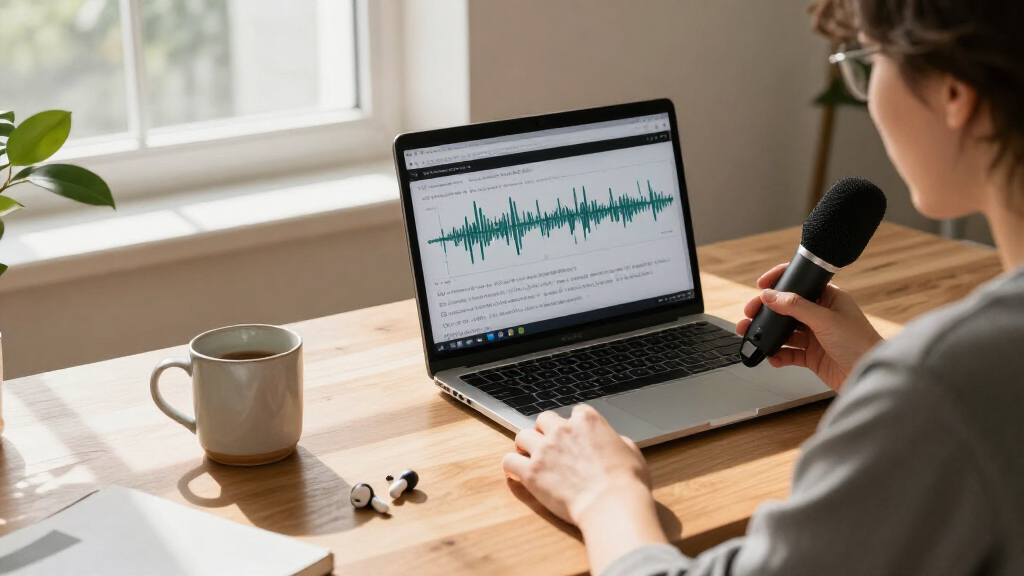
I ranked these options by how directly they address a real transcription workflow: capturing clear audio, turning it into usable text, handling edits or summaries, and moving the result into the buyer’s next tool. I also weighed ease of setup, compatibility, portability, and whether a device adds value beyond transcription. Because the lineup includes software, recorders, meeting hardware, and accessories, I did not treat every item as a like-for-like AI transcription app.
Products with a clearly defined workflow received stronger placement than listings whose supplied description names a broad feature set without clarifying language support, export formats, or service terms. That puts a meeting-oriented all-in-one such as HiDock H1E ahead for general workplace use, a specialized clinical workflow like CortexaNote in its own lane, and Express Scribe Pro high for manual transcription rather than automated speech recognition. Similar Express Scribe listings are separated by their stated bundle or platform details, not assumed to offer distinct capabilities. Buyers should verify current compatibility and transcription terms before committing.
Factors to Consider When Choosing AI Transcription Software
Before choosing, decide what you mean by transcription software: a service that generates text automatically, a recorder that feeds an AI transcription workflow, or a player that helps you transcribe by hand. That distinction changes what specifications matter and can prevent paying for features that do not solve your actual bottleneck.
Decide Whether You Need Automatic or Manual Transcription
Automatic transcription is most useful when you have frequent recordings and want a draft quickly; manual transcription tools are better when accuracy and careful review matter more than speed. A foot pedal can make repeated listening and playback control easier, but it does not itself create an AI transcript. One common mistake is buying an audio player or dictation utility expecting it to provide speech recognition. Check whether the product generates text, helps you edit a transcript created elsewhere, or only records audio. If your source audio is sensitive or highly technical, plan for human correction even when automation is available.
Match the Capture Method to Where You Work
Meeting hardware, pocket recorders, wearable devices, and desktop software solve different capture problems. A desk-based meeting tool can fit recurring calls, while a portable recorder is more useful for interviews, field notes, or conversations away from a computer. Do not assume a recorder’s microphone will suit every room or speaker distance; placement and background noise can shape results as much as the transcription feature. Consider whether you can record calls legally and whether everyone involved needs notice or consent. Choose the capture device around your actual recording environment, then evaluate its transcription workflow.
Check Languages, Accents, and Audio Conditions
A broad claim of AI transcription does not tell you how well a tool handles your language, regional accents, overlapping speakers, or specialist vocabulary. Before relying on a system for regular work, test it with a short sample that resembles your real recordings. Ask whether it supports multiple speakers, timestamps, and vocabulary customization, since these can reduce cleanup for interviews and technical discussions. Poor microphone placement and crosstalk can defeat even a capable recognition model. Treat advertised language coverage as a starting point, not a guarantee of transcript quality for your use case.
Trace the Transcript from Recording to Final Destination
Transcription is only one step if the finished text must reach a document system, note platform, or electronic health record. Map the full path: capture, processing, correction, export, and sharing. A direct import feature can save repeated copying, but verify the formats and destinations it supports rather than relying on a general integration claim. Buyers often focus on the transcript screen and miss limitations on exporting audio, captions, or speaker labels. For a team workflow, confirm that the handoff works for every person who will review or use the text.
Review Privacy, Retention, and Consent
Audio may contain personal, client, or business information, so find out where recordings and transcripts are processed and stored. Check retention controls, deletion options, account access, and whether recordings are used to improve the service. A local recorder does not automatically mean the transcription step is local; audio may still be uploaded for processing. For regulated or confidential work, compare the provider’s data handling terms with your organization’s policies before recording. Also establish consent practices, since privacy obligations can depend on the setting and the people recorded.
Compare the Whole Workflow, Not the Feature List
Hardware bundles, subscriptions, and transcription services can have different ongoing requirements, so check what is included and what needs a separate account or app. Identify any limits on recording duration, transcription volume, storage, exports, or language access before you commit. A bundle may simplify setup but add gear you will not use; a standalone software tool may be a better fit if you already have reliable audio. Likewise, a premium workflow makes sense when it removes repeated editing or data-entry work, not just because it lists more features. Compare the effort required per finished transcript, including correction time and handoffs.
Frequently Asked Questions
Are these all AI transcription apps?
No. This list includes automatic transcription and meeting tools, recording devices, dictation products, and software for manual transcription playback. Express Scribe is aimed at controlling and working through audio, while a recorder such as OLZO is centered on capturing it. Check the product’s exact role before buying: a microphone or recorder may need a separate transcription service, and a manual transcription player may not generate text automatically. This distinction is the first filter I would use when comparing the lineup.
Which option makes the most sense for a clinician?
CortexaNote is the most directly targeted choice here because its listing identifies clinician use and one-click EHR import. That workflow focus may reduce the handoff work that a general-purpose recorder leaves to the user. Before choosing it, confirm that it supports your specific EHR and documentation process, and review its privacy and data-handling terms. A generic recorder can still work for clinical dictation, but only if its transcription and export steps meet your organization’s rules.
Should I choose a recorder or transcription software?
Choose a recorder when capturing audio in the room or on the move is your main problem; choose software when you already have recordings and need to turn them into text or manage transcription work. Some products combine capture with transcription features, but buyers should verify whether processing is included or requires a separate service. A recorder’s storage capacity does not indicate how accurate its transcripts will be. If your workflow starts with calls on a computer, a meeting-focused device may fit better than a pocket recorder.
What should I check before buying an Express Scribe listing?
Compare the exact edition, supported operating systems, included accessories, and any bundled license or subscription details. This roundup has multiple Express Scribe entries, including a Pro listing with an Infinity USB foot pedal, so the product names alone do not establish that the bundles are identical. Also confirm whether your goal is manual transcription playback or automatic speech recognition; these are different jobs. If you already own a compatible pedal, a software-only listing may be enough, while a new transcriber may value a complete bundle.
How can I judge whether AI transcripts will be accurate enough for my work?
Use a sample recording that matches your typical speakers, room noise, terminology, and recording device, then compare the transcript with the audio. Check proper nouns, numbers, speaker changes, and any terms where an error could cause harm or extra work. Ask whether the tool allows corrections, vocabulary additions, timestamps, and export of the revised text. No product description alone can guarantee performance on your recordings, and automated output may still need review. For sensitive or high-stakes work, build human verification into the process.
Conclusion
For most desk-based meeting workflows, I’d start with HiDock H1E as the best overall fit because it combines meeting note-taking with a broader desktop role. For value in a manual transcription setup, Express Scribe is the more focused route, while Express Scribe Pro with the Infinity foot pedal is the better-defined pick for buyers who want hardware-controlled playback. For beginners, OLZO or another straightforward recorder may be easier to approach than a manual transcription workflow, but confirm how transcription is delivered and what service terms apply. For clinicians, CortexaNote is the clearest specialist choice because its listing calls out EHR import; for portable or wearable capture, compare Tupuniu, Vobot, and Fieldy 3 around how you record and move audio into text. I’d reserve the premium choice for buyers whose full workflow benefits from the extra hardware or specialized integrations, and verify compatibility, privacy, and export details before selecting any option.