
📊 Full opportunity report: When Does Cheap Memory Come Back? The 2027–2029 Question on ThorstenMeyerAI.com — validation score, market gap, and execution plan.
Listen free for 30 days with Audible
Thousands of audiobooks and originals — cancel anytime.
Start your free trialAs an affiliate, we earn on qualifying purchases.
TL;DR
Memory shortages are expected to persist until at least late 2028 or early 2029, with prices remaining elevated. Industry capacity growth is slow, and demand, especially from AI, continues to outpace supply.
Memory prices are unlikely to fall significantly before 2028 or 2029, with industry experts warning that relief may be delayed well beyond 2027 due to ongoing capacity constraints and sustained demand, especially from AI applications.
Multiple industry sources, including IDC and Samsung, agree that the global memory shortage will persist through 2027, with a genuine easing of prices and availability expected around late 2028 to 2029. The primary reason is the lengthy and complex process of building and ramping new fabrication plants, which can take years.
Key capacity additions, such as Micron’s Idaho fab and SK Hynix’s Indiana plant, are scheduled for 2028, but the largest planned facilities, including Micron’s Clay megafab, are delayed until 2030. This means supply growth will be gradual, and prices are expected to stabilize at a level 30–50% above pre-crisis prices, representing a new normal rather than a temporary dip.
Industry insiders also warn that demand, fueled by AI infrastructure growth, remains high and may even accelerate, further constraining supply. Some companies, like OpenAI, have secured long-term supply agreements through 2029, indicating sustained demand. Additionally, the physical constraints of advanced packaging and the discipline of major manufacturers to avoid overbuilding reinforce the likelihood of prolonged shortages.
When does cheap memory come back?
The question everyone’s really asking: do I just wait this out? The honest answer is a timeline, three scenarios, and news you may not want — the cheap memory you remember isn’t coming back. A less-expensive market probably is — later, and at a higher floor.
Capacity ramps ’27–’28; price climbs stop, then ease. Settles ~30–50% above pre-crisis — the new baseline, not a return to 2024.
AI keeps accelerating; OpenAI locked ~40% of DRAM through 2029; makers pause expansion to protect record margins; each HBM gen worsens the math.
AI demand moderates just as delayed ’27–’28 fabs all arrive → classic overshoot → prices crash. Not the bet — but never impossible in this industry.
The one relief valve that needs no fab is efficiency: if compression (Part 9) cuts how much memory each model needs, demand softens on the timescale of a software update, not a construction project. So the posture isn’t waiting — it’s the discipline this series has been about. Memory is now a scarce, valuable resource; treat it that way. Buy what you need, right-size, own what’s steady, rent what’s spiky, quantize either way. The people who do best won’t be the ones who guessed the bottom — they’ll be the ones who stopped needing so much. That’s the squeeze, end to end.
Implications of Persistent Memory Shortages
This outlook suggests that consumers and businesses will face higher memory prices for several more years, impacting the cost of electronics, data centers, and AI infrastructure. The persistent scarcity may also influence industry strategies, with companies prioritizing efficiency and demand management over capacity expansion, potentially shaping the future landscape of memory markets.
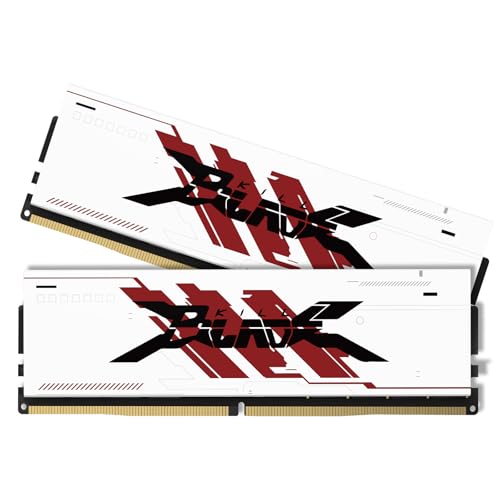
PUSKILL DDR4 3200MHz CL16 Desktop RAM Kit Heatsink, 32GB (2x16GB)
- High Capacity Memory: 32GB (2x16GB) for heavy tasks
- Fast 3200MHz Speed: Ultra-responsive multitasking and gaming
- Low Latency CL16: Tight timings for quick data access
As an affiliate, we earn on qualifying purchases.
As an affiliate, we earn on qualifying purchases.
Recent Trends and Industry Capacity Plans
The current memory crunch stems from years of underinvestment and physical constraints in fabrication capacity. Major manufacturers like Samsung, SK Hynix, and Micron have announced new fabs, but these take years to become fully operational. The 2027 wave of capacity additions, including Micron’s Idaho plant and SK Hynix’s Yongin cluster, is the first significant step toward alleviating shortages, but the largest projects, such as Micron’s Clay fab, are delayed until 2030.
Meanwhile, the industry’s history of boom-and-bust cycles remains relevant, with the potential for oversupply if demand suddenly drops, possibly leading to a price crash. For now, though, demand from AI applications continues to outpace supply, keeping prices high.
“The shortage could extend beyond 2027, with a genuine easing only possible in late 2028 or 2029.”
— Samsung spokesperson
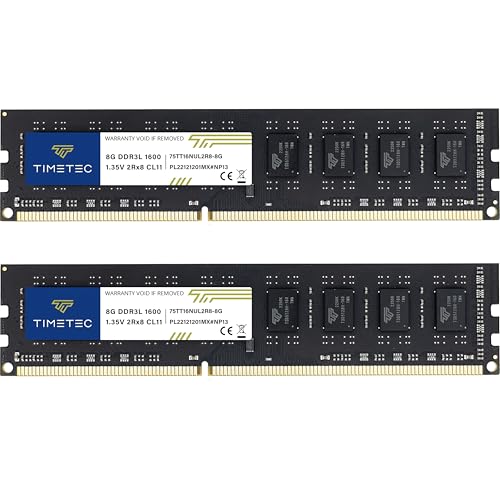
Timetec 16GB KIT(2x8GB) DDR3L / DDR3 1600MHz (DDR3L-1600) PC3L-12800 / PC3-12800 Non-ECC Unbuffered 1.35V/1.5V CL11 2Rx8 Dual Rank 240 Pin UDIMM Desktop PC Computer Memory RAM(SDRAM) Module Upgrade
- Color Variability: PCB color may vary (black or green)
- Memory Type and Speed: DDR3L/DDR3 1600MHz, PC3L-12800
- Module Configuration: 2x8GB kit, dual rank, 240-pin
As an affiliate, we earn on qualifying purchases.
As an affiliate, we earn on qualifying purchases.
Uncertainties in Memory Market Recovery Timeline
While most forecasts point to late 2028 or early 2029 for market normalization, significant uncertainties remain. Demand from AI and other high-growth sectors could accelerate faster than expected, or supply could be delayed further due to unforeseen construction or technical issues. Additionally, potential market oversupply or a sudden demand slowdown could alter the projected timeline.

256GB USB Flash Drive for Phone and Pad, Photo Stick High Speed External USB Thumb Drives Photo Storage Memory Stick for Save More Photos and Videos (Black, 256GB)
- Large Storage Capacity: 256GB for photos and videos
- Immediate Memory Expansion: Free up phone and iPad space
- Secure File Encryption: Password protection for private files
As an affiliate, we earn on qualifying purchases.
As an affiliate, we earn on qualifying purchases.
Upcoming Capacity Expansions and Market Indicators
The next key developments include Micron’s Clay fab reaching full capacity around 2030 and the ongoing ramp-up of SK Hynix’s Indiana plant. Industry analysts will closely monitor these milestones, along with demand signals from AI companies and broader economic factors, to refine the timing of market normalization. Additionally, advancements in memory efficiency and compression techniques may provide some relief independent of capacity increases.

Gigastone 【NAS Certified】 1TB High Endurance SSD (2-Pack) Up to 550MB/s TLC Flash with SLC Caching 24/7 Reliable for Gaming/PC/NAS SSD 5-Year Warranty 2.5" SATA Internal Solid State Drives RAID Disk
- High Endurance for Heavy Workloads: Reliable NAS SSD with 24/7 operation
- Fast Transfer Speeds: Up to 550MB/s sequential transfer rate
- Designed for Creative Professionals: Ideal for video editing and virtualization
As an affiliate, we earn on qualifying purchases.
As an affiliate, we earn on qualifying purchases.
Key Questions
When can I expect memory prices to drop significantly?
Most industry experts estimate that meaningful price relief is unlikely before late 2028 or early 2029, as new capacity ramps up slowly and demand remains high.
Will the memory shortage last forever?
No, the shortage is expected to ease gradually over the next few years, but prices are likely to settle at a higher level than pre-crisis prices, with a new normal established by 2029.
What factors could accelerate or delay the market recovery?
Demand fluctuations from AI and tech sectors, delays in fab construction, or a sudden market oversupply could all impact the timeline. Advances in memory efficiency could also provide some relief without new capacity.
How will this affect consumer electronics prices?
Higher memory costs are likely to keep prices of consumer electronics elevated until supply increases and demand stabilizes, possibly into 2028 or later.
Source: ThorstenMeyerAI.com
Pool season Picks
robotic pool cleaners
As an affiliate, we earn on qualifying purchases.