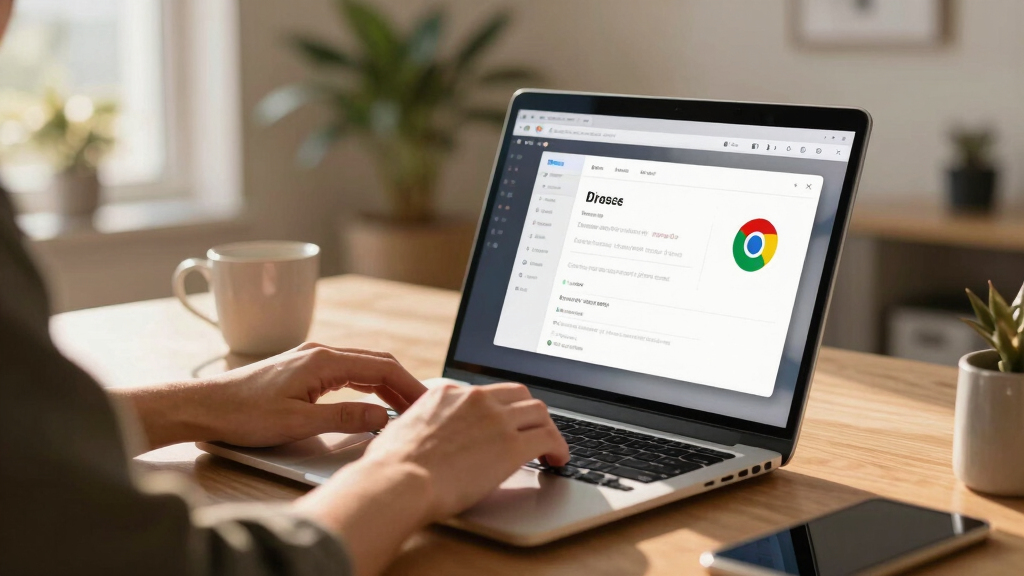

📊 Full opportunity report: DIY Chrome Extensions on IdeaNavigator AI — validation score, market gap, and execution plan.
Listen free for 30 days with Audible
Thousands of audiobooks and originals — cancel anytime.
Start your free trialAs an affiliate, we earn on qualifying purchases.
TL;DR
A new AI-driven platform allows users to generate and install custom Chrome extensions from simple text descriptions. This development aims to empower non-developers and prosumers to build browser automations without coding. The initiative is still in early testing, with plans for a freemium SaaS model.
A new platform leveraging AI technology is enabling non-developers, prosumers, and internal-tool builders to create custom Chrome extensions using natural language descriptions. This innovation addresses a longstanding barrier: the complexity of building Manifest V3 extensions, which requires technical knowledge of service workers, content scripts, and permissions. The initiative aims to democratize extension creation and streamline browser automation for a broad user base.
According to sources familiar with the project, the platform offers a web app where users input a plain-language description of desired browser behavior, such as ‘highlight all prices on a page and convert them to EUR.’ The system then generates a valid Manifest V3 extension, including manifest files, content scripts, and minimal permissions, ready for one-click local installation or guided submission to the Chrome Web Store.
Developers behind the project highlight that this approach is designed to keep generated code reviewable and safe by limiting capabilities to vetted features like DOM manipulation, page scraping, keyboard shortcuts, and API calls. The platform plans to operate on a freemium SaaS model, offering free tiers with limits and paid subscriptions for unlimited builds, private team distribution, and advanced permissions. Early testing involves a landing page to gauge interest and collect prompt submissions, with initial validation metrics focusing on prompt-to-install conversion rates and user retention.
Transforming Browser Automation for Non-Developers
This development has the potential to significantly expand the accessibility of browser automation, enabling a wider range of users—such as marketers, operations teams, and indie hackers—to create custom tools without coding. It could accelerate productivity workflows, reduce reliance on external developers, and foster innovation within the browser extension ecosystem. The rise of AI-assisted extension builders also signals a shift in how browser customization is approached, potentially leading to a more democratized and competitive market.
JODSONE 3Pcs 10ml Top Coat Base Coat Builder Gel Set – No Wipe Gel for Strengthening Thickening and Nail Extension Requires U V Lamp Curing
- Set Includes: Top Coat, Base Coat, Builder Gel
- Protects Natural Nails: Base coat prevents staining and peeling
- Strengthens & Extends Nails: Builder gel creates durable extensions
As an affiliate, we earn on qualifying purchases.
As an affiliate, we earn on qualifying purchases.
Growth of No-Code and AI-Generated Apps in Browser Extensions
The concept of DIY extension creation is gaining momentum amid broader trends in no-code and low-code development, which Gartner projects will account for 75% of new apps by 2026. The Chrome Web Store hosts over 190,000 extensions, many of which address productivity and automation needs. Recent launches of AI-powered extension builders like Kromio, Emergent, Toolmark, and Manus in 2025-2026 have validated strong market demand, although the category remains fragmented and unconsolidated. Historically, building even simple extensions has been a barrier for non-technical users, but advances in AI code generation are beginning to change that landscape.
“This platform could lower the barrier for non-developers to create browser tools, opening up new possibilities for customization and automation.”
— an anonymous researcher

AI-Powered Instagram Automation for Passive Income: How to Build, Grow, and Monetize a Faceless Instagram Theme Page Using AI Tools Like ChatGPT, … to Advanced (Automated Passive Income)
As an affiliate, we earn on qualifying purchases.
As an affiliate, we earn on qualifying purchases.
Early Testing Results and Adoption Challenges
It is not yet clear how quickly non-technical users will adopt the platform or how effectively it will handle complex extension requests. The project is still in initial testing phases, and metrics such as prompt-to-install conversion, user retention, and willingness to pay are still being evaluated. Additionally, questions remain about security, code review processes, and compliance with Chrome Web Store policies as the platform scales.
custom Chrome extension creation software
As an affiliate, we earn on qualifying purchases.
As an affiliate, we earn on qualifying purchases.
Next Steps in Validation and Platform Expansion
The team plans to launch a public beta to gather user feedback, refine the prompt-to-extension pipeline, and expand the library of supported capabilities. They will also test monetization strategies, including paid tiers and enterprise plans, and explore partnerships with no-code communities. Future updates may include more complex automation features and integration options, with the goal of enabling broader adoption among non-developers and professional teams.

Powerbuilt 4-Piece 3/8-Inch Drive Socket Extension Bar Set, Chrome Vanadium, 1-1/2", 3", 6", 10" Lengths, Knurled Grip & Detent Ball – 641510
- Essential Extension Set – Four of the most useful 3/8-inch drive extension lengths: 1-1/2", 3", 6", and 10"…
- Strong Chrome Vanadium Steel – Built from premium…
- Better Control & Grip – Each extension includes…
As an affiliate, we earn on qualifying purchases.
As an affiliate, we earn on qualifying purchases.
Key Questions
Can I create any type of Chrome extension with this platform?
Initially, the platform will focus on a limited set of capabilities such as DOM manipulation, page scraping, and keyboard shortcuts to ensure safety and reviewability. Support for more complex features will be added over time based on user demand and safety considerations.
Is the generated code safe and compliant with Chrome Web Store policies?
The platform aims to generate code that is reviewable and adheres to security best practices. However, users should review extensions before publishing, and the team is working to ensure compliance with Chrome Web Store policies.
Will this platform be free to use?
The initial offering will include a free tier with usage caps. Paid subscriptions will unlock unlimited builds, private team distribution, and advanced features. Pricing details are still being finalized.
When will the platform be available for general use?
The project is currently in early testing, with a public beta planned for later in 2024. Exact release dates will depend on user feedback and platform stability.
Source: IdeaNavigator AI
Grilling season Picks
grills
As an affiliate, we earn on qualifying purchases.