
TL;DR

Get business pricing on tech for your team
- Business-only prices and quantity discounts
- Tax-exempt purchasing
- Multiple users, one account, clear invoices
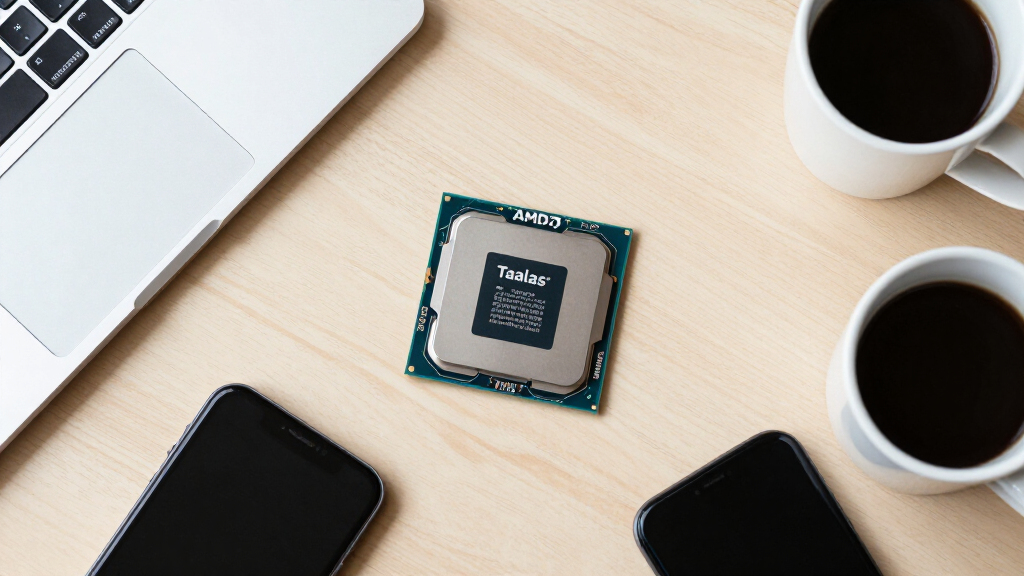
AMD has acquired Taalas to embed AI models directly into silicon chips, aiming to significantly improve inference performance. This move signals AMD’s focus on hardware-level AI acceleration. Details about the acquisition and its immediate impact are confirmed, but specific integration plans remain under development.
AMD has acquired Taalas, a company specializing in embedding AI models directly into silicon chips, to enhance inference performance for AI applications. This strategic move aims to improve hardware efficiency and reduce latency for AI workloads. The acquisition was publicly announced in March 2024 and confirms AMD’s focus on hardware-level AI acceleration, which could influence the competitive landscape of AI chip manufacturing.
AMD’s acquisition of Taalas is designed to integrate AI models directly into silicon chips, a process often called ‘etching models in silicon.’ This approach aims to improve inference speed and efficiency, crucial for real-time AI applications such as autonomous vehicles, data centers, and edge computing.
According to AMD, this move will enable the company to deliver more powerful and energy-efficient AI hardware solutions. The terms of the acquisition were not disclosed, but AMD confirmed that Taalas’s technology will be integrated into its existing product lines.
Industry analysts see this as a significant step toward hardware-based AI optimization, potentially giving AMD a competitive edge over rivals relying primarily on software-based AI acceleration.
Impact of Silicon-Level AI Model Integration
This acquisition underscores a shift toward embedding AI models directly into hardware, which could dramatically reduce inference latency and power consumption. For AI developers and end-users, this means faster, more efficient AI processing in devices ranging from data centers to edge devices.
For AMD, this move positions it as a leader in hardware-level AI acceleration, challenging competitors like NVIDIA and Intel. It may also influence future chip design standards, emphasizing integrated AI models at the silicon level.
AI inference acceleration hardware
As an affiliate, we earn on qualifying purchases.
As an affiliate, we earn on qualifying purchases.
AMD’s Strategy in AI Hardware Development
AMD has been investing heavily in AI hardware, competing with industry giants like NVIDIA, Intel, and Google. Prior to this acquisition, AMD primarily focused on GPU-based AI acceleration and data center solutions. The move to acquire Taalas reflects a broader industry trend toward embedding AI models directly into hardware to overcome limitations of software-based approaches.
Historically, chip manufacturers have relied on software optimization to improve AI inference, but embedding models into silicon offers a more direct and efficient route. Taalas’s technology is reportedly capable of etching AI models into silicon, which AMD now aims to leverage across its product lines.
“Integrating AI models directly into silicon chips allows us to deliver unprecedented inference performance and energy efficiency, setting a new standard in AI hardware.”
— Dr. Lisa Chen, AMD CTO
As an affiliate, we earn on qualifying purchases.
Details of Integration and Future Plans
While AMD has confirmed the acquisition and the general goal of embedding models into silicon, specific details about how Taalas’s technology will be integrated into AMD’s product roadmap remain undisclosed. It is also unclear when new products featuring this technology will be available to consumers or enterprise clients.
Additionally, the extent of Taalas’s technology compatibility with existing AMD hardware and the timeline for full deployment are still developing.
As an affiliate, we earn on qualifying purchases.
Upcoming AMD Product Launches and Integration Milestones
Next steps include AMD’s integration of Taalas’s technology into its upcoming chips, likely announced at industry events later in 2024. AMD may also reveal specific product plans or collaborations with OEMs in the coming months. Monitoring AMD’s quarterly updates will provide further clarity on the deployment timeline and technological advancements.
As an affiliate, we earn on qualifying purchases.
Key Questions
What is Taalas’s technology and how does it work?
Taalas specializes in embedding AI models directly into silicon chips, a process known as ‘etching models in silicon,’ which aims to improve inference performance and efficiency by reducing the need for external processing.
How will this acquisition affect AMD’s competitors?
This move could give AMD a competitive edge in AI hardware by enabling faster, more energy-efficient inference, potentially pressuring rivals like NVIDIA and Intel to accelerate their own hardware innovations.
When will AMD release products with this technology?
Specific product timelines have not been announced. AMD indicated that integration is underway, with new hardware expected to be revealed later in 2024 or early 2025.
Does this acquisition mean AMD is shifting away from GPUs?
No. AMD continues to develop GPU-based AI solutions but is expanding into silicon-embedded AI models to complement its existing hardware portfolio.
What are the potential benefits for end-users?
End-users could see faster AI inference, lower power consumption, and more efficient hardware for applications like autonomous vehicles, data centers, and edge devices.
Source: hn
Halloween Picks
halloween
As an affiliate, we earn on qualifying purchases.