
TL;DR

Get business pricing on tech for your team
- Business-only prices and quantity discounts
- Tax-exempt purchasing
- Multiple users, one account, clear invoices
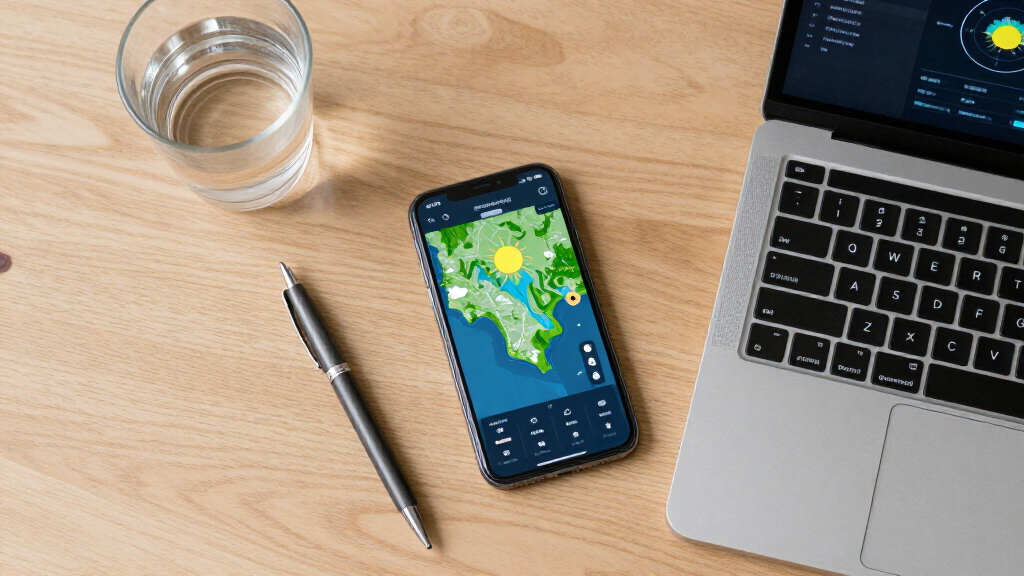
DeepMind’s WeatherNext model has demonstrated a new level of accuracy in predicting cyclone formation and paths. This breakthrough could improve early warning systems and disaster preparedness globally.
DeepMind has announced that its WeatherNext model has achieved a major breakthrough in predicting cyclones, demonstrating increased accuracy and earlier detection compared to existing forecasting systems. This development could significantly enhance early warning capabilities for cyclone-prone regions, potentially saving lives and reducing economic damage.
According to DeepMind, WeatherNext has successfully forecasted cyclone formation and trajectories with a higher degree of precision than current models. The company reports that tests conducted over the past year showed WeatherNext providing reliable predictions up to 72 hours in advance, a substantial improvement over traditional methods that typically offer 48-hour forecasts.
DeepMind attributes this success to its advanced machine learning architecture, which incorporates high-resolution climate data and sophisticated neural networks capable of capturing complex atmospheric patterns. The model was trained on historical cyclone data and real-time satellite inputs, enhancing its predictive capabilities.
While DeepMind has shared initial results with meteorological organizations, full validation and peer review are ongoing. The company emphasizes that WeatherNext is still in the testing phase and has not yet been deployed operationally for public weather services.
Potential Impact on Cyclone Prediction and Disaster Readiness
This breakthrough could transform how governments and agencies prepare for cyclones, enabling earlier evacuations and resource mobilization. Improved forecasting accuracy also reduces false alarms, helping communities better allocate resources and minimize economic disruption. If validated and adopted widely, WeatherNext may set a new standard in meteorology and disaster management.
weather forecasting satellite receiver
As an affiliate, we earn on qualifying purchases.
As an affiliate, we earn on qualifying purchases.
Advances in AI-Driven Weather Forecasting Over Recent Years
DeepMind’s WeatherNext builds on a growing trend of integrating artificial intelligence into meteorology. Previous efforts have improved short-term weather predictions, but forecasting cyclones remains particularly challenging due to their complex dynamics. Historically, meteorologists rely on satellite data and physical models, which have limitations in predicting rapid developments.
DeepMind’s approach leverages deep learning models trained on vast datasets, aiming to overcome these limitations. The company’s announcement follows similar claims from other AI-focused weather projects, but WeatherNext’s reported accuracy marks a notable step forward.
“WeatherNext has demonstrated unprecedented accuracy in cyclone forecasting, providing reliable predictions up to 72 hours in advance.”
— DeepMind spokesperson
As an affiliate, we earn on qualifying purchases.
Validation and Deployment Challenges for WeatherNext
While initial results are promising, it is not yet clear how WeatherNext will perform in operational settings across diverse climates and conditions. Full validation by independent meteorological agencies is pending, and the timeline for public deployment remains uncertain. Additionally, questions remain about the model’s ability to predict rapid intensification or unexpected shifts in cyclone paths.
As an affiliate, we earn on qualifying purchases.
Next Steps: Validation, Peer Review, and Integration into Weather Services
DeepMind plans to collaborate with national meteorological agencies to conduct comprehensive validation of WeatherNext. Peer-reviewed publications are expected in the coming months, and if successful, the model could be integrated into existing forecasting systems within the next year. Further research will focus on refining predictions for cyclone intensity and rapid changes.
As an affiliate, we earn on qualifying purchases.
Key Questions
How does WeatherNext improve upon existing cyclone forecasting models?
WeatherNext uses advanced machine learning techniques trained on large datasets, enabling it to capture complex atmospheric patterns more accurately and predict cyclone formation and paths up to 72 hours in advance, compared to about 48 hours with traditional models.
When might WeatherNext be used in operational weather forecasting?
DeepMind has not announced a specific deployment timeline. The model is currently in testing and validation phases, with potential integration into public weather services possible within the next year if validation proves successful.
What are the limitations of WeatherNext at this stage?
It is still unproven in diverse real-world conditions, and its ability to predict rapid changes or intensification of cyclones remains unconfirmed. Full peer review and independent validation are ongoing.
Could this technology help reduce cyclone-related damages?
Yes, if validated and deployed widely, earlier and more accurate forecasts could enable timely evacuations and better resource allocation, potentially saving lives and reducing economic losses.
What other weather phenomena might AI models improve forecasting for?
AI models are also being explored for improved predictions of severe storms, heatwaves, and other extreme weather events, but cyclone forecasting remains one of the most challenging areas.
Source: hn
Halloween Picks
halloween
As an affiliate, we earn on qualifying purchases.