
TL;DR

Get business pricing on tech for your team
- Business-only prices and quantity discounts
- Tax-exempt purchasing
- Multiple users, one account, clear invoices
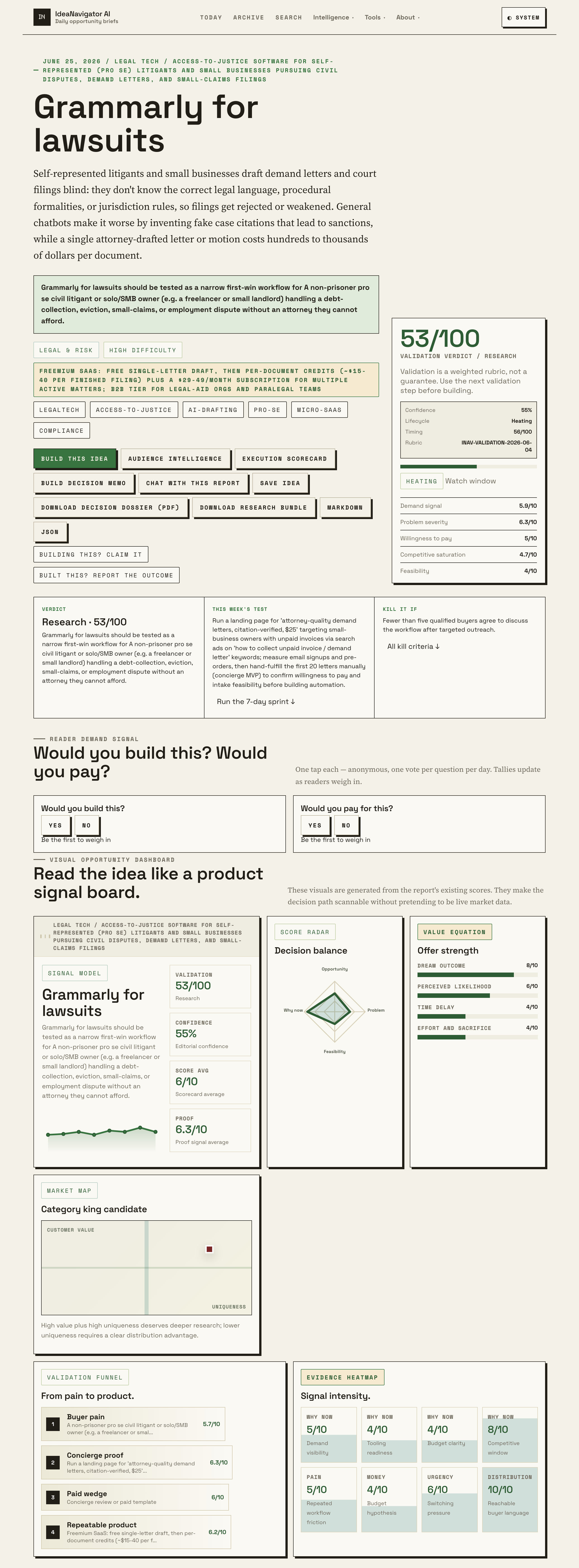
An AI-based application is in development to assist self-represented litigants and small businesses in drafting legally accurate demand letters and court filings. It verifies citations and formats documents for court submission, addressing the widespread issue of citation errors and procedural mistakes.
A new AI-powered application is being developed to assist self-represented litigants and small business owners in drafting court documents with verified legal citations and proper formatting. The tool aims to address the widespread issues of citation errors and procedural mistakes that often lead to document rejection or sanctions in civil cases. This development comes amid growing concerns about the quality of filings by pro se litigants and the flooding of courts with hallucinated citations from generic AI chatbots.
The project, referred to as ‘Grammarly for lawsuits,’ is designed as a web application that guides users through structured intake questions—covering parties, amounts, contract details, and jurisdiction—to generate demand letters or small-claims filings. The generated documents are then run through an AI verification layer that flags weak or missing legal elements and cross-checks every cited statute or case against a real legal database, effectively preventing hallucinated or incorrect citations. The output is a court- and jurisdiction-specific, e-signature-ready document.
This tool targets a significant market segment: non-lawyer individuals handling debt collection, evictions, or employment disputes without legal representation. It seeks to fill a critical gap, as recent data shows that approximately 60% of civil cases in the U.S. involve pro se litigants, and a substantial portion of federal civil cases include self-represented parties. The problem has worsened with the proliferation of AI chatbots that generate fake case citations, leading to sanctions and delays.
Developers plan to offer a freemium SaaS model, starting with a free single-letter draft, then charging per document (roughly $15-40), with optional monthly subscriptions for multiple matters. The initial MVP will focus on demand letters and small-claims filings, with plans to expand features based on user feedback and demand validation through targeted landing pages and pre-orders.
Why Accurate Legal Drafting Matters for Self-Represented Litigants
This development is significant because it addresses a critical challenge faced by millions of Americans who handle civil disputes without legal counsel. Errors in citations and procedural missteps can lead to case dismissals, sanctions, or unfavorable outcomes, especially as courts become more stringent about document accuracy. By providing a tool that verifies legal references and formats documents correctly, it could reduce the risk of sanctions and improve the quality of filings, making civil justice more accessible for non-lawyers.
Furthermore, as courts experience an influx of AI-generated filings, the need for verification tools that can prevent hallucinated citations and procedural errors grows more urgent. If successful, this tool could serve as a model for integrating AI into legal self-help services, potentially transforming access to justice for small businesses and individuals unable to afford attorneys.
As an affiliate, we earn on qualifying purchases.
Growing Use of AI and Challenges in Civil Self-Representation
In recent years, the number of civil cases involving self-represented litigants has increased significantly, with roughly 60% of civil filings in the U.S. now involving pro se parties. The rise is driven by cost barriers and limited access to affordable legal services. However, self-represented litigants often lack legal training, leading to mistakes such as incorrect citations, procedural missteps, or incomplete filings, which can result in case dismissals or sanctions.
Meanwhile, the deployment of large language models (LLMs) and AI chatbots has introduced new risks. Many generic AI tools generate hallucinated citations—fabricated legal references that appear plausible but are false—posing a serious risk of sanctions when courts discover inaccuracies. Data logged from late 2025 indicates that pro se litigants are responsible for roughly 39% more hallucination incidents than attorneys, highlighting the urgent need for verification-first drafting tools tailored for legal use.
This context underscores the importance of specialized AI tools that not only generate draft documents but also verify every legal citation against authoritative databases, ensuring compliance and reducing errors in court filings.
“The proliferation of AI-generated citations that are false or unverified is a growing concern, especially as courts become less tolerant of procedural errors.”
— an anonymous researcher
As an affiliate, we earn on qualifying purchases.
Uncertainties About Development and Adoption Timeline
It is not yet clear when the ‘Grammarly for lawsuits’ tool will be available for wider testing or commercial release. The project is currently in early development and prototype phases, with initial testing likely focused on demand letters and small-claims filings. The effectiveness of the citation verification layer and user acceptance remain to be validated through pilot programs.
Additionally, regulatory considerations and court acceptance of AI-generated filings are still evolving, which could influence the tool’s future deployment and integration into legal workflows. The extent to which courts will trust AI-verified documents is an open question.
As an affiliate, we earn on qualifying purchases.
Next Steps for Validation and Market Entry
The development team plans to launch a targeted landing page to test demand by offering ‘attorney-quality demand letters, citation-verified, $25.’ They will measure signups and pre-orders to gauge market interest. The first batch of documents will be manually fulfilled to assess user satisfaction and operational feasibility. Based on these initial results, the team aims to refine the tool and prepare for broader beta testing.
Further, engagement with legal reform advocates and court officials will be essential to understand acceptance criteria and integration pathways. The project’s success depends on validating the tool’s accuracy, usability, and legal compliance before scaling up for wider adoption.
self-represented litigant legal kit
As an affiliate, we earn on qualifying purchases.
As an affiliate, we earn on qualifying purchases.
Key Questions
How will the AI verify legal citations?
The AI will cross-check each cited statute or case against a real legal database, ensuring the references are accurate and relevant before finalizing the document.
Can this tool replace a lawyer?
No, it is designed to assist non-lawyers in drafting basic legal documents and verifying citations. It does not replace legal advice or representation by qualified attorneys.
When will the tool be available for public use?
The project is still in development, with initial testing phases underway. A wider release may occur within the next year, pending successful validation and court acceptance.
Will courts accept AI-generated filings?
This remains uncertain. Court acceptance will depend on the verification accuracy, compliance with procedural rules, and potential regulatory guidance. Ongoing discussions with legal authorities are expected.
How much will the service cost?
The initial model plans to offer a free single draft, with additional documents costing approximately $15-40 each, and optional monthly subscriptions for ongoing matters at $29-49.
Source: IdeaNavigator AI
Fall Picks
fall essentials
As an affiliate, we earn on qualifying purchases.