
TL;DR

Get business pricing on tech for your team
- Business-only prices and quantity discounts
- Tax-exempt purchasing
- Multiple users, one account, clear invoices
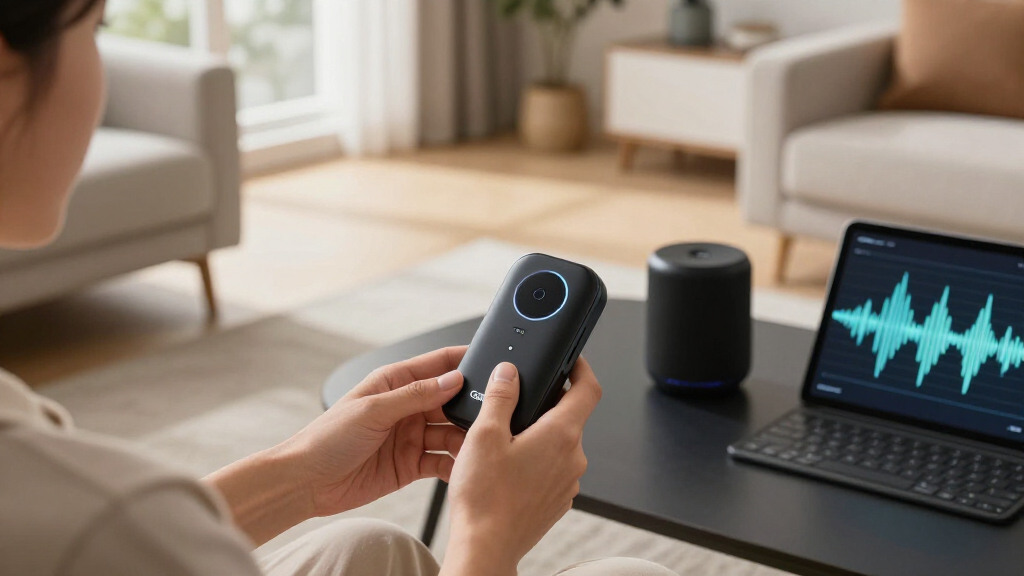
xAI has announced Grok Voice Realtime, an innovative audio-to-audio model that enables real-time voice conversion and synthesis. The development signals a major step forward in speech AI, though details remain preliminary.
xAI has announced Grok Voice Realtime, an audio-to-audio model designed to perform real-time voice conversion and synthesis. The company claims this technology could significantly enhance speech AI applications, though technical details are still emerging. The announcement marks a notable development in the field of speech processing, with potential implications across industries from entertainment to accessibility.
The Grok Voice Realtime model, introduced by xAI, is designed to convert one voice into another in real-time, enabling seamless voice transformation during live speech. According to the company, the model leverages advanced neural network architectures to achieve low latency and high fidelity in voice conversion, though specific technical specifications have not yet been publicly disclosed.
Sources familiar with the announcement indicate that Grok Voice Realtime can handle multiple languages and accents, making it versatile for global applications. The company emphasizes that this technology could be used for voice dubbing, virtual assistants, gaming, and accessibility tools. However, it is still unclear whether the model is in a prototype stage or nearing commercial deployment, as detailed performance metrics are not yet available.
Industry analysts note that this development follows a trend of increasing interest in real-time speech synthesis and voice conversion, driven by advancements in deep learning and neural networks. The announcement has sparked curiosity among researchers and developers, with many seeking further technical disclosures from xAI.
Potential Impact on Speech and AI Applications
The introduction of Grok Voice Realtime could significantly influence various sectors by enabling more natural and flexible voice interactions. Its ability to perform real-time voice conversion may improve virtual assistants, enhance entertainment experiences through dynamic voice dubbing, and support accessibility for individuals with speech impairments. The technology’s potential to create realistic voice mimicry also raises questions about ethical considerations and misuse risks, making its deployment and regulation critical topics for future discussion.
As an affiliate, we earn on qualifying purchases.
Advances and Trends in Speech AI Technology
The field of speech AI has seen rapid progress over recent years, with neural network-based models enabling more natural-sounding speech synthesis and voice conversion. Major tech companies and startups alike have been investing heavily in this area, driven by applications in virtual assistants, gaming, and multimedia content creation. Prior to this announcement, several companies demonstrated static voice conversion systems, but real-time, high-fidelity models remain a technical challenge due to latency and computational constraints.
The trend signal for interest in real-time voice AI has been rising, with search and coverage spikes observed across industry forums and tech news outlets. However, it is important to note that the specific details of xAI’s Grok Voice Realtime are still unconfirmed, and the company has not released technical papers or demos publicly. The interest appears to be driven by the potential for practical applications, but the actual readiness of the technology remains uncertain.
As an affiliate, we earn on qualifying purchases.
Unconfirmed Technical Details and Deployment Status
While xAI has announced Grok Voice Realtime, specific technical specifications, performance benchmarks, and deployment timelines are not yet publicly available. It is unclear whether the model is in a prototype or pilot phase or if it is close to commercial release. Additionally, the extent of language and accent support, as well as robustness under different acoustic environments, remains unconfirmed.
Experts caution that without detailed disclosures, it is difficult to evaluate the model’s real-world readiness or potential limitations. The announcement has generated interest, but many questions about the technology’s maturity and safety remain unanswered.
As an affiliate, we earn on qualifying purchases.
Expected Next Steps and Disclosure Timeline
Moving forward, xAI is likely to release technical papers, demos, or pilot programs to demonstrate Grok Voice Realtime’s capabilities. Industry observers will be watching for peer-reviewed validation of the model’s performance, latency, and fidelity. Regulatory and ethical discussions surrounding voice synthesis technologies are also expected to intensify as the technology approaches broader deployment.
Stakeholders in voice AI, including developers, regulators, and potential users, will need to evaluate the technology’s benefits and risks, especially concerning misuse or malicious applications. The timing of these disclosures and the model’s commercial availability remain uncertain, pending xAI’s future announcements.
multilingual voice transformation tool
As an affiliate, we earn on qualifying purchases.
As an affiliate, we earn on qualifying purchases.
Key Questions
What is Grok Voice Realtime?
Grok Voice Realtime is an audio-to-audio neural network model announced by xAI that aims to perform real-time voice conversion and synthesis, allowing seamless voice transformation during live speech.
How does it differ from existing voice AI models?
Unlike previous models that often operate with latency or require pre-recorded inputs, Grok Voice Realtime claims to enable low-latency, high-fidelity voice conversion in real-time, though technical details are not yet confirmed.
When will the technology be available for public or commercial use?
xAI has not announced specific timelines. Future disclosures are expected to clarify whether the model is in prototype testing or nearing deployment.
What are the potential risks or ethical concerns?
The ability to mimic voices in real-time raises concerns about misuse, such as deepfake voice scams or unauthorized voice cloning. Regulation and safeguards will be critical as the technology develops.
What industries could benefit from Grok Voice Realtime?
Potential applications include virtual assistants, gaming, entertainment, accessibility tools, and multilingual voice services, depending on the technology’s performance and deployment.
Source: rss
Halloween Picks
halloween
As an affiliate, we earn on qualifying purchases.