
TL;DR

Get business pricing on tech for your team
- Business-only prices and quantity discounts
- Tax-exempt purchasing
- Multiple users, one account, clear invoices
SenseTime’s spinoff ACE ROBOTICS has announced its entry into the commercial market, highlighting a robot that can switch grips during failed attempts. Details on product performance, customer deployment, and specific capabilities remain undisclosed (from the original source).
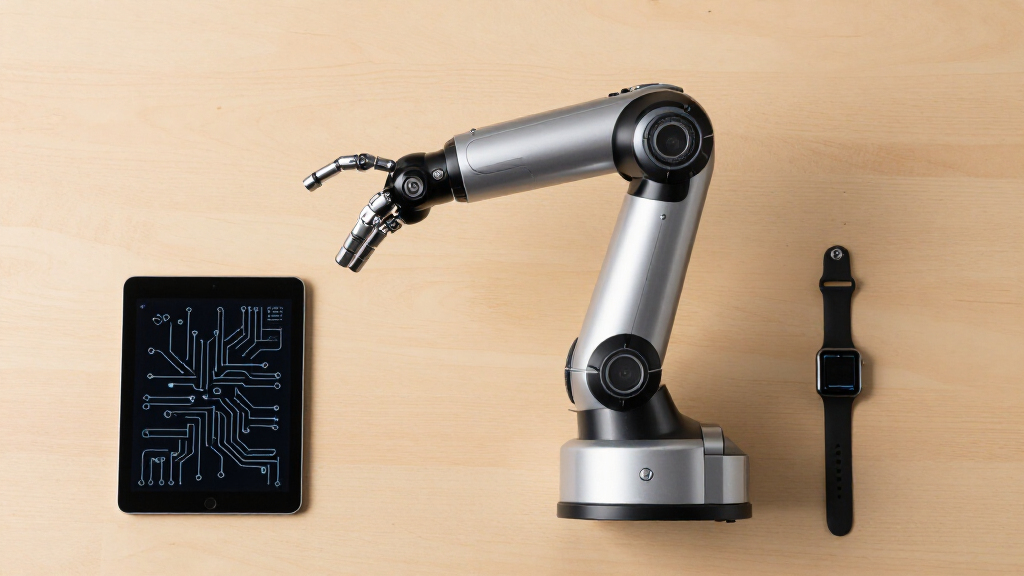
SenseTime’s spinoff ACE ROBOTICS has entered the commercial market, according to a recent report. The company claims its robot can switch grips during a failed attempt, a feature that could improve robotic manipulation reliability outside controlled environments. However, details on product specifications, deployment, and performance metrics have not been disclosed, and the scope of the commercial rollout remains unclear.
The report from SenseTime indicates that ACE ROBOTICS has moved beyond technical demonstrations to commercial deployment (as detailed in the original analysis). The robot’s key feature is its ability to detect a failed grasp and change its grip mid-task, potentially reducing the need for human intervention in industrial and service settings (as detailed in the original analysis). The report does not specify whether this capability has been independently tested or verified by third parties, nor does it provide success rates or detailed technical data.
It remains unknown whether ACE ROBOTICS is offering a product for sale, conducting pilot projects, or operating in limited deployment. The report does not mention specific customers, markets, pricing, or shipment volumes. The term “gone commercial” suggests some form of market activity but leaves open whether this involves full product launches, paid pilots, or initial deliveries. The absence of independent validation or detailed testing results means the reliability of the grip-switching capability cannot yet be confirmed.
Potential Impact of Adaptive Manipulation on Robotics Industry
The announcement signals a shift toward more resilient robotic systems capable of handling real-world variability. If proven reliable, the ability to recover from grip failures automatically could reduce operational downtime and lower the need for human oversight in complex tasks. This development aligns with broader industry efforts to create more adaptable, autonomous robots for manufacturing, logistics, and service roles. However, without independent performance data, the true impact on the market and existing robotic solutions remains uncertain.
robotic gripper with adaptive switching
As an affiliate, we earn on qualifying purchases.
As an affiliate, we earn on qualifying purchases.
Background on SenseTime’s Robotics Innovations
SenseTime has been a prominent player in AI and computer vision, with recent efforts expanding into robotics. The company’s spinoff ACE ROBOTICS emerged as a venture focused on applying AI-driven adaptive manipulation to real-world tasks. Prior demonstrations have shown robots performing grasping and handling, but the transition to commercial deployment marks a key milestone. The timeline for ACE ROBOTICS’ development and its integration into industrial workflows remains unconfirmed, as does its relationship with SenseTime’s broader business strategy.
“The ability to switch grips mid-fail could significantly improve robotic reliability, but we need independent validation to assess its consistency.”
— an anonymous researcher
industrial robot with grip failure recovery
As an affiliate, we earn on qualifying purchases.
As an affiliate, we earn on qualifying purchases.
Unverified Aspects of ACE ROBOTICS’ Market Entry
It is not yet clear what specific form the commercial deployment takes—whether it is limited pilots, full product sales, or ongoing production. No independent testing, success metrics, or detailed technical data have been released. The scope of customer engagement, actual deployment sites, pricing, or performance guarantees remains unknown. The term “gone commercial” is ambiguous without further clarification from the company or third-party evaluations.
AI-powered robotic manipulation arms
As an affiliate, we earn on qualifying purchases.
As an affiliate, we earn on qualifying purchases.
Next Steps for Validating ACE ROBOTICS’ Capabilities
Future developments should include the release of detailed product specifications, independent performance tests, and customer deployment announcements. Verification of the grip-switching capability across different objects and environments will be critical. Additionally, transparency regarding sales figures, deployment sites, and user feedback will help assess the true market impact and reliability of ACE ROBOTICS’ technology.
commercial robotic arms for manufacturing
As an affiliate, we earn on qualifying purchases.
As an affiliate, we earn on qualifying purchases.
Key Questions
What exactly has ACE ROBOTICS announced?
They announced that their robot has entered the commercial market and can switch grips during a failed attempt, but specific product details, deployment scale, and customer information have not been disclosed.
Does “gone commercial” mean the robot is available for purchase?
It is not yet confirmed. The phrase could refer to pilots, orders, or broader availability, but no sales channels, pricing, or delivery timelines have been announced.
Has the grip-switching capability been independently tested?
No. The report does not include independent validation, success rates, or detailed testing methodology, so the reliability of this feature remains unconfirmed.
What is the relationship between ACE ROBOTICS and SenseTime?
ACE ROBOTICS is described as a SenseTime spinoff, but specific ownership, management, and operational details have not been provided.
What should we look for to confirm the technology’s effectiveness?
Look for independent testing results, customer deployment announcements, technical specifications, and performance data demonstrating repeatability and reliability across different scenarios.
Source: ThorstenMeyerAI.com
Halloween Picks
halloween
As an affiliate, we earn on qualifying purchases.