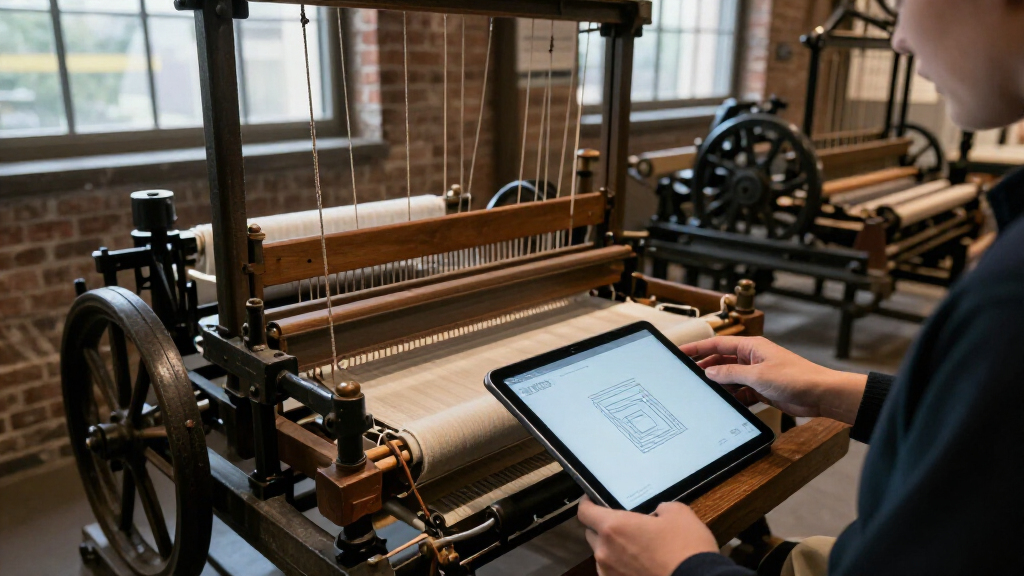

🔍 Read the full analysis: Luddite History Helps Explain Today’s Fears About AI on ThorstenMeyerAI.com

Get business pricing on tech for your team
- Business-only prices and quantity discounts
- Tax-exempt purchasing
- Multiple users, one account, clear invoices
TL;DR
A November 5, 2026, episode of ThorstenMeyerAI.com’s “Work After Work” series revisits the Luddite movement and argues that its history can clarify present-day concerns about AI at work. The account says the frame breakers targeted particular practices around pay and production, while the broader effects of industrial change on wages unfolded over decades.
A new episode of ThorstenMeyerAI.com’s “Work After Work”, published November 5, 2026, uses records of the Luddite movement to examine why workers’ fears about artificial intelligence and job conditions echo older disputes over technology. The episode argues that the Luddites were not simply opposed to machinery: many worked with stocking frames and objected to how employers used them, including practices that lowered prices and weakened workers’ livelihoods.
The episode focuses on framework knitters in and around Nottingham, who produced stockings and other goods using mechanical knitting frames. Many worked at home or in small workshops, rented the equipment, and received piece-rate payment from hosiers, the merchants who distributed work and sold the goods. It draws on contemporary records, including magistrate Robert Baker’s February 1812 report to the Home Office, parliamentary speeches and legislation.
Baker reported that in some places one-fifth of frame workers were out of work before the disturbances. He wrote that breakers first targeted hosiers who paid what he called “the under-price,” as well as wider frames that enabled cheaper stockings. His account also said the attacks had generally focused on frames rather than other property, though a January 1812 reward notice described five frames broken at a workshop whose workers said they had been operating at the full price. The records therefore show targeted grievances, but not that every attack was aimed accurately or at an underpaying employer.
The movement began in Nottinghamshire in 1811 and spread to Yorkshire and Lancashire in 1812, according to the National Archives account cited by the episode. The government deployed soldiers, and Parliament passed the Frame-Breaking Act on March 20, 1812, making frame breaking a capital felony. The episode says 17 men were executed in 1813. It also contrasts productivity and wages: economist Robert Allen’s estimate puts British real-wage growth at 12% from 1780 to 1840, while output per worker rose 46%. The source says later research narrows, but does not eliminate, that gap.
The Labor Questions Behind AI
The historical comparison shifts attention from whether a technology is inherently good or bad to who controls its use and who benefits. The episode connects the Luddites’ concerns over pay and the quality of goods to current arguments about AI’s effect on workers’ compensation, job security and influence over workplace decisions. That framing matters to employees and policymakers because productivity gains do not, by themselves, establish how those gains will be shared.
The comparison is an interpretation, not proof that AI will reproduce the economic outcomes of mechanized textile production. The technologies, industries and labor laws differ. But the historical record offers a concrete example of workers resisting not machinery in the abstract, but specific changes to production and bargaining conditions. Current disputes over contracts, consultation and workplace rules can be understood partly through that lens.
Products Worth Considering

Apple MacBook Air 13.6-inch with M5 Chip, 16GB Memory, 512GB SSD, Sky Blue

Anker SOLIX S2000 Solar Powered Generator, 2010 Wh, 1500 W

Samsung Galaxy Tab A11 Wi‑Fi (International Version), 8.7, 64GB + 4GB, Gray
As an affiliate, we earn on qualifying purchases.
From Nottingham Frames to AI Rules
The familiar use of “Luddite” as a label for someone hostile to technology obscures that the original movement involved machine workers. Framework knitters operated stocking frames, often without owning them, and were paid by the piece. The episode says trade unions were illegal under the Combination Acts of 1799 and 1800, while Parliament rejected a minimum wage for weavers in 1808. Those limits shaped the options available to workers seeking better terms.
Letters were signed by “General Ned Ludd” or “King Ludd,” but the National Archives describes Ned Ludd as a mythical figure; there is no reliable evidence that he led the movement. The episode links historical disputes to present-day examples including writers’ contracts in Hollywood, works-council rights in Germany and the EU’s AI Act. These involve different rules and sectors, but each raises questions about how technology affects work and what say workers have.
““Resentment against the hosiers who paid the under-prices””
— Nottingham magistrate Robert Baker, in a February 6, 1812, report to the Home Office
Limits of the Historical Comparison
The records summarized in the episode cannot establish that every frame breaker shared the same motive, or that each target was selected because of underpayment. Baker was a magistrate reporting to the Home Office, not a neutral observer, and the reward notice describing frames said to be working at full price indicates that some attacks did not fit the stated pattern. Threatening letters and later popular stories also require caution; the episode treats Ned Ludd as legend rather than a documented leader.
The wage and productivity figures are historical estimates, and the source notes that later research narrows the measured gap. The account does not specify those revised estimates. Nor does the analogy settle what AI will do to employment, wages or productivity: those outcomes depend on how systems are adopted, workplace arrangements and policy. The episode presents parallels in the questions being asked, not evidence that the past and present will produce identical results.
How Workplace AI Rules Develop
The source identifies Hollywood writers’ contracts, German works-council rights and the EU’s AI Act as current arenas for negotiating how AI affects work. Those examples make worker participation and the distribution of productivity gains practical policy questions, rather than simply arguments about whether a new tool should exist. The episode does not announce a new rule or decision in any of those areas.
For readers following the issue, the next developments to watch are how employers deploy AI, what workers and their representatives negotiate, and whether laws or workplace agreements shape the use of these systems. The historical account supplies context for those disputes; the specific effects of AI on pay, job numbers and working conditions remain unsettled.
Key Questions
Who were the original Luddites?
They were workers, including framework knitters in Nottinghamshire, who made goods using mechanical stocking frames. The movement spread to other English textile districts in 1812.
Were the Luddites against all machinery?
The records discussed in the episode point to targeted objections over pay, production methods and particular frames. They do not support reducing the movement to a general hatred of technology.
What happened to people who broke frames?
The Frame-Breaking Act of March 20, 1812, made frame breaking a capital felony. The source says 17 men were executed in 1813.
What is the connection to AI?
The episode draws a comparison between historical disputes over who benefited from machinery and present debates about AI, worker pay, job conditions and influence over how technology is used. It does not claim the two periods will have the same outcomes.
Was Ned Ludd a real leader?
The National Archives describes General Ned Ludd as mythical. The source says there is no reliable evidence that a person by that name led the movement.
Source: ThorstenMeyerAI.com