
TL;DR

Get business pricing on tech for your team
- Business-only prices and quantity discounts
- Tax-exempt purchasing
- Multiple users, one account, clear invoices
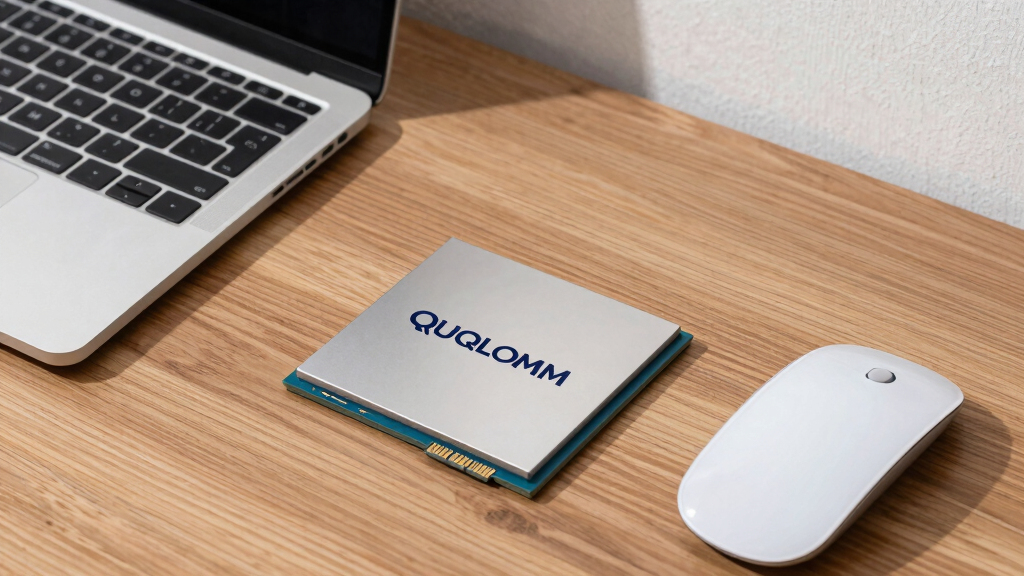
Qualcomm announced a new line of AI data center chips and systems, marking its entry into the enterprise AI hardware market and intensifying competition with Nvidia. The move aims to expand Qualcomm’s footprint beyond mobile and consumer devices.
Qualcomm has launched a new line of artificial intelligence data center chips and integrated systems, marking its official entry into the enterprise AI hardware market and increasing competition with Nvidia.
The company introduced its Snapdragon AI Data Center Platform, which includes specialized chips designed for large-scale AI workloads. Qualcomm’s new offerings aim to provide high-performance, energy-efficient solutions for data centers and cloud providers. The announcement was made during a technology event in March 2024, with Qualcomm emphasizing its focus on AI acceleration and scalable systems. Qualcomm’s move positions it as a direct competitor to Nvidia, which has dominated the AI GPU market for years. The company stated that its new chips leverage its existing semiconductor expertise and are optimized for AI inference and training tasks. Industry analysts note that this development could diversify the AI hardware landscape and challenge Nvidia’s market share in the data center segment.
Implications for AI Hardware Competition
This launch marks Qualcomm’s significant entry into the enterprise AI hardware space, potentially disrupting Nvidia’s dominance. It could lead to increased competition, innovation, and pricing pressure among data center chip providers. For cloud service providers and enterprise customers, this offers more options for AI infrastructure, possibly impacting costs and performance. Qualcomm’s move also signals a broader industry shift towards diversified AI hardware solutions, emphasizing energy efficiency and scalability. The development is likely to accelerate innovation in AI acceleration hardware and influence future industry standards.
As an affiliate, we earn on qualifying purchases.
Industry Shift Toward Diversified AI Data Center Hardware
Until now, Nvidia has been the primary provider of AI-focused data center chips, especially with its GPUs widely used for training and inference. Qualcomm’s entry follows a broader industry trend of semiconductor companies expanding into AI-specific hardware, driven by increasing demand for AI compute power. Qualcomm has a history of success in mobile and consumer chips but has been exploring enterprise markets. Its recent announcement reflects a strategic move to leverage its semiconductor design expertise and enter a high-growth segment. The company has previously supplied chips for networking and edge computing, but this marks a more direct challenge to Nvidia’s core business. The timing coincides with broader investments in AI infrastructure by cloud providers and tech giants.
“Our new AI data center platform demonstrates Qualcomm’s commitment to leading in AI infrastructure, offering scalable, energy-efficient solutions for the next generation of data centers.”
— Cristiano Amon, Qualcomm CEO
As an affiliate, we earn on qualifying purchases.
Unconfirmed Aspects of Qualcomm’s AI Data Center Strategy
It is not yet clear how Qualcomm’s new chips will perform in real-world data center environments compared to established solutions like Nvidia’s GPUs. Details about product availability, pricing, and adoption by cloud providers remain undisclosed. Industry experts are also uncertain about Qualcomm’s long-term market share and how quickly it can scale production to meet enterprise demand. Additionally, whether Qualcomm’s chips will support the same breadth of AI frameworks and workloads as Nvidia’s offerings is still under development.
As an affiliate, we earn on qualifying purchases.
Next Steps for Qualcomm and Industry Response
Qualcomm plans to showcase its AI data center systems at upcoming industry events and begin pilot programs with select cloud providers. The company will likely release detailed performance benchmarks and deployment case studies in the coming months. Industry observers will monitor how Nvidia and other competitors respond, including potential product updates or new offerings. The broader AI hardware market is expected to see increased activity, with Qualcomm’s entry prompting further innovation and strategic shifts among established players.
energy-efficient AI server processors
As an affiliate, we earn on qualifying purchases.
As an affiliate, we earn on qualifying purchases.
Key Questions
How does Qualcomm’s AI data center chip compare to Nvidia’s GPUs?
Performance comparisons are not yet available. Qualcomm claims its chips are optimized for energy efficiency and scalability, but detailed benchmarks are pending.
When will Qualcomm’s AI data center systems be available for purchase?
Specific release dates have not been announced. Qualcomm indicated that pilot programs will start in the coming months, with broader availability planned later in 2024.
Will Qualcomm’s new chips support popular AI frameworks like TensorFlow and PyTorch?
It is not yet confirmed, but Qualcomm has stated its hardware will be compatible with major AI frameworks, pending software optimization.
How might this affect Nvidia’s market position?
While Nvidia remains dominant, Qualcomm’s entry could introduce more competition, potentially impacting Nvidia’s pricing and innovation pace, especially if Qualcomm’s solutions prove effective in real-world deployments.
What does this mean for AI infrastructure costs?
If Qualcomm’s chips are competitive on performance and energy efficiency, they could help reduce costs for data center operators, fostering more widespread AI adoption.
Source: google-trends
Halloween Picks
halloween
As an affiliate, we earn on qualifying purchases.