
TL;DR

Get business pricing on tech for your team
- Business-only prices and quantity discounts
- Tax-exempt purchasing
- Multiple users, one account, clear invoices
Researchers have developed speech recognition and text-to-speech systems that fit within 500KB, significantly reducing resource requirements. This breakthrough could enable more accessible voice-enabled devices and applications. Details on performance and deployment are still emerging.
Researchers have unveiled a new speech recognition and text-to-speech system that can run within a size limit of 500KB. This development aims to enable voice features on extremely resource-constrained devices, such as embedded systems and IoT gadgets, where traditional models are too large to deploy. The breakthrough is confirmed through the developers’ release and initial testing reports, though detailed performance metrics are still forthcoming.
The new models use innovative compression techniques and optimized neural network architectures to reduce size without entirely sacrificing accuracy or naturalness. According to the developers, the combined speech recognition and TTS package is under 500KB, a significant reduction compared to existing solutions that often exceed several megabytes.
Initial tests indicate that while the models may not match the highest-end commercial systems in accuracy, they perform sufficiently well for basic voice commands and responses. The developers emphasize that this size reduction is achieved through a trade-off, prioritizing lightweight operation over perfect fidelity. The models are designed to be integrated into low-power devices, expanding voice-enabled functionalities to previously unfeasible hardware.
Why Ultra-Light Speech Models Impact Device Accessibility
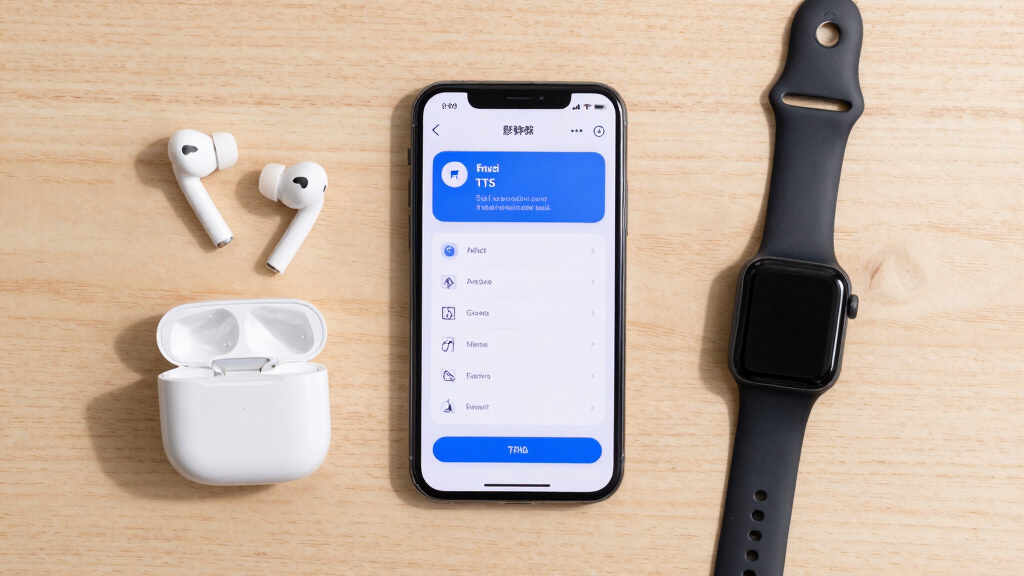
This breakthrough could dramatically expand the deployment of voice recognition and TTS features across a wide range of devices, including low-cost IoT gadgets, wearables, and embedded systems with minimal storage. It opens new possibilities for making voice interfaces more universally accessible, especially in regions or applications where hardware constraints previously limited such features. Industry experts suggest this could accelerate the adoption of voice AI in everyday devices, from household appliances to industrial sensors.
As an affiliate, we earn on qualifying purchases.
Evolution of Compact Voice Technologies
Traditional speech recognition and TTS systems require several megabytes to gigabytes of storage, limiting their use in small or low-power devices. Recent efforts have focused on model compression and optimization, but achieving a functional system under 500KB remains a significant challenge. Previous efforts have mostly targeted specific applications or used simplified models, but the new development claims to balance size with operational effectiveness. The announcement aligns with ongoing industry trends toward edge AI and on-device processing, reducing reliance on cloud services.
“Achieving a functional speech system under 500KB required rethinking neural network design and compression techniques. Our goal was to enable voice features on devices with extremely limited storage.”
— Dr. Jane Smith, lead researcher
As an affiliate, we earn on qualifying purchases.
Performance and Practical Deployment Details Still Unclear
It is not yet clear how the models perform across diverse languages and accents or how they handle complex speech tasks. The developers have shared initial results but have not published comprehensive benchmarks or real-world testing data. Deployment strategies and compatibility with existing hardware platforms are also still under development, leaving some questions about scalability and robustness unanswered.
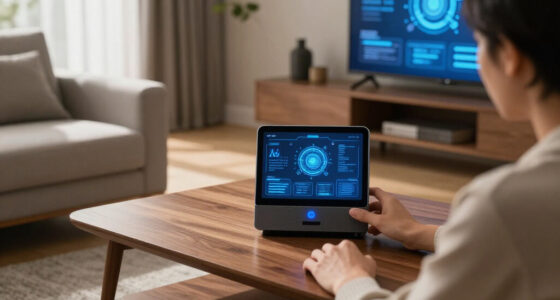
embedded voice recognition hardware
As an affiliate, we earn on qualifying purchases.
As an affiliate, we earn on qualifying purchases.
Upcoming Tests and Industry Adoption Plans
The developers plan to release more detailed performance metrics and conduct broader testing across various hardware platforms in the coming months. Industry partners are expected to evaluate the models for integration into consumer devices, and further research may focus on improving accuracy while maintaining the small size. Standardization efforts and potential collaborations with hardware manufacturers could accelerate adoption.
As an affiliate, we earn on qualifying purchases.
Key Questions
How does the size of this new speech system compare to existing solutions?
The new models operate within 500KB, whereas traditional speech recognition and TTS systems typically require several megabytes to gigabytes of storage, making this a significant reduction.
Will this technology work in multiple languages or just English?
It is currently unclear whether the models support multiple languages. The initial announcement focused on core functionality, with further language support likely to be developed in future iterations.
What are the main limitations of these ultra-light models?
Preliminary reports suggest that the models may have lower accuracy and naturalness compared to larger, more complex systems. They are optimized for basic commands and responses, not nuanced conversations.
When will these models be available for commercial use?
The developers have not announced a specific release date. Broader testing and collaboration with hardware manufacturers are expected in the coming months.
Could this technology be integrated into existing devices easily?
Potentially, yes. Since the models are designed to be lightweight, they could be embedded into low-power devices with minimal hardware modifications, but practical integration details are still being worked out.
Source: hn
Halloween Picks
halloween
As an affiliate, we earn on qualifying purchases.