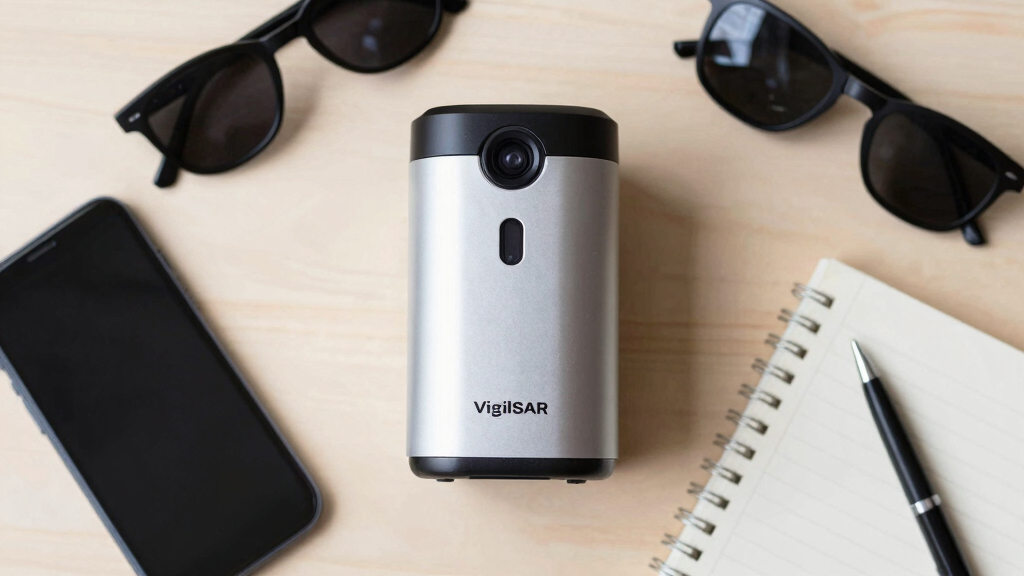

📊 Full opportunity report: VigilSAR: The Object That Isn’t Transmitting on ThorstenMeyerAI.com — validation score, market gap, and execution plan.

Get business pricing on tech for your team
- Business-only prices and quantity discounts
- Tax-exempt purchasing
- Multiple users, one account, clear invoices
TL;DR
VigilSAR is a radar-based platform that detects ships and aircraft that are not transmitting transponder signals, improving maritime security and safety. Its core capability is proven using European Sentinel-1 SAR data, with broader integrations in development.
VigilSAR has confirmed its core capability: detecting and classifying objects in radar imagery that are not transmitting transponder signals, a breakthrough for maritime domain awareness and security.
This platform combines synthetic-aperture radar (SAR) with data fusion from transponder signals and open-source information, offering reliable detection regardless of weather or lighting conditions. Its current foundation relies on publicly available European Space Agency SAR data, with commercial and defense applications actively being developed.
VigilSAR leverages SAR technology, which uses microwave signals to image the Earth’s surface in all weather and lighting conditions, unlike optical satellites that depend on daylight and clear skies. This makes it particularly valuable for maritime and border surveillance, disaster monitoring, and security operations.
The platform’s core function involves detecting anomalies in radar data and then classifying these objects through AI algorithms. Its unique strength lies in fusion: combining radar detections with transponder data, such as AIS and ADS-B signals. When a radar detection lacks an associated transponder signal, it signals a vessel or aircraft operating covertly or illegally, which is critical for law enforcement and safety agencies.
While the detection techniques are based on established remote sensing methods, VigilSAR’s innovation is in its data fusion process, which isolates objects that are ‘seen but not reported.’ This approach is especially relevant for identifying illegal fishing vessels, smuggling ships, or distressed vessels in need of rescue, making it a versatile tool for multiple agencies.
VigilSAR — the object that isn’t transmitting
Radar sees through cloud and darkness, when cameras can’t. Fuse it with transponder data and the signal is the one detection no transponder explains.
Independent commentary on public positioning, produced with AI assistance under human editorial oversight. The views are the author’s own and may change. This does not verify or endorse VigilSAR’s capabilities, contracts, or performance. Capabilities on Sentinel-1 / Copernicus reflect a free, public data foundation; commercial-constellation and air-gapped-deployment references reflect stated positioning, not independently demonstrated fact. ISR and related technologies may be subject to export controls and dual-use regulations — lawful, ethical use is solely the operator’s responsibility. Nothing here is an offer, pricing, or operational/safety/legal advice. AI detection and classification can err and require human verification. Product and company names are trademarks of their respective owners; mention does not imply endorsement.
Implications for Maritime Security and Safety
This development enhances the ability of maritime authorities to detect vessels that are intentionally ‘dark,’ meaning they operate without transmitting transponder signals. Such vessels are often involved in illegal activities like fishing, smuggling, or sanctions evasion, and their detection is vital for enforcing maritime laws and ensuring safety.
Because VigilSAR’s core capability is demonstrated using publicly accessible SAR data, it offers a potentially cost-effective and scalable solution for coast guards, fisheries regulators, and humanitarian responders worldwide. Its ability to operate in all weather and darkness conditions fills a critical gap in current surveillance systems, which often rely heavily on optical imagery or radio signals that can be disabled or jammed.
Ultimately, VigilSAR’s detection of silent objects could lead to more effective enforcement, better resource allocation, and improved safety for vessels in distress, with broad implications across security, environmental, and humanitarian domains.
synthetic aperture radar (SAR) device
As an affiliate, we earn on qualifying purchases.
As an affiliate, we earn on qualifying purchases.
Background on SAR and Maritime Surveillance
Most satellite imagery relies on optical sensors, which are limited by weather, darkness, and smoke. Synthetic-aperture radar (SAR) overcomes these limitations by using microwave signals that pass through clouds and operate in darkness, providing consistent surface imaging.
The challenge has been interpreting SAR data, which is not an image but a radar return signal. AI and data fusion techniques have been developed to convert raw radar data into actionable intelligence, focusing on detection and classification of objects.
VigilSAR builds on these techniques, integrating radar detections with transponder signals like AIS (for ships) and ADS-B (for aircraft). Its key innovation is identifying objects that appear in radar but lack transponder signals, a critical feature for maritime security and law enforcement.
While the core detection capability is proven with Sentinel-1 data, broader commercial and military deployments are still under development, with no public pricing or detailed operational specifications available yet.
“VigilSAR’s ability to detect objects that are not broadcasting transponder signals marks a significant advancement in all-weather, day-and-night surveillance.”
— Thorsten Meyer, remote sensing expert
As an affiliate, we earn on qualifying purchases.
Current Deployment Status and Limitations
It is not yet clear how widely VigilSAR’s capabilities are deployed in operational environments or how effective they are against sophisticated concealment tactics. Broader commercial and defense applications are still in development, with no public confirmation of operational success beyond initial demonstrations.
Details about pricing, integration with existing systems, and real-world case studies are not yet available, leaving questions about scalability and practical deployment open.
As an affiliate, we earn on qualifying purchases.
Next Steps for Commercial and Defense Adoption
VigilSAR’s developers plan to expand testing across different satellite constellations and operational scenarios. Expect further demonstrations and potential pilot programs with government agencies and commercial entities in the coming months.
Additionally, the company may release more detailed technical information and seek partnerships to integrate VigilSAR into existing maritime security frameworks, aiming for broader deployment and validation.
As an affiliate, we earn on qualifying purchases.
Key Questions
How does VigilSAR detect vessels without transponders?
VigilSAR uses synthetic-aperture radar to identify objects based on their radar return signals, which differ from surrounding water or terrain. It then fuses this data with transponder signals; objects with no associated transponder are flagged as ‘dark’ vessels.
Is VigilSAR’s capability proven in real-world conditions?
The core detection capability has been demonstrated using publicly available Sentinel-1 SAR data. Broader operational deployment is still under development, with real-world effectiveness yet to be fully confirmed.
Who can benefit from VigilSAR?
Maritime authorities, coast guards, fisheries regulators, and humanitarian agencies can benefit by identifying vessels operating covertly, aiding enforcement, safety, and environmental protection efforts.
What are the limitations of VigilSAR?
Current limitations include the need for further integration with operational systems and the unknown effectiveness against highly concealed or electronically shielded vessels. Deployment scale and cost details are also not yet available.
Source: ThorstenMeyerAI.com
Fall Picks
fall essentials
As an affiliate, we earn on qualifying purchases.