TL;DR

Get business pricing on tech for your team
- Business-only prices and quantity discounts
- Tax-exempt purchasing
- Multiple users, one account, clear invoices
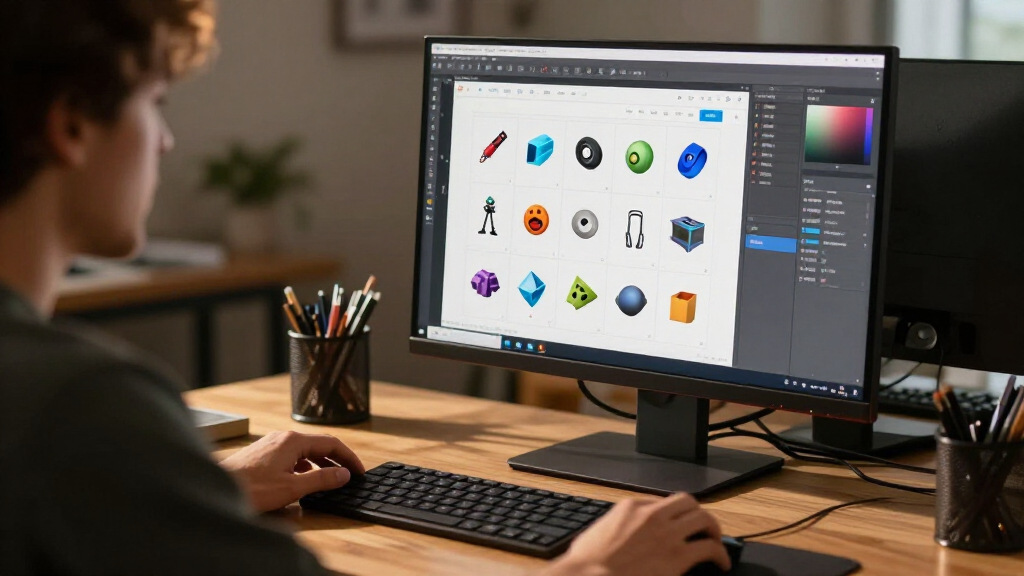
NVIDIA announced SimReady Central, a free, ungated Hugging Face library with more than 2,000 OpenUSD assets prepared for simulation workflows. Developers can browse assets for robotics and AI factory scenes, while manufacturers can validate and submit their own assets against SimReady profiles.
NVIDIA has announced SimReady Central, a free, ungated library on Hugging Face containing more than 2,000 OpenUSD assets prepared for simulation workflows. The collection is intended to help robotics developers and teams building AI factory digital twins find reusable 3D equipment models with physical and other simulation-related properties already specified.
Unlike a 3D model intended only for display, a SimReady asset includes information that simulation software can use to represent how an object behaves. Depending on the asset and its profile, that may include collision geometry, mass, friction, joints and movement limits, semantic labels, materials, or sensor attributes. NVIDIA’s report says those additions can reduce the manual preparation needed before an object is used in a simulation.
The library covers equipment for both robotics and industrial environments. Examples described in the announcement include robot arms and grippers, warehouse equipment, racks, cooling systems, and household appliances. Developers can inspect which capabilities an asset supports and combine assets from different suppliers in an OpenUSD scene, selecting profiles that fit the intended simulation use case.
The announcement names contributors and asset providers including Vertiv, Comau, FANUC, Franka Robotics, Robotiq, Standard Bots, Universal Robots, LG Electronics, Palatial and ForgeCAD. Their listed examples span factory and data-center infrastructure, robots, grippers, appliances, and articulated props. The report says OEMs can prepare and validate assets against SimReady requirements, then submit them to the library so developers can discover and test equipment in virtual environments.
Reusable Assets for Robotics and Factories
Preparing a simulation environment involves more than placing realistic-looking models in a scene. A robot training setup may depend on an object’s mass, friction and collision shape to represent contact and movement. Factory digital twins can also need equipment geometry and application-specific information, such as electrical or thermal metadata. If each development team must create and check those details from scratch, asset preparation becomes a separate workload before simulation and evaluation can begin.
SimReady Central is presented as a shared discovery point for assets that have been prepared for defined simulation profiles. That could make it easier for teams to assemble scenes using equipment from multiple suppliers, and for manufacturers to make their products available for virtual testing. The report says this may help customers test scenarios and make decisions faster, but it does not provide measurements demonstrating time savings or improved simulation results.
The library also connects manufacturers with developers who may not otherwise have access to product models prepared for simulation. For robotics, scenes can combine a robot or gripper with warehouse equipment or household objects. For AI factory planning, developers can place racks, cooling equipment and related infrastructure in a digital twin. These are potential uses described in the announcement, not evidence that every asset has been tested in every simulation system.
simulation-ready 3D robot arm models
As an affiliate, we earn on qualifying purchases.
As an affiliate, we earn on qualifying purchases.
How SimReady Profiles Work
The announcement describes SimReady assets as OpenUSD assets with properties needed for specified simulation workflows. OpenUSD is an extensible framework for describing and combining 3D scenes. A detailed CAD model can provide geometry, but simulation may require additional data describing physical behavior, articulation, or how sensors and rendering should interpret the object.
SimReady Foundation provides specifications, profiles and validation tools for those requirements, according to the report. A profile groups the features an asset needs for a particular use case; requirements therefore vary rather than applying identically to every object. For example, collision and physical properties support contact simulation in a compatible runtime, while joint structures and limits describe articulated movement. Semantic labels can support identification and annotated synthetic data.
The library’s role is to help users find and compose assets that match their needs. The report also describes a submission process in which OEMs use a SimReady Central submission skill to validate and package assets against relevant profiles. The announcement frames this as a way for manufacturers to manage their own Hugging Face datasets while making assets discoverable to simulation developers.
““SimReady assets are 3D models that come prepared with the properties required for simulation workflows.””
— NVIDIA, in the Hugging Face announcement
industrial equipment 3D models for simulation
As an affiliate, we earn on qualifying purchases.
As an affiliate, we earn on qualifying purchases.
Compatibility and Asset Coverage
The report does not specify the library’s publication date, provide a complete inventory of the assets, or state how many assets meet each profile. It also does not give independent test results, performance comparisons, or evidence that every asset works across all simulation runtimes. The source says assets can be used in a supported runtime, so compatibility depends on the asset, its profile and the software workflow.
It is also unclear how frequently the collection will be updated, what review process applies after submission, or whether the listed asset providers represent the full set of contributors. The announcement describes possible benefits for simulation preparation and decision-making but gives no quantified results. Those outcomes should be treated as intended uses rather than measured effects.
As an affiliate, we earn on qualifying purchases.
How Contributors and Developers Proceed
Manufacturers interested in contributing can use the SimReady Central submission skill described in the report to validate and package assets against applicable profiles before submitting them. Developers can browse the Hugging Face library, check each asset’s supported capabilities, and choose models that match their intended simulation workflow.
The next practical test will be how well the available assets support real projects: whether teams can combine models from different suppliers, use them in their selected runtimes, and build the robotics or AI factory scenes they need. The announcement does not provide a timetable for further releases or additional asset totals, so updates to the library and its profile coverage remain to be seen.
As an affiliate, we earn on qualifying purchases.
Key Questions
What is SimReady Central?
SimReady Central is a free, ungated Hugging Face library that the announcement says contains more than 2,000 OpenUSD assets prepared for simulation workflows.
What makes an asset simulation-ready?
A SimReady asset includes data required for a specified simulation profile. Depending on its use, that can include collision geometry, physical properties, joints, semantic labels, materials or sensor attributes.
What kinds of assets are included?
The report describes robotics and industrial assets, including robot arms, grippers, warehouse equipment, racks, cooling infrastructure and appliances. The exact capabilities differ by asset.
Can manufacturers submit their own assets?
Yes. The announcement says OEMs can use a SimReady Central submission skill to validate and package assets against relevant profiles before submitting them for inclusion.
Does every asset work with every simulation tool?
The announcement does not claim universal compatibility. It says developers can check asset capabilities and refers to use in a supported runtime; compatibility should be checked for the intended profile and software workflow.
Source: rss
Halloween Picks
halloween
As an affiliate, we earn on qualifying purchases.