📊 Full opportunity report: How Pro Athlete Data Can Inform Youth Technique Reviews on IdeaNavigator AI — validation score, market gap, and execution plan.

Get business pricing on tech for your team
- Business-only prices and quantity discounts
- Tax-exempt purchasing
- Multiple users, one account, clear invoices
TL;DR
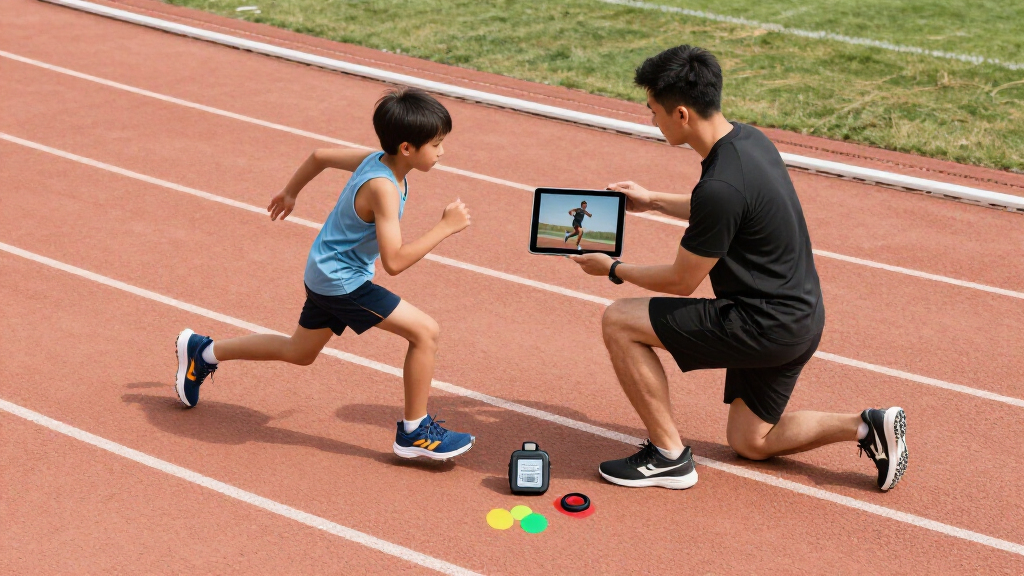
IdeaNavigator AI describes a proposed app that would compare young athletes’ movements with professional reference mechanics and suggest a drill for each practice session. The idea remains a product proposal: no app, test results, or coach-validated accuracy are reported, and a pilot with 100 baseball players is suggested as a way to evaluate it.
IdeaNavigator AI has proposed a phone-based form-grading app for young athletes practicing without a private coach, with a suggested first test involving 100 children in baseball. The proposal would compare filmed movements with professional reference mechanics, grade selected checkpoints, and recommend one drill per session; it does not report that the app has been built or tested.
The concept is aimed at a specific potential customer: a parent of a young athlete who practices without regular individual coaching. The proposed workflow would let a family film a swing, throw, or stride, then receive a motion overlay and scores for skill-specific mechanics. Baseball hitting is identified as the proposed first sport, rather than a confirmed product launch or completed trial.
The suggested minimum product would assess checkpoints such as hip rotation, release angle, and stride, depending on the skill being reviewed. It would then identify what it judges to be the largest gap and prescribe one drill for that session. The proposal also suggests a free tier and paid family subscriptions organized by sport, with a separate coach tier for team use. Pricing, feature limits, and availability are not specified.
To test the idea, the proposal recommends asking certified coaches to review the app’s grades against their own assessments across 100 young athletes. That evaluation is presented as a validation plan, not as research that has already happened. No accuracy results, injury outcomes, or evidence that the suggested drills improve performance are provided.
A Lower-Cost Option for Practice
If developed and shown to produce useful feedback, the concept could give families a way to review repetitions between coaching sessions. The proposal frames private lessons, which it says can cost $75 to $150 per session, as a barrier for some families. A phone-based service could offer more frequent feedback at a lower cost, though the proposed subscription pricing is not given and its affordability cannot yet be assessed.
The central question is not whether a phone can display movement measurements, but whether its scores are reliable, understandable, and appropriate for children. An inaccurate grade could mislead a young athlete or parent; a useful one might help a coach or family spot a movement worth discussing. The proposed coach review is therefore a key step before treating automated feedback as a dependable substitute or supplement to instruction.
As an affiliate, we earn on qualifying purchases.
From Phone Video to Technique Scores
The proposal argues that phone-based pose-estimation models have advanced enough to compare movement with reference profiles. It presents that capability as the reason a low-cost, consumer-facing product may now be feasible. However, no specific model, benchmark, technical study, or measured accuracy is cited in the proposal, so the claim remains a rationale for the idea rather than independently documented evidence.
Its problem statement is that young athletes may repeat movements without someone noticing technique issues, while private coaching can be costly. It also says flaws could become habits and raise injury risk. Those are concerns motivating the product concept; the proposal supplies no data measuring how often this occurs or showing that its planned app would prevent injuries.
As an affiliate, we earn on qualifying purchases.
Accuracy and Child-Specific Benchmarks
The proposal does not identify a product, development team, launch schedule, or completed pilot. It also does not explain how the reference mechanics would be selected, how a child’s age or physical development would affect comparisons, or how the system would handle different camera angles and recording conditions. Those details could materially affect the meaning of a technique score.
It remains unknown whether certified coaches would agree with the app’s grades, what level of agreement would count as acceptable, or whether any resulting feedback would change performance or injury rates. The proposal’s mention of phone-model capability is not accompanied by validation data for this specific use. Until testing is reported, the app’s effectiveness and safety remain unestablished.
As an affiliate, we earn on qualifying purchases.
Coach Review Would Be the First Test
The next step described in the proposal is a baseball hitting pilot with 100 children, in which certified coaches would compare the app’s grades with their own assessments. No dates, participating coaches, recruitment details, or planned publication of results are provided. The proposal also does not say whether the test would assess only scoring agreement or track athletes’ progress over time.
Any future report would need to explain how the comparison was conducted and where the app agreed or disagreed with coaches, as well as the limits of the test. Until a product and evaluation are documented, the concept should be understood as a proposed workflow for youth sports training, not a proven coaching tool.
Source: IdeaNavigator AI
kids sports technique video analysis
As an affiliate, we earn on qualifying purchases.
As an affiliate, we earn on qualifying purchases.
Key Questions
Is the youth form-grading app available now?
No launch is reported. IdeaNavigator AI describes a product concept and proposed minimum viable product, not an app confirmed to be available to families.
How would the proposed app review technique?
A user would film a repetition. The proposed app would compare the athlete’s movement with pro-derived reference mechanics, grade selected checkpoints, and suggest one drill aimed at the largest identified gap.
Has the app been shown to grade movements accurately?
No accuracy results are reported. The proposal recommends a coach audit across 100 children as a way to test its grades against human assessments.
Which sport would be tested first?
The proposed pilot starts with baseball hitting. The proposal does not report that the pilot has begun or name a schedule.
Would the app replace a private coach?
That has not been established. The concept targets practice without a private coach, but its accuracy, effects on performance, and role alongside human instruction have not been tested in reported results.
Source: IdeaNavigator AI
Fall Picks
fall essentials
As an affiliate, we earn on qualifying purchases.