
📊 Full opportunity report: Influencer Scoring For Ecommerce Teams Launching New Products on IdeaNavigator AI — validation score, market gap, and execution plan.

Get business pricing on tech for your team
- Business-only prices and quantity discounts
- Tax-exempt purchasing
- Multiple users, one account, clear invoices
TL;DR
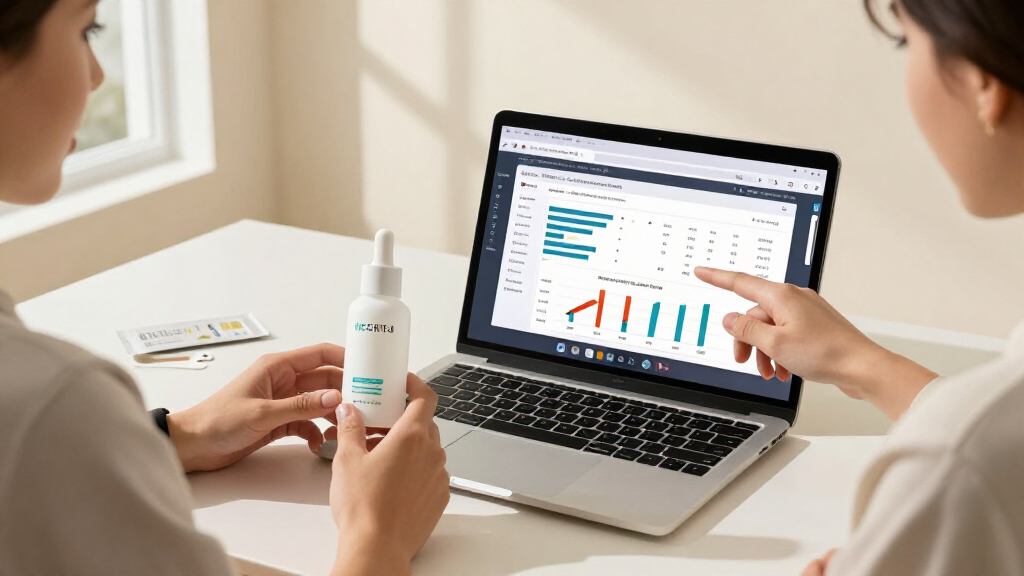
IdeaNavigator AI describes a proposed scoring workflow for direct-to-consumer brands choosing influencers for product launches. The concept would rank candidates using audience-fit signals, engagement authenticity and category sales history where available, but its performance has not been established; a proposed test would compare predictions with attributed sales across ten launches.
IdeaNavigator AI has proposed a scoring workflow for direct-to-consumer brands selecting influencers for new-product launches, with rankings based on audience fit, engagement authenticity and category conversion history where available. The concept is aimed at helping launch teams choose a roster and offer structure, but no product release, customer results or validation data were provided; the suggested next step is to test predictions against attributed sales across ten launches. These details are from IdeaNavigator AI’s published proposal.
In its proposal, IdeaNavigator AI says the tool would ask a brand to enter the product and target customer, then score candidate influencers using several signals. These include how well an influencer’s audience fits the intended customer, whether engagement appears authentic, and past conversion performance in the product category when that information is available. It says the tool would return a ranked launch roster and suggested offer structures.
IdeaNavigator AI frames the concept around a measurement gap: launch teams may select partners based on follower counts and subjective impressions, then learn after a campaign which influencers generated sales. The proposal says sales evidence can be spread across affiliate links, post-purchase surveys and Spark Ads data, making it difficult to assess performance in one place. It does not provide evidence showing how often this problem occurs or how much sales data brands can reliably consolidate.
The proposal describes a subscription priced by roster volume as a possible business model in the influencer-marketing analytics market. To test whether the rankings are useful, it recommends scoring influencer rosters for ten launches before results are known, preserving those predictions, and comparing them with realized per-influencer attributed sales. IdeaNavigator AI reports no results from such a test.
Testing Better Launch Roster Decisions
IdeaNavigator AI argues that, if its proposed scoring method can predict which partners produce attributed sales, it could give DTC launch teams a repeatable way to compare candidates rather than relying mainly on reach or informal judgment. Preserving predictions before a launch would also make it possible to evaluate the tool against campaign outcomes instead of treating a favorable result after the fact as proof of accuracy.
The commercial question is whether the rankings improve decisions enough to justify a recurring subscription. Brands would need to see that the scores add value beyond data already available through affiliate platforms, surveys and advertising tools. The proposal does not report a working product, measured savings, sales lift or customer adoption, so its business value remains unverified.
For marketers, the distinction between a ranked roster and a dependable performance forecast matters. A score could help organize available evidence, but it would not by itself establish that a particular influencer caused a sale. Attribution can be incomplete, and results may depend on the offer, timing, product and how each brand tracks purchases. Those factors make the pre-launch test proposed by IdeaNavigator AI central to judging the idea.
influencer scoring tool for ecommerce
As an affiliate, we earn on qualifying purchases.
As an affiliate, we earn on qualifying purchases.
Existing Signals, One Proposed Score
IdeaNavigator AI’s proposal points to several kinds of campaign measurement: affiliate links, post-purchase surveys and Spark Ads data. The company says these signals are often distributed across tools rather than collected into a unified view. It presents their aggregation as the reason a scoring workflow may now be practical, but does not name particular platforms, integrations or data standards.
Influencer selection based on follower counts and perceived fit is the problem framing in IdeaNavigator AI’s proposal, not a measured finding in the material provided. Likewise, the scoring inputs are proposed criteria; the company discloses no formula, weighting system, minimum data threshold or method for checking engagement authenticity. The plan is therefore at the product-concept and validation stage, rather than a reported deployment with established results.
IdeaNavigator AI suggests testing predictions against outcomes across ten launches. To make that comparison informative, a team would need to record scores before campaigns begin and define how it will attribute sales to each influencer. The proposal does not specify a time window, attribution rules, comparison baseline or threshold for deciding that the model performed well.
influencer engagement authenticity analyzer
As an affiliate, we earn on qualifying purchases.
As an affiliate, we earn on qualifying purchases.
Key Questions Before Validation
No validation results are available. IdeaNavigator AI’s proposal does not identify a product launch date, a built tool, participating brands or completed tests. It is also unclear how candidate influencers would be selected for scoring, how much historical data the system would require, and what it would do when category conversion history is unavailable.
The relationship between a score and actual sales remains unproven. The company’s suggested test would compare predicted rankings with attributed sales, but the proposal does not set out how to account for differences in campaign spend, audience size, offer terms or other marketing activity. It also does not say how post-purchase survey responses would be combined with affiliate and advertising data, or how conflicting signals would be handled.
Finally, pricing and customer demand have not been established. IdeaNavigator AI presents subscription tiers based on roster volume as a proposed revenue model, not a reported commercial offering. The proposal provides no price, paying customers or evidence of willingness to subscribe.
product launch influencer ranking software
As an affiliate, we earn on qualifying purchases.
As an affiliate, we earn on qualifying purchases.
A Ten-Launch Prediction Test
IdeaNavigator AI proposes a pre-registered-style comparison across ten launches: score each roster before the campaign, preserve the predictions, and compare them with per-influencer attributed sales after results are available. The proposal does not specify who would run the test or when it would begin.
For the exercise to establish whether the rankings are useful, the test would need clear definitions for attributed sales, the evaluation period and the treatment of missing or conflicting records. It would also need to report outcomes rather than only whether a tool generated a roster. Until such findings are available, the scoring workflow should be treated as a proposal to validate, not a proven way to improve launch performance.
Source: IdeaNavigator AI
influencer marketing analytics platform
As an affiliate, we earn on qualifying purchases.
As an affiliate, we earn on qualifying purchases.
Key Questions
What is the proposed influencer-scoring tool?
IdeaNavigator AI describes a proposed workflow that would use product and target-customer information to rank potential launch influencers by audience fit, engagement authenticity and category conversion history when that history is available.
Has the tool been launched or tested?
IdeaNavigator AI reports no launch or test results. Its outlined validation plan is to score rosters for ten product launches before outcomes are known and compare the rankings with attributed sales.
What data would the scoring use?
The proposal refers to audience-fit signals, engagement information and available category conversion history. It also points to affiliate links, post-purchase surveys and Spark Ads data as possible sales-measurement sources, but does not detail integrations or a scoring formula.
How might the product make money?
IdeaNavigator AI proposes a subscription tiered by the number of scored rosters. Pricing, customer demand and paid adoption have not been reported.
Source: IdeaNavigator AI
Fall Picks
fall essentials
As an affiliate, we earn on qualifying purchases.