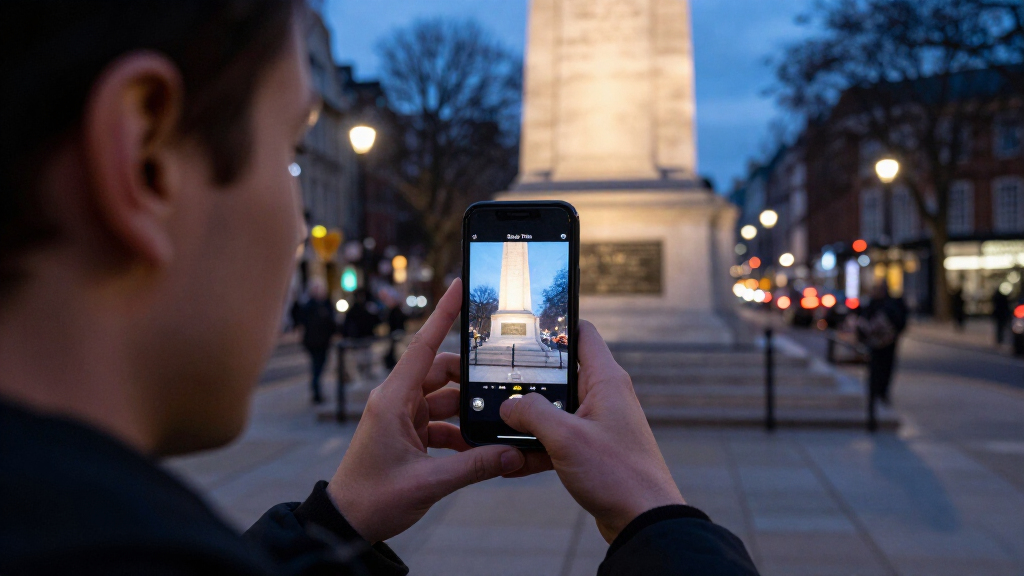

🔍 Read the full analysis: Steal This: The Signature Technique Behind “The Cenotaph At Night | A Two-Minute Vigil” on ThorstenMeyerAI.com

Get business pricing on tech for your team
- Business-only prices and quantity discounts
- Tax-exempt purchasing
- Multiple users, one account, clear invoices
TL;DR
The ‘Cenotaph at Night’ virtual memorial employs disciplined design and CSS techniques to create a contemplative, silent experience. Its signature lies in timed silence, static visuals, and minimal interaction, emphasizing reflection over spectacle.
The virtual memorial ‘The Cenotaph at Night | A Two-Minute Vigil’ employs a distinctive design technique centered on disciplined restraint, emphasizing silence and stillness to evoke remembrance. Its design approach is discussed in the original analysis. Its core feature is a static, floodlit photograph paired with a timed clock, creating a meditative space that guides visitors through a moment of solemn reflection. This approach is confirmed by the site’s design documentation and direct observation of its live implementation. For a detailed breakdown of the techniques used, see this analysis.
The experience centers around a single, high-quality architectural photograph that remains static throughout, avoiding any looping video or animation. Visitors interact primarily through scrolling, which triggers a carefully timed two-minute countdown from 23:58 to midnight. During this countdown, the clock updates subtly, and at midnight, names and inscriptions are revealed in a slow, smoke-like rise, mimicking a shared moment of remembrance. The entire design employs CSS techniques such as cover cropping, monochrome grading, and precise sizing to ensure visual consistency across devices. More about CSS techniques for immersive memorials can be found in the original analysis. Interaction is minimal but meaningful: scrolling advances the clock, which then triggers a class toggle that dims the clock, pauses grain and petals, and reveals names dynamically generated to resemble a list of fallen soldiers, with details like ranks and ages. The site also features optional low-tone sounds and wind effects at midnight, which fade out to maintain the contemplative tone. Accessibility considerations include static states for users with reduced motion preferences, ensuring the space remains undistracted and meditative. The signature element of this design is its disciplined restraint—focusing on materiality, timed silence, and static visuals rather than motion or performance, creating an immersive, silent memorial experience.
Steal This: The Signature Technique Behind “The Cenotaph at Night”
A two-minute vigil built on disciplined restraint — timed silence, a static floodlit photograph, and one scroll-driven countdown from 23:58 to midnight. No loops, no spectacle. Just stillness, made in code.
A Digital Memorial Without Spectacle
By refusing animation-heavy storytelling, the vigil mirrors traditional remembrance rituals: stillness, materiality, and a shared, timed silence. The result is a meditative space that feels closer to a stone monument than a landing page.
Silence as Interface
Sound fades to near-nothing. Low-tone ambience and wind are optional, and they dissolve at midnight to preserve the contemplative register of the piece.
The Static Image
A single, high-quality architectural photograph stays frozen throughout — no looping video, no parallax. Visitors focus on materiality and the passage of time itself.
Stone, Brass, Poppy Red
Monochrome grading with one poppy-red accent echoes traditional war memorial materials: carved stone, aged brass, and subdued ceremonial colour.
Scroll → Clock → Midnight → Names
One scroll input drives the entire ritual. A JavaScript class toggle orchestrates every state change — dimming the clock, pausing grain and petals, and releasing the names in a slow, smoke-like rise.
Visitor Arrives
Floodlit cenotaph photograph, monochrome-graded, cover-cropped for any screen.
Scroll Begins
The clock starts ticking from 23:58, updating subtly as the visitor moves down the page.
Class Toggles
At midnight the clock dims, grain and petals pause, audio fades to silence.
Names Rise
Dynamically generated names — ranks, ages — ascend like smoke in a shared act of remembrance.
The discipline is the technique: minimal interaction, timed silence, and static visuals instead of motion or performance.
Signature Principle — The Cenotaph at NightHow It’s Built: The Steal-able Checklist
Every element of the vigil is achievable with plain web technologies. Here is the technique stack, ready to borrow for your own contemplative projects.
| Technique | Implementation | Purpose | Steal It? |
|---|---|---|---|
| Cover Cropping | CSS background-size / object-fit rules | Guarantees the photograph composes identically on every device | ✓ Yes |
| Monochrome Grading | CSS filters and a strict tone palette | Creates ceremonial gravity; one poppy-red accent only | ✓ Yes |
| Precise Sizing | Fixed ratios and typographic scale | Visual consistency across viewports and browsers | ✓ Yes |
| Class-Toggle Timing | Vanilla JS adds/removes state classes on scroll | Drives clock dimming, particle pause, and name reveal | ✓ Yes |
| Generated Name Roll | JS-generated entries with ranks and ages | Resembles a fallen-soldiers list; smoke-like rise animation | ~ Adapt |
| Reduced-Motion Fallback | Static states via media queries | Keeps the space undistracted for motion-sensitive users | ✓ Yes |
Where This Memorial Sits on the Spectrum
Compared with typical memorial and tribute sites, “The Cenotaph at Night” pushes almost every dial toward stillness. That restraint is exactly what makes it worth copying.
From Idea to Immersion
The complete chain of design decisions that carry a visitor from first arrival to the moment of remembrance.
What Designers Keep Asking
The essentials, answered — from cross-device consistency to whether this technique can travel beyond remembrance themes.
Why does the static visual matter so much?
It creates a meditative, timeless quality — the visitor focuses on materiality and the passage of time, not on distraction or spectacle.
How is cross-device consistency achieved?
Cover cropping, monochrome grading, and precise sizing in CSS, combined with vanilla JavaScript for scroll-timed interactions.
What happens with reduced motion preferences?
The site enforces static states and simplifies animations, keeping the contemplative tone intact without motion distractions.
What is the role of timed silence?
It fosters a shared, solemn moment of reflection — stillness over spectacle, aligning with traditional remembrance practice.
Can the technique be adapted elsewhere?
Yes. The restraint-based model works for contemplative digital memorials across themes and cultural contexts.
What remains open?
Universal accessibility for visually or motor-impaired users, plus the long-term emotional effect of a silent, static memorial.
Why This Minimalist Approach Matters in Digital Memorials
This design approach demonstrates how restraint and precise timing can create a powerful emotional impact in digital memorials. By avoiding animation and motion, the experience fosters a shared, contemplative space that emphasizes silence and stillness, aligning with traditional remembrance rituals. It highlights a shift toward meditative, non-spectacular memorials that prioritize materiality and timed silence, offering a new model for digital remembrance that is accessible, respectful, and deeply immersive. This method underscores the importance of design discipline in evoking solemnity and reflection in virtual spaces, potentially influencing future memorial projects.
CSS design tools for web memorials
As an affiliate, we earn on qualifying purchases.
As an affiliate, we earn on qualifying purchases.
Design Principles and Technical Foundations of the Memorial
The ‘Cenotaph at Night’ was developed as part of a larger project—an exhibition of 175 websites—each crafted through AI with a focus on simplicity and emotional resonance. Its design draws inspiration from traditional war memorials, emphasizing materials like stone, brass, and subdued colors, combined with a strict palette of monochrome tones and a single poppy red accent. The technical execution relies solely on HTML, CSS, and vanilla JavaScript, with no external assets or frameworks. The static visual and timed interactions are achieved through CSS techniques such as cover cropping, monochrome grading, and precise sizing, ensuring cross-device consistency. The core interaction—scrolling to advance the clock—uses JavaScript to toggle classes that control visual and auditory states, creating a seamless, contemplative experience. The site was built with accessibility and device performance in mind, including static states for reduced motion preferences and optimized frame rates. This disciplined, code-driven approach embodies the signature technique of the project: minimalism, timed silence, and material focus, crafted to evoke a profound sense of remembrance.
minimalist web design lighting effects
As an affiliate, we earn on qualifying purchases.
As an affiliate, we earn on qualifying purchases.
Remaining Questions About User Experience and Accessibility
While the design emphasizes silence and restraint, it is not yet clear how universally accessible the experience is for users with diverse needs, particularly those with visual or motor impairments. The impact of the timed interaction on different devices and browsers is also still being evaluated, and the long-term emotional effect of the static, silent memorial remains to be studied in depth.
scroll-triggered animation software
As an affiliate, we earn on qualifying purchases.
As an affiliate, we earn on qualifying purchases.
Future Developments and Broader Impact of the Technique
Future steps include gathering user feedback to refine accessibility features and exploring how this disciplined approach can influence other digital memorials. The creators plan to analyze visitor responses and possibly adapt the technique for different cultural contexts or themes. Additionally, the project aims to demonstrate how minimalism and timed silence can serve as a powerful alternative to more animated or dynamic memorials, potentially setting new standards for digital remembrance spaces.
accessible web design tools for silent memorials
As an affiliate, we earn on qualifying purchases.
As an affiliate, we earn on qualifying purchases.
Key Questions
How does the static visual contribute to the memorial’s impact?
The static visual creates a meditative, timeless quality, encouraging visitors to focus on the materiality and the passage of time, rather than distraction or spectacle.
What technical methods ensure cross-device consistency?
CSS techniques like cover cropping, monochrome grading, and precise sizing, combined with vanilla JavaScript for interactions, ensure visual and functional consistency across devices.
How does the experience handle users with reduced motion preferences?
The site enforces static states and simplifies animations for users with reduced motion settings, maintaining its contemplative tone without motion distractions.
What is the significance of timed silence in this memorial?
Timed silence fosters a shared, solemn moment of reflection, emphasizing materiality and stillness over spectacle, aligning with traditional memorial practices.
Could this approach be adapted for other types of memorials?
Yes, the disciplined, restraint-based technique offers a model for creating contemplative digital memorials across different themes, emphasizing silence and materiality.
Source: ThorstenMeyerAI.com
Halloween Picks
halloween
As an affiliate, we earn on qualifying purchases.