📊 Full opportunity report: Lab And Symptom Tracker For TRT Patients on IdeaNavigator AI — validation score, market gap, and execution plan.

Get business pricing on tech for your team
- Business-only prices and quantity discounts
- Tax-exempt purchasing
- Multiple users, one account, clear invoices
TL;DR
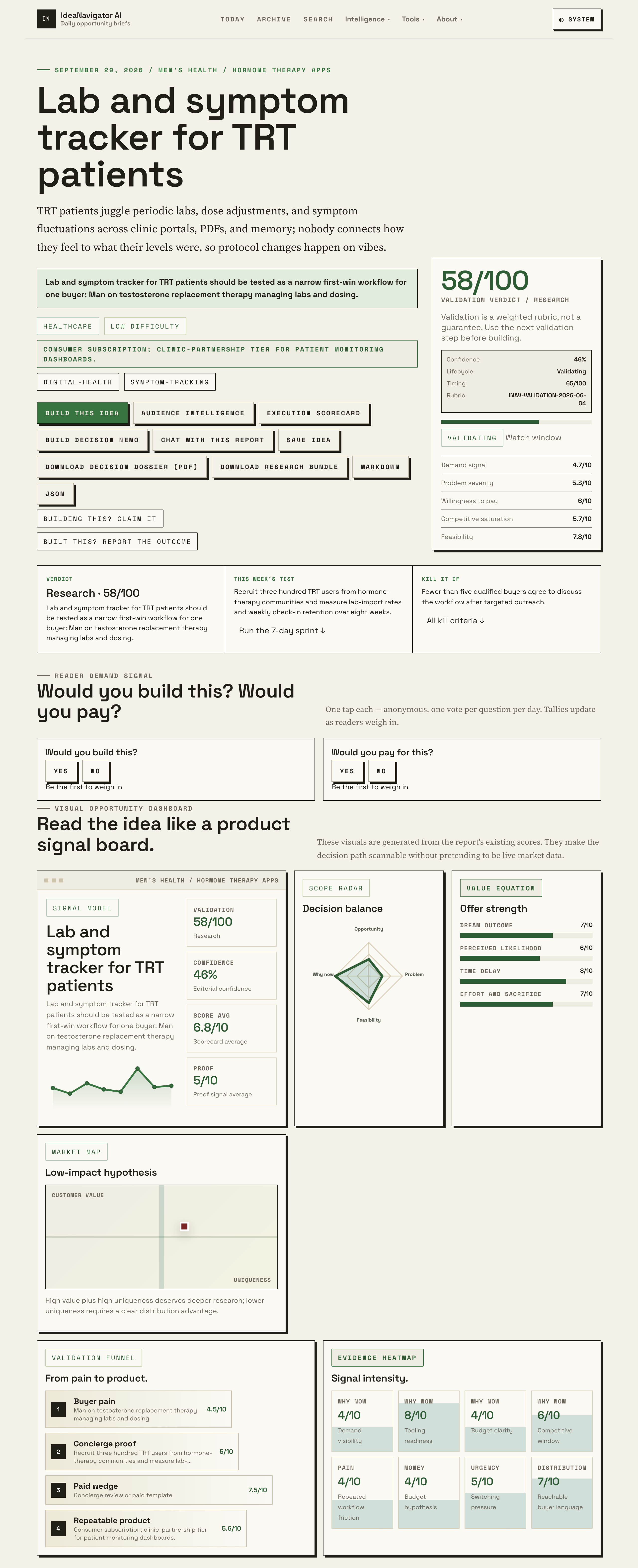
A product proposal outlines a lab and symptom tracker for men receiving testosterone replacement therapy. The suggested app would combine imported lab PDFs, dose changes and daily symptom check-ins, then test user engagement over eight weeks; no trial results or product launch are reported.
IdeaNavigator AI has proposed testing a lab and symptom tracker for men on testosterone replacement therapy (TRT), a workflow intended to connect lab results and dose changes with daily symptom records. The proposal describes a product concept and an eight-week user test; it does not report that an app has launched or that the test has begun.
The proposed minimum product would let users import lab-result PDFs, chart hormone measurements over time and mark when their TRT dose changes. Patients would also record symptoms each day. The combined timeline is meant to show how measurements and reported symptoms vary alongside treatment changes.
The app would generate trend summaries for clinic visits and flag results moving outside target ranges. The proposal does not define which hormone tests or target ranges would be used, how those ranges would be selected, or whether a clinician would review a flag before a patient sees it.
The suggested business model has two parts: a consumer subscription and a clinic partnership tier with patient-monitoring dashboards. To test demand, the plan calls for recruiting 300 TRT users through hormone-therapy communities and measuring lab-import rates and weekly check-in retention over eight weeks. No recruitment, pricing, retention findings or clinical outcomes are provided.
Connecting Labs With Daily Symptoms
The product idea addresses a record-keeping gap described in the proposal: patients may have lab reports in PDFs or clinic portals, dose adjustments recorded elsewhere, and symptom changes held in memory. Bringing those records into one timeline could give a patient and clinician a clearer account of what changed and when during treatment.
That would make the app potentially useful as a visit-preparation and monitoring aid, if users enter data consistently and the summaries are accurate. It would not, by itself, show that a dose change caused a symptom change or establish what treatment is appropriate. The proposal presents a workflow hypothesis, not evidence that the app improves care or health outcomes.
The plan also puts continued use at the center of validation. Lab imports and weekly check-ins would indicate whether users engage with the core functions during the test, but those measures alone would not establish clinical value, safety, or demand for a paid subscription. Clinic dashboards would add another potential use, while raising questions about who can see patient data and how clinics would incorporate it.
Top picks for "symptom tracker patient"
As an affiliate, we earn on qualifying purchases.
A Fragmented TRT Record
The proposal frames TRT management as a process that can involve periodic lab testing, dose adjustments and changing symptoms across separate records and care providers. It says telehealth clinics and TRT prescriptions have grown, but supplies no figures, timeframe or independent evidence for that claim. The size of the potential market is therefore not established here.
Its suggested first customer is deliberately specific: a man already receiving TRT who is managing lab results and dosing. This focus shapes the proposed product around tracking and visit preparation, rather than a broader men’s health service. The proposal identifies men’s health and hormone-therapy apps as the market category and recommends testing the workflow with a defined group before expanding it.
The proposed eight-week test would recruit 300 TRT users from hormone-therapy communities. Lab-import rates and weekly check-in retention are named as measures, but no recruitment method, comparison group, success threshold or analysis plan is described. The test remains a proposed validation step, not a completed study.
Product and Trial Details Pending
No app name, developer, launch date, clinic partner or price is specified. It is also unclear whether the proposed 300-person test has been funded or scheduled, how participants would be recruited, or what results would count as sufficient retention or import activity.
The proposal does not explain how lab PDFs would be read and checked for errors, how target ranges would account for individual circumstances, or how alerts would be presented. It gives no details on privacy, data storage, clinician access, or the handling of out-of-range results. No clinical validation or evidence of improved patient outcomes is reported.
Testing Use Over Eight Weeks
The next stated step is to recruit the proposed 300 TRT users and track lab-import activity and weekly symptom check-ins for eight weeks. The proposal does not provide a start date or say that recruitment is underway. If the test proceeds, its results could indicate whether patients use the core tracking features consistently.
Further details would be needed to judge whether the concept is ready for wider use: the test’s findings, the app’s data and alert safeguards, and any clinic-partnership plans. Until those are reported, the tracker remains a product idea with a suggested validation plan.
Source: IdeaNavigator AI
Key Questions
Has a TRT lab and symptom tracker launched?
No launch is reported. The information describes a proposed app and an approach to testing it.
What would the proposed app track?
It would combine lab results, dose changes and daily symptom check-ins, with charts and summaries intended to support clinic visits.
How would the idea be tested?
The proposal recommends recruiting 300 TRT users and measuring lab imports and weekly check-in retention over eight weeks. No test results are available.
Would the app recommend TRT doses?
The proposal describes charts, visit summaries and flags for results outside target ranges. It does not say the app would recommend or change doses.
Source: IdeaNavigator AI
Halloween Picks
halloween
As an affiliate, we earn on qualifying purchases.