
TL;DR

Get business pricing on tech for your team
- Business-only prices and quantity discounts
- Tax-exempt purchasing
- Multiple users, one account, clear invoices
Apple announced a Mac Studio with up to 512GB of unified memory, capable of loading large AI models locally. While it can run frontier-scale models, actual speed and suitability depend on specific use cases.
Apple has introduced a new Mac Studio featuring a maximum of 512GB of unified memory, capable of directly addressing large AI models typically run in data centers. This development allows users to run frontier-scale AI models locally, a capability previously limited to specialized hardware or cloud services. The announcement, made on August 25, 2026, highlights a significant shift toward desktop-based AI experimentation and development, especially for individual researchers and small teams.
The new Mac Studio comes in two configurations: the M5 Max with up to 128GB of memory and the M5 Ultra with up to 512GB of unified memory. The latter, starting at $5,499, is available in late October with retail prices exceeding $10,000 once memory upgrades are included. The key feature is the 512GB memory pool, which enables the GPU to directly access large models without shuttling data, a capability that was previously limited to expensive server-grade hardware.
The M5 Ultra is built by connecting two M5 Max chips through Apple’s UltraFusion interconnect, creating a four-die processor capable of high-performance AI inference. Apple claims the system delivers up to 4.3x faster AI performance than the M3 Ultra and nearly 10x improvement over the M1 Ultra in certain benchmarks. However, these figures are based on Apple’s own measurements and depend heavily on specific workloads and configurations.
Impact of 512GB Memory on Local AI Model Running
This development marks a notable advance in desktop AI hardware, as it allows individual users and small teams to load and experiment with large, frontier-scale models directly on their desks. The capacity to hold models with hundreds of billions of parameters without cloud reliance enhances privacy, reduces latency, and democratizes access to advanced AI research. However, it’s important to recognize that loading large models does not equate to high-speed inference, and performance will vary based on bandwidth and compute constraints.
As an affiliate, we earn on qualifying purchases.
Background on AI Hardware and Apple Silicon Advances
Until now, running large AI models locally at scale has been confined to specialized data center hardware with high memory bandwidth and multiple GPUs. Consumer-grade hardware typically lacked the memory capacity, forcing most users to rely on cloud services. Apple’s transition to silicon-based hardware with unified memory architecture has gradually improved local AI capabilities, culminating in this new Mac Studio. The announcement follows years of incremental improvements in Apple’s M-series chips, which increasingly integrate neural accelerators and high-bandwidth memory to support AI workloads.
Previously, the largest models could only be run in the cloud or on expensive server hardware, limiting accessibility for smaller entities. The new Mac Studio’s 512GB memory pool bridges this gap, offering a desktop solution capable of loading larger models than ever before, though with performance limitations inherent to desktop-class hardware compared to data center clusters.
“Loading a big model and serving it fast are different achievements, and this machine is dramatically better at the first than the marketing suggests about the second.”
— Thorsten Meyer
As an affiliate, we earn on qualifying purchases.
Limitations of Performance and Practical Use
While the Mac Studio can load large models, the actual inference speed is constrained by memory bandwidth (~1.2 terabytes per second) and compute power, which are significantly lower than data center GPUs. Real-world benchmarks on local workloads are awaited to confirm performance levels. It remains unclear how well this hardware will perform with complex, multi-user inference tasks or at scale.
Additionally, the maturity of Apple’s ML tooling and ecosystem is still evolving, potentially impacting workflow efficiency and compatibility for certain AI applications.
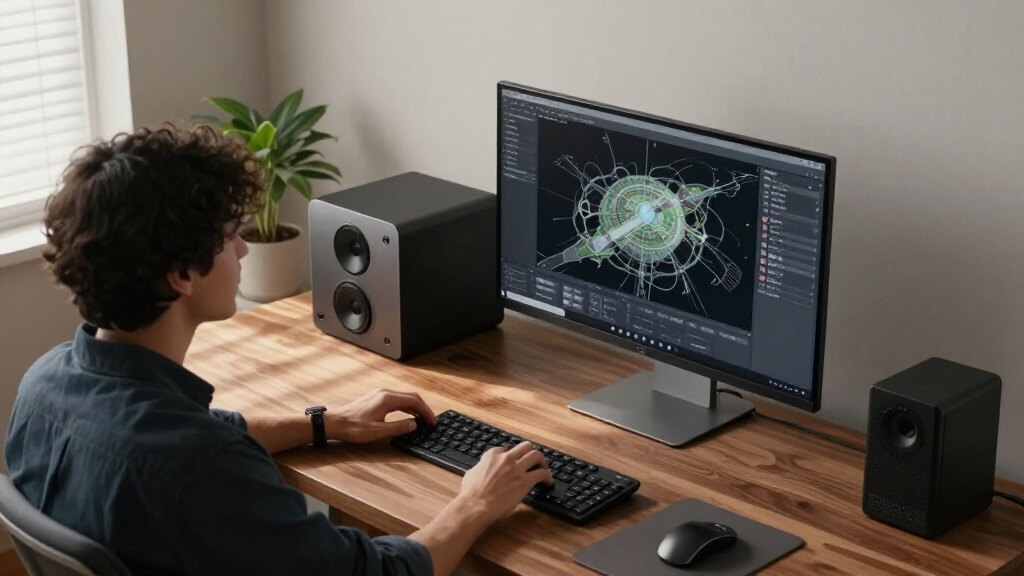
high memory desktop computer for AI
As an affiliate, we earn on qualifying purchases.
As an affiliate, we earn on qualifying purchases.
Expected Benchmarks and Ecosystem Developments
Independent benchmarking of the Mac Studio’s AI inference performance is expected in the coming months, providing clearer insights into its practical capabilities. Software updates and developer tools will likely improve, making it easier to optimize workflows for large models. Apple may also release further hardware revisions or accessories to enhance AI performance and usability.
Users interested in this machine should monitor real-world performance reports and consider their specific workload requirements before investing, recognizing that this is a high-cost but potentially transformative desktop AI platform.
As an affiliate, we earn on qualifying purchases.
Key Questions
Can the Mac Studio run all frontier-scale AI models?
It can load models up to 512GB in size, but actual inference performance depends on the model complexity and workload. It’s suitable for experimentation and small-scale deployment but not for large-scale production serving.
How does the performance compare to data center GPUs?
The Mac Studio’s bandwidth and compute are lower than top-tier data center accelerators, so inference speeds will be slower, especially for multi-user or high-throughput applications.
Is this hardware suitable for AI research?
Yes, for research and development involving large models, especially where local control and privacy are priorities. It’s less suitable for large-scale deployment or production environments requiring maximum throughput.
When will real-world benchmarks be available?
Benchmark results from independent testers are expected in the next few months, which will clarify its practical performance for various workloads.
Will software support improve for AI workloads?
Apple’s ML ecosystem is advancing, but some workflows may require porting or optimization. Future updates should enhance compatibility and performance for AI development.
Source: ThorstenMeyerAI.com
Halloween Picks
halloween
As an affiliate, we earn on qualifying purchases.