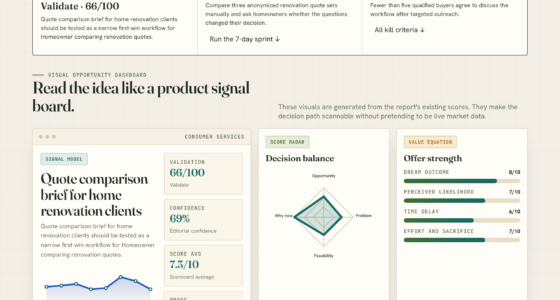
📊 Full opportunity report: Track Your Skincare Journey With A Glow-Up App For Men on IdeaNavigator AI — validation score, market gap, and execution plan.

Get business pricing on tech for your team
- Business-only prices and quantity discounts
- Tax-exempt purchasing
- Multiple users, one account, clear invoices
TL;DR
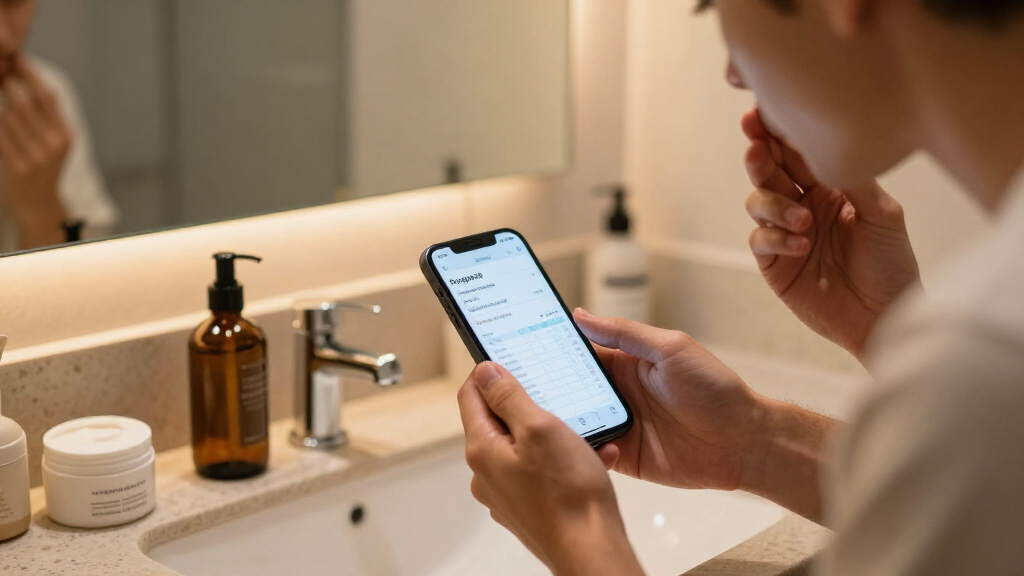
IdeaNavigator AI has outlined a proposed skincare-tracking app for men, aimed at people who want to measure whether a new routine is helping. The concept includes weekly guided selfies, skin indicators, routine logs and streaks; no launched product, clinical validation or user-test results are reported.
IdeaNavigator AI has proposed a skincare progress app for men that would track weekly selfies, routine use and visible skin indicators, targeting people who have recently started skincare and want evidence of change. The material describes a product opportunity and minimum viable product concept, not an app launch: it gives no user-trial results, validated measurement method or release date.
The proposed app would guide users through taking weekly selfies and assess three areas: skin clarity, texture and dark circles. It would also let users log their routines, maintain streaks and view progress cards. The concept recommends presenting those cards as training-style metrics rather than using conventional beauty language. No technical details explain how the scores would be generated or whether assessment would rely on software, human review or both.
The intended user is a man newly investing in skincare who wants to know whether a routine is working. IdeaNavigator AI argues that some men may find existing beauty apps’ design and marketing unwelcoming. That is the concept’s account of a potential customer problem, not evidence from a reported survey or user study. Its suggested commercial model combines a subscription with affiliate product recommendations linked to measured gaps.
For validation, IdeaNavigator AI proposes comparing the same image-capture technology presented with men’s-training branding against a neutral presentation, then comparing conversion and retention across user segments. The material does not say that this test has been run, identify a sample size, or report results. It also supplies no revenue estimates, product partner agreements or independent evidence for the market-growth claim it makes about men’s grooming.
Testing Demand Before Building
The proposal focuses on a specific decision that could shape the product: whether a training-oriented presentation makes men more likely to try and keep using a skincare tracker. Testing two brand positions with the same capture technology could help separate interest in the app’s function from interest in its framing. That distinction matters because conversion and retention would offer different evidence: a sign-up suggests initial appeal, while continued use would indicate that the tracking workflow may fit users’ routines.
For prospective users, the appeal is a structured record rather than relying on memory or occasional comparisons between photographs. But image-based tracking is not automatically proof that a product works. Lighting, camera angle, facial expression and other conditions can change how skin appears. The concept does not explain how it would control those variables, distinguish ordinary fluctuation from improvement, or communicate uncertainty. Until those details are established, the proposed scores should be understood as product features under consideration, not as clinically validated measures.
The commercial approach also has consequences for trust. Recommendations tied to an app’s assessment could make product discovery easier, but affiliate revenue creates a financial interest in purchases. The proposal does not describe how recommendations would be selected, whether commercial relationships would be disclosed, or how the app would avoid presenting a paid suggestion as an independent assessment.
men's skincare progress tracking app
As an affiliate, we earn on qualifying purchases.
As an affiliate, we earn on qualifying purchases.
From Product Idea to Test
The supplied IdeaNavigator AI material frames the opportunity within men’s grooming technology and says demand is being driven in part by looksmaxxing culture and interest in measurable self-improvement. It does not provide market figures, citations or a defined period for the claim that men’s skincare is the fastest-growing grooming segment, so that description cannot be independently assessed from the material provided.
Rather than proposing a full skincare platform, the concept narrows its first use case to one customer: a man who has started a routine and wants to see whether it is helping. Its suggested first version brings together photo capture, a small set of visible indicators and habit tracking. The proposed branding test would come before broader product development, but no company, development team, launch plan or completed research is identified.
As an affiliate, we earn on qualifying purchases.
Scores, Privacy and Evidence
It is not clear whether the app exists beyond the proposal, when it might be developed, or whether any users have tested the workflow. The material does not provide evidence that automated scores for clarity, texture or dark circles can reliably measure change across weekly photographs. It also does not specify lighting guidance, image-processing methods, limits on what the scores can establish, or whether assessments would be reviewed by skincare professionals.
Other practical questions remain unanswered: how facial images and routine logs would be stored, who could access them, whether users could delete their data, and how affiliate recommendations would be disclosed. No test findings, pricing, subscription terms or product partnerships are reported. The market-growth and user-preference statements are presented as rationale for the idea, not supported with figures or research details in the supplied material.
As an affiliate, we earn on qualifying purchases.
A Branding Test Comes First
The next step proposed by IdeaNavigator AI is to test the same capture technology using two presentations: men’s-training branding and neutral branding. The suggested comparison would examine conversion and retention by segment. The material does not give a timetable or specify how participants would be recruited, what counts as retention, or how differences between user groups would be measured.
Before results could support a product decision, the team behind any implementation would also need to define how image-based indicators are produced, what users can reasonably infer from them, and how personal images and commercial recommendations are handled. For now, the concept remains an unvalidated product proposal; whether it becomes an app, and whether its positioning improves uptake or sustained use, is unknown.
Source: IdeaNavigator AI
As an affiliate, we earn on qualifying purchases.
Key Questions
Has the skincare tracking app launched?
The supplied material describes a product concept. It does not report a launch, a finished app or a release date.
What would the proposed app track?
It would use guided weekly selfies to assess skin clarity, texture and dark circles, alongside routine logging, streaks and progress cards. The method for calculating scores is not specified.
How does IdeaNavigator AI propose testing the idea?
It suggests comparing the same capture technology presented with men’s-training branding and neutral branding, then measuring conversion and retention by segment. No completed test or results are reported.
Would the app’s scores prove that a skincare product works?
No such evidence is reported. The concept does not establish that its proposed scores are clinically validated or explain how it would control for differences in photographs and normal changes in skin appearance.
How might the app make money?
The proposed model is a subscription combined with affiliate product recommendations tied to assessed needs. Pricing, partners and disclosure practices are not specified.
Source: IdeaNavigator AI
Fall Picks
fall essentials
As an affiliate, we earn on qualifying purchases.