
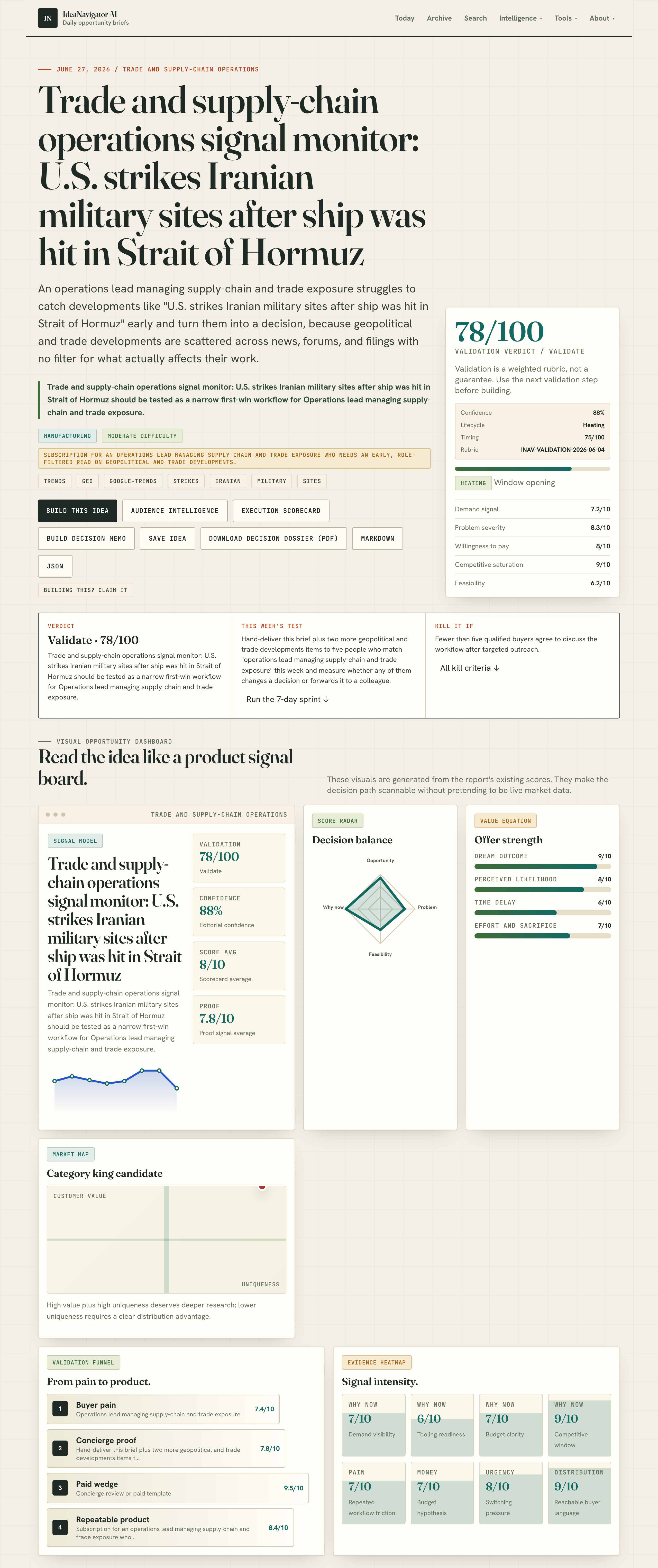
📊 Full opportunity report: Trade and supply-chain operations signal monitor: U.S. strikes Iranian military sites after ship was hit in Strait of Hormuz on IdeaNavigator AI — validation score, market gap, and execution plan.

Get business pricing on tech for your team
- Business-only prices and quantity discounts
- Tax-exempt purchasing
- Multiple users, one account, clear invoices
TL;DR
The U.S. conducted military strikes against Iranian military sites after a ship was hit in the Strait of Hormuz. This development signals increased tensions and has implications for global trade routes.
The United States has launched military strikes against Iranian military sites in response to an attack on a commercial vessel in the Strait of Hormuz, according to U.S. officials. This escalation raises concerns about stability in key regional shipping lanes and global trade flows.
U.S. officials confirmed that military operations targeted Iranian military infrastructure believed to be involved in the recent attack on a merchant ship in the Strait of Hormuz. The strike was authorized following an assessment of the threat posed by Iran’s military activities in the region. The incident involved an unidentified vessel that was reportedly hit in an attack that has heightened tensions between the two countries.
Iran has denied involvement in the attack, and the situation remains fluid with ongoing diplomatic and military responses. The U.S. military has not disclosed specific locations of the strikes but indicated they targeted Iranian military sites in the region. No immediate reports of casualties or further escalation have been confirmed.
Impact on Global Trade and Regional Stability
This development is significant because the Strait of Hormuz is a critical chokepoint for global oil and trade shipments. Any escalation of conflict in this area risks disrupting supply chains and increasing fuel prices worldwide. The strikes also signal a hardening U.S. stance towards Iran, potentially leading to further regional instability and influencing international diplomatic efforts.
trade and supply chain signal monitor
As an affiliate, we earn on qualifying purchases.
As an affiliate, we earn on qualifying purchases.
Recent Escalations in Iran-U.S. Tensions
Over the past year, tensions between Iran and the United States have escalated amid disputes over Iran’s nuclear program and regional influence, highlighting the importance of trade and supply-chain operations in the region. Incidents involving attacks on shipping vessels in the Strait of Hormuz have increased, prompting U.S. military responses. The attack on the merchant ship today marks a notable escalation, with the U.S. responding with targeted strikes against Iranian military infrastructure.
Previous incidents have prompted warnings from international maritime authorities about security in the Strait, and diplomatic efforts to de-escalate have so far been unsuccessful. This latest development underscores the volatile nature of the region and the potential for broader conflict.
“We conducted precise strikes against Iranian military sites believed to be involved in recent hostile actions in the Strait of Hormuz.”
— U.S. Defense Department spokesperson
military site surveillance equipment
As an affiliate, we earn on qualifying purchases.
As an affiliate, we earn on qualifying purchases.
Unclear Details on Targets and Casualties
It is not yet clear which specific Iranian military sites were targeted or if there were any casualties resulting from the strikes. The U.S. has not disclosed detailed locations or operational specifics, and Iran has not provided further information about the impact of the strikes.
As an affiliate, we earn on qualifying purchases.
Potential for Further Escalation and Diplomatic Responses
Next steps include monitoring regional responses, diplomatic efforts to de-escalate tensions, and possible retaliatory actions from Iran. International actors may call for restraint, while the U.S. and Iran assess their next moves. The situation remains fluid, with further developments expected in the coming days.
As an affiliate, we earn on qualifying purchases.
Key Questions
Why did the U.S. strike Iranian military sites?
The U.S. conducted the strikes in response to an attack on a merchant vessel in the Strait of Hormuz, which U.S. officials attribute to Iran’s military activities.
Has there been any confirmation of casualties?
No, the U.S. has not disclosed any information about casualties or damage resulting from the strikes.
Could this lead to a wider conflict?
The potential exists, as escalation in the region could trigger further military or diplomatic responses from both sides and international actors.
What is the significance for global trade?
The Strait of Hormuz is a vital shipping route for oil and goods. Disruption or conflict there could impact global supply chains and energy markets.
Source: IdeaNavigator AI
Halloween Picks
halloween
As an affiliate, we earn on qualifying purchases.