
TL;DR
An Eighth Rank analysis of macOS 26 describes Apple’s Knowledge Construction and Intelligence Platform services building a local knowledge graph from information and activity on a Mac. The report says the graph can represent relationships between people, but Apple’s public documentation does not spell out its full inputs or how relationship inferences work.
An Eighth Rank analysis says macOS 26 includes services that assemble an on-device knowledge graph from information such as contacts, calendar events, photos and communication activity. The report describes records linking people and representing relationships, including family connections, while noting that Apple’s public documentation does not explain the system’s full operation.

Get business pricing on tech for your team
- Business-only prices and quantity discounts
- Tax-exempt purchasing
- Multiple users, one account, clear invoices
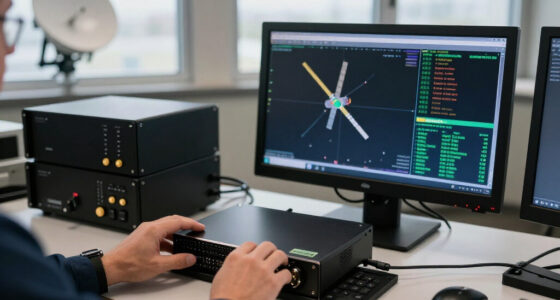
The report identifies two services, knowledgeconstructiond and intelligenceplatformd, as working together to build the graph. Apple’s macOS manual describes knowledgeconstructiond as analyzing content on the device to create “a general purpose knowledge graph” representing the device and its user. Eighth Rank says it examined the system on macOS 26.6.2.
According to the analysis, the data is stored in a directory under the user’s Library in SQLite databases, including a central database called graph.db. Eighth Rank says that database uses 181 entity classes and 278 predicates, which encode entities and the relationships or attributes connecting them. The report says each relationship can include confidence, source and timestamp information.
The analysis lists sources that may contribute information, including Contacts, Photos, Calendar, Family Sharing, Health’s Medical ID, and suggestions drawn from Mail and Messages. It also describes separate tables for communication metadata, location and movement, and other device signals. Eighth Rank says the communication log records who communicated, when, through which app and in which direction, but not message content. It says some communication records can also come from other devices.
A Detailed Map of Personal Connections
A graph that links people, events, places and communication patterns could help software retrieve personal context, but it also concentrates sensitive information in one place. The report’s account of relationship records and inferred connections matters to users who want to know what their devices may derive from everyday data, not just what they explicitly save.
Eighth Rank frames the store as a potential privacy risk if an attacker or another unauthorized party gained access to it. That is a risk scenario, not evidence that the graph has been breached or that another party has accessed it. The report also says the databases are in a location protected by Full Disk Access controls; it does not establish that every listed source is available to every Mac or that every possible inference is made for every user.
Products Worth Considering

Apple MacBook Air 13-inch Laptop with M5 Chip, 32GB Memory, 1TB SSD, Silver

Logitech MX Master 4 for Mac

Sonos Roam Portable Bluetooth and Wi-Fi Speaker, Black
As an affiliate, we earn on qualifying purchases.
What Apple’s Manual Says
Apple’s manual page for knowledgeconstructiond offers a brief description: the service analyzes on-device content to help build a knowledge graph and works with intelligenceplatformd on heavier processing. Eighth Rank says Apple researchers published a paper on graph-construction techniques in 2023, but argues that the paper and manual do not document how the mechanism is integrated across macOS or give a complete list of inputs and inferences.
The report is not the first public account of a similar store. It cites Nic Lydon’s earlier write-up of a personal knowledge graph on a laptop and a September 2026 report by digital forensics researcher Alexis Brignoni, who adapted iLEAPP to read the store on iOS. Eighth Rank says it also released iKnow, a local dashboard for inspecting a Mac’s graph. Those reports provide independent avenues for examining the data, but they do not substitute for a full Apple explanation of system behavior.
“A daemon that analyzes content on the device to build a general purpose knowledge graph.”
— Apple’s macOS manual page for knowledgeconstructiond
The Missing System Details
The report does not establish which macOS versions and hardware configurations run the services, or whether every listed data source is used in every case. The exact rules for inferring kinship and other personal relationships are also unclear, as are the thresholds behind the graph’s confidence values and how long particular records remain stored.
Eighth Rank’s findings describe an analysis of macOS 26.6.2, not a comprehensive audit of every Apple device or system release. The report’s description of a stream that appears to track people physically nearby is an interpretation of its record format; the material provided does not independently establish exactly what it detects, how it is used, or whether it reliably identifies people present.
Further Inspection and Apple Detail
Eighth Rank says users can inspect the local store through its iKnow dashboard. Users considering any third-party inspection tool should review its permissions and handling of data, since the graph may contain sensitive personal information. The report does not announce a response or policy change from Apple.
The next key developments would be a fuller explanation from Apple and further testing across macOS versions and devices. Until then, the analysis offers a detailed account of one system version, while the scope, retention and precise relationship-inference behavior remain unresolved.
Key Questions
What does the report say the Mac knowledge graph does?
Eighth Rank says it connects information about the device and its user, including people, events and activity, in a local graph that other system components may use to retrieve context. The report’s detailed account is based on its analysis of macOS 26.6.2.
Does the graph include family relationships?
The report says the graph can represent relationships between people and discusses kinship inference. It does not establish the exact rules used to infer family links or how consistently the system does so.
Does it store message contents?
Eighth Rank says the communication log it examined records metadata such as who communicated, when, through which app and in which direction, rather than message content. The report separately lists Mail and Messages as possible sources for contact and event suggestions.
Where is the data stored?
The analysis says the databases are stored in a directory under the user’s Library at ~/Library/IntelligencePlatform, with graph.db among the files. Eighth Rank says the location is protected by Full Disk Access controls.
Has Apple confirmed the report’s full account?
No full Apple description is included in the source material. Apple’s manual describes the knowledge-construction service at a high level, while the detailed list of data sources and inferences comes from Eighth Rank’s analysis.
Source: 8rank.ai