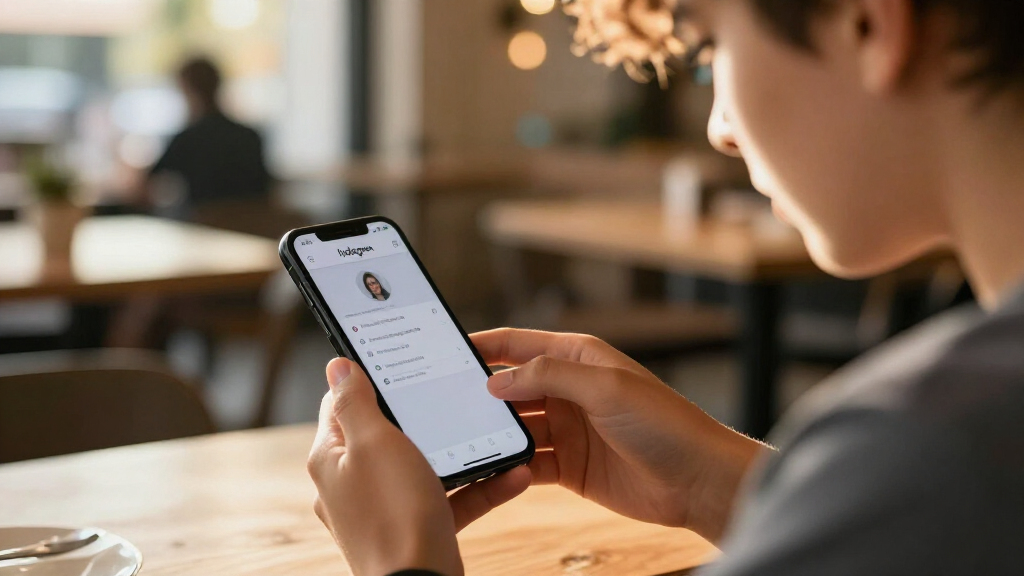

🔍 Read the full analysis: When Instagram’s AI Gets Teen Status Wrong, What Can Users Do? on ThorstenMeyerAI.com

Get business pricing on tech for your team
- Business-only prices and quantity discounts
- Tax-exempt purchasing
- Multiple users, one account, clear invoices
TL;DR
Meta said on November 9, 2026, that Instagram is expanding its AI age-estimation system worldwide to identify suspected users aged 13 to 17, including people who entered an adult birthday, and place them in Teen Account protections. Meta has not published error rates or detailed an appeal process for adults misclassified by the expanded system; changing a birthday from under 18 to over 18 can require an ID or Yoti facial age estimation.
Meta said on November 9, 2026, that Instagram is expanding its AI age-estimation system worldwide, allowing the platform to place people it suspects are aged 13 to 17 in Teen Account protections even if they entered an adult birthday. The change is intended to extend limits on contacts, content and app use to more teens, but Meta has not disclosed how often the system misclassifies adults or set out a specific appeal process for people caught by mistake.
Teen Accounts are Instagram’s restricted settings for users under 18. Meta says they limit who can contact teens, the content shown to them and the time they spend on the app. Users under 16 need a parent or guardian’s approval to change those settings, according to the company. Meta said the global expansion is meant to address cases where teens give the service an adult birthday.
Meta describes its age estimation as drawing on contextual clues across profiles, including references to school grades or birthday celebrations in posts, comments, bios and captions. It has also described visual analysis of photos and videos for general age-related patterns. Meta says that analysis is not facial recognition and does not use biometric data or create facial fingerprints. Visual analysis is available only in select countries, the company said in a July 2026 correction.
The November announcement also covered other changes. In Australia, Meta says it uses Apple’s age-range signal, which can be passed to an app developer when a user downloads an app. Meta said it is sending US parents an Instagram in-feed video explaining its age-assurance approach and how to help check that a teen’s age is accurate. The company also said Facebook is getting the technology and similar technology will begin launching globally on Threads later in 2026.
When Instagram’s AI Gets Teen Status Wrong What Can Users Do?
Instagram is expanding age estimation worldwide, and adults mistakenly placed in Teen Accounts may face age verification to restore their settings.
What the change means
Instagram may apply Teen Account protections even when a suspected teen entered an adult birthday.
More accounts may be protected
Teen Accounts limit who can contact users, the content they see and the time they spend on the app.
Mistakes can restrict settings
An adult estimated to be a teen may face Teen Account limits while trying to correct their age.
Approval for under-16s
Users under 16 need parent or guardian approval to change Teen Account settings.
How age estimation works
Meta says it uses contextual clues, with visual analysis available only in select countries.
Posts, comments, bios and captions may contain clues such as school grades or birthday references.
In select countries, Meta says photos and videos may be analyzed for general age-related patterns, not facial recognition.
Users suspected to be 13 to 17 may be placed in Teen Accounts, even if their birthday says they are adults.
If your age is flagged incorrectly
Meta’s published guidance is partial; follow the instructions shown in your account.
- Check your account settings and any age-verification notice.
- Changing a birthday from under 18 to over 18 may require an ID or Yoti facial age estimation.
- Meta has not published a complete appeal route, review timeframe or all accepted evidence.
What remains unclear
The public information does not show how often the system gets age estimates wrong or how corrections are handled.
- It is expanding Instagram age estimation globally.
- Earlier guidance said users could change settings if Meta made a mistake.
- System error rates or the number of adults misclassified.
- A complete appeal process, review time or country-by-country schedule.
When Adults Face Teen Restrictions
The rollout affects more than the accounts it correctly identifies. If Instagram’s system estimates an adult user is a teen, Teen Account limits may apply, restricting contacts and the content the person sees. Meta has not said how many adults might be affected, so users cannot assess the likelihood of a mistaken classification from the information released so far.
Meta said in an earlier account of the system that users would have an option to change settings if the company made a mistake. But its May 2026 explanation says that someone trying to change a birthday from under 18 to over 18 must verify age with an ID or Yoti’s facial age-estimation tools. That creates a practical issue for adults who want restrictions removed: a correction may involve providing identity information or using a third-party age-estimation service. The company has not described all available routes or how quickly it handles such cases.
The decision also matters because age-based protections depend on estimates rather than a confirmed age for every account. For parents, broader coverage could mean more teens receive restrictions even if they misstate their birthday. For adult users, the absence of public error statistics and clear case-by-case guidance makes it difficult to know what happens after a mistaken flag.
Products Worth Considering

Apple MacBook Air 13.6-inch Laptop with M5 Chip, 16GB Memory, 512GB SSD, Midnight

LG UltraGear 25G590B-B 25-Inch Full HD 1000Hz Gaming Monitor

Samsung Galaxy Tab S7 11-inch Android Tablet 128GB Wi‑Fi with S Pen Mystic Black
As an affiliate, we earn on qualifying purchases.
From Country Tests to Global Reach
Meta previously tested age-estimation measures in selected places. In April 2025, when it described a US test, the company said users would have an option to change settings if it made a mistake. In May 2026, it described profile-context analysis and its approach to birthday changes. The November 9 announcement expands the Teen Account placement for suspected 13-to-17-year-olds to Instagram globally.
That expansion is separate from Instagram’s process for children under 13, who are not allowed on the service. Meta says it deactivates accounts it believes belong to under-13s and requires the account holder to prove their age to prevent deletion. The Verge corrected its November 9 report after Meta clarified that the global rollout announced that day concerns Teen Account placement, not a global change to the separate under-13 process.
The announcement comes amid legal and regulatory scrutiny of child safety on Meta’s platforms. The source material cites an agreement with 52 US attorneys general and an April 29, 2026, preliminary finding by the European Commission that Meta does too little to keep under-13s off Instagram and Facebook. Meta presents the rollout as a safety measure; the announcement does not establish that legal pressure was the reason for its timing.
“We’re expanding our AI age-estimation technology globally.”
— Meta, in its November 9, 2026, announcement
Error Rates and Appeals Remain Unknown
Meta has not published the system’s error rate, the number of adults it has misclassified, or the signals and weights used in individual decisions. The company says it is encouraged by results from countries where the system was already running, but has not provided figures in the cited material that would let readers evaluate that claim.
It is also unclear what precise notice a user receives after being placed in a Teen Account, what evidence Instagram accepts to correct an erroneous estimate, and how long a review takes. Meta’s earlier statement about being able to change settings and its later age-verification rule offer partial guidance, but do not amount to a complete, published appeal procedure for the worldwide rollout. The company also has not supplied numerical results for its separate claim that AI-assisted review of reports about underage accounts is more accurate and faster than human review alone.
Rollout and User Guidance Ahead
Meta says the Instagram expansion is global, but it has not published a country-by-country schedule or a date when every account will be assessed. US parents are expected to see an in-feed video during November explaining age assurance and how they can help make sure their teen’s age is correct. Meta has also said similar technology will begin launching globally on Threads later in 2026, while the Facebook rollout proceeds.
For adults who believe Instagram has mistaken them for a teen, the available company guidance points to checking account settings and following any age-verification request. Meta says a change from an under-18 birthday to an over-18 birthday requires verification using an ID or Yoti’s facial age-estimation tools. The company has not publicly set out a dedicated appeal route for every type of mistaken classification, so users may need to follow the instructions presented in their account. Further details from Meta on reviews, corrections and system performance remain outstanding.
Key Questions
What did Instagram change?
Meta said on November 9, 2026, that Instagram is expanding AI age estimation globally. The system can place users it suspects are aged 13 to 17 in Teen Account protections, even if they entered an adult birthday.
What can an adult do if Instagram thinks they are a teen?
Meta’s published guidance says someone changing a birthday from under 18 to over 18 must verify their age using an ID or Yoti’s facial age-estimation tools. Meta has not described a complete appeal process for every kind of mistaken classification.
Does Instagram’s AI use facial recognition?
Meta says its visual analysis is not facial recognition, does not use biometric data and does not create facial fingerprints or identify people in images. The company says it looks for general visual patterns that may suggest someone underage is pictured.
Is the global rollout also about removing children under 13?
No. The November 9 announcement concerns placing suspected users aged 13 to 17 in Teen Account protections. Meta describes a separate process for accounts it believes belong to children under 13, including deactivation and a requirement to prove age to prevent deletion.
How often does the system get a user’s age wrong?
Meta has not published an error rate or the number of adults misclassified. It has also not released enough detail to independently assess its claims about the system’s performance.
Source: ThorstenMeyerAI.com