📊 Full opportunity report: Remote And Hybrid Teams: How Digital Strength Tests Support Wellness on IdeaNavigator AI — validation score, market gap, and execution plan.

Get business pricing on tech for your team
- Business-only prices and quantity discounts
- Tax-exempt purchasing
- Multiple users, one account, clear invoices
TL;DR
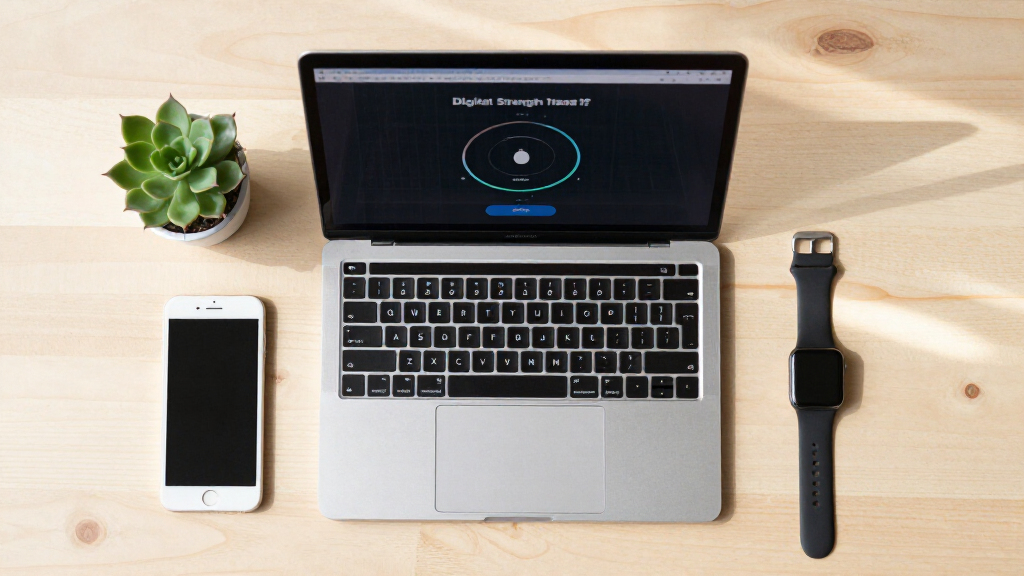
Employers are testing new smartphone-based strength and mobility assessments to monitor remote workers’ musculoskeletal health. These tools aim to identify early risks and reduce costs. Pilot programs are underway to validate effectiveness and engagement.
Remote and hybrid work arrangements are prompting the development of digital strength assessments aimed at preventing musculoskeletal disorders among distributed employees. These tools, leveraging smartphone cameras and pose estimation technology, are designed to provide early detection of mobility and posture issues, offering a proactive approach to employee health that could reduce costly medical claims and lost workdays.
Employers, particularly those with self-insured plans, face rising medical costs linked to neck, back, and posture-related musculoskeletal (MSK) problems among remote and hybrid workers. Traditional reactive programs tend to treat pain after it develops, but new digital assessments seek to shift toward prevention.
The emerging solution involves a web or mobile app that guides employees through a 10-minute series of strength, mobility, and posture tests, such as sit-to-stand repetitions, shoulder and hip range-of-motion, and seated posture photos. Using the phone camera and pose estimation algorithms, the system scores movement quality and generates a personalized MSK risk score. It also recommends corrective routines and tracks progress over time.
Employers will have access to aggregate dashboards showing team-level risk trends and engagement metrics, with options to refer at-risk employees to clinical MSK or physical therapy providers. Pilot deployments with one or two employers are planned to validate scoring accuracy, user engagement, and clinical correlation, with success defined by high completion rates, positive retention, and acceptable validity of risk scores.
Implications for Employee Health and Cost Reduction
This innovation could significantly impact how companies manage employee wellness, shifting from reactive treatment to proactive prevention. Early detection of MSK risks may reduce the incidence of clinical episodes, lowering healthcare costs and minimizing productivity loss due to musculoskeletal issues. As remote work becomes a permanent fixture, these digital assessments could become a standard component of corporate health programs, especially for self-insured employers seeking cost-effective solutions.
musculoskeletal health assessment app
As an affiliate, we earn on qualifying purchases.
As an affiliate, we earn on qualifying purchases.
Growing Need for Preventive MSK Solutions in Remote Work
The shift to remote and hybrid work has eliminated incidental physical activity associated with commuting and office ergonomics, leading to increased sedentary behavior and a surge in MSK complaints. Musculoskeletal conditions are already a top driver of employer medical costs, with many cases going undetected until pain manifests clinically.
Current programs are largely reactive, often addressing issues only after employees experience pain or injury. The maturation of smartphone-based pose estimation and motion capture technologies now offers a new avenue for early screening, enabling self-assessment without sensors or clinical visits. This technological evolution aligns with the broader trend of digital health tools aimed at preventive care for remote workers.
Several startups and benefits providers are exploring pilot programs to test these solutions, with initial focus on validation of risk scoring accuracy, user engagement, and integration into existing benefits ecosystems.
posture correction smartphone device
As an affiliate, we earn on qualifying purchases.
As an affiliate, we earn on qualifying purchases.
Uncertainties Around Validation and Adoption
It is still unclear how accurately the camera-derived MSK risk scores will correlate with clinical assessments performed by physical therapists. The effectiveness of these tools in diverse employee populations and their long-term impact on health outcomes remain to be validated through pilot studies. Additionally, questions about employee privacy, data security, and user engagement are still being addressed by developers and employers.
As an affiliate, we earn on qualifying purchases.
Upcoming Pilot Deployments and Validation Studies
Within the next three to six months, pilot programs with selected employers are expected to launch, aiming to validate the assessment tools’ scoring accuracy, completion rates, and user retention. Results from these pilots will determine whether the technology can scale into broader deployment. Concurrently, developers will refine algorithms based on initial data, and stakeholders will evaluate integration with existing benefits platforms and clinical referral networks.
digital musculoskeletal risk screening
As an affiliate, we earn on qualifying purchases.
As an affiliate, we earn on qualifying purchases.
Key Questions
How do these digital assessments work remotely?
Employees use their smartphone cameras to perform guided strength, mobility, and posture tests, which are then analyzed using pose estimation algorithms to generate a risk score and personalized recommendations.
What are the privacy considerations for employees?
Developers emphasize privacy-safe data handling, with aggregate dashboards for employers and individual assessments stored securely, but specific policies are still being finalized in pilot programs.
Can these tools replace clinical MSK assessments?
They are intended as screening tools to identify at-risk employees early, not replacements for comprehensive clinical evaluations. At-risk individuals will be referred to healthcare providers for further assessment.
Will this technology be accessible to all remote workers?
Accessibility depends on employees having smartphones with cameras and internet access; developers aim to make the app user-friendly across diverse devices and tech literacy levels.
When will these assessments be widely available?
While pilot results are pending, commercial availability could follow within 12-18 months if validation is successful and employer adoption is favorable.
Source: IdeaNavigator AI
Halloween Picks
halloween
As an affiliate, we earn on qualifying purchases.