
🔍 Read the full analysis: AI And Gaming On A Budget? Compare 10 Graphics Cards For 2026 on ThorstenMeyerAI.com

Get business pricing on tech for your team
- Business-only prices and quantity discounts
- Tax-exempt purchasing
- Multiple users, one account, clear invoices
TL;DR
The source ranks 10 graphics cards across high-end gaming, more modest upgrades and basic display needs, naming the ASUS TUF RTX 5080 its top overall choice. It does not provide prices, benchmark results or AI workload testing, so readers should treat the rankings as use-case guidance rather than a verified value comparison.
A 2026 graphics-card buyer’s guide from ThorstenMeyerAI.com compares 10 models for different PC needs, from high-end gaming to basic monitor connections, and names the ASUS TUF Gaming GeForce RTX 5080 its top overall pick. The guide also cautions that its rankings do not substitute for checking a card’s fit, power requirements or performance in the games and applications a buyer actually uses.
The list covers three RTX 5080 designs—the ASUS TUF, GIGABYTE Gaming OC and white ROG Astral—alongside two Radeon RX 9070 XT models, an RX 9070, an RTX 5070, and three older cards: the GT 730, GT 740 and RX 580. The guide places the RTX 5080 and RX 9070 XT options at the performance-focused end, with the RX 9070 and RTX 5070 presented as less extreme modern alternatives.
Its recommendations are framed around intended use rather than a single universal winner. The guide identifies the ASRock Radeon RX 9070 Challenger and ASUS Prime RTX 5070 as options for buyers considering an upgrade without choosing one of the highest-tier cards. It describes the GT 730 and GT 740 as suited to narrower display or compact-PC roles, while the RX 580 is the older, more gaming-oriented option among those three.
The material does not give prices, benchmark figures, power-draw measurements or AI application tests. It says the ranking weighs generation and performance tier, memory, cooling, physical dimensions and display connectivity, while avoiding claims that would depend on direct testing. The headline’s reference to gaming and AI should not be read as evidence that the cards were compared in specific AI workloads.
The 10 picks
- 1
 ASUS ROG Astral GeForce RTX 5080 16GB GDDR7 White OC Edition Graphics CardView on Amazon →
- 2
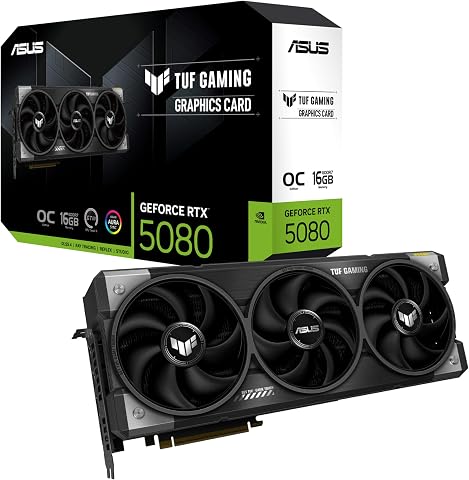 ASUS TUF Gaming GeForce RTX 5080 16GB GDDR7 OC Edition Graphics CardView on Amazon →
- 3
 GIGABYTE GeForce RTX 5080 Gaming OC 16G Graphics CardView on Amazon →
- 4
 ASUS NVIDIA GeForce RTX 5070 OC Edition Graphics Card (PCIe 5.0, 12GB GDDR7,…View on Amazon →
- 5
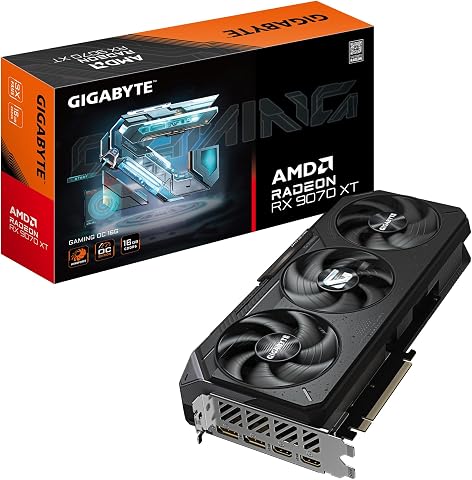 GIGABYTE Radeon RX 9070 XT Gaming OC 16G Graphics CardView on Amazon →
- 6
 ASUS Prime Radeon RX 9070 XT 16GB GDDR6 OC Edition Gaming Graphics CardView on Amazon →
- 7
 ASRock Radeon RX 9070 Challenger 16GB OC Graphics Card, RDNA 4, 2520MHz Boost…View on Amazon →
- 8
 Kelinx AISURIX RX 580 8GB GDDR5 Graphics Card with Dual HDMI and DisplayPortView on Amazon →
- 9
 GT 730 Graphics Card 4GB DDR3 64-bit with HDMI, DisplayPort, VGAView on Amazon →
- 10
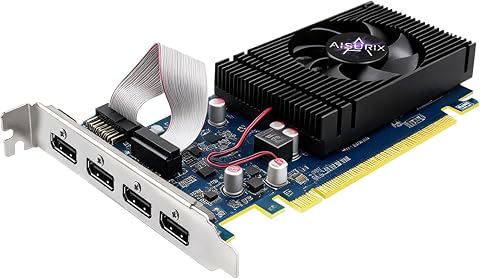 AISURIX GT 740 4GB GDDR5 Low-Profile Graphics Card with 4 HDMI PortsView on Amazon →
How the Use Case Changes the Pick
The comparison matters because GPU names and memory figures alone do not tell buyers whether a card suits their system. A high-performance model can be a poor purchase for a compact case, a limited power supply or a basic monitor setup. Conversely, a display-focused low-profile card is not presented as a substitute for a modern gaming GPU.
For anyone choosing on a budget, total upgrade cost matters alongside the card. The source advises checking required power connectors and the power supply’s capacity, as well as case clearance and airflow. It also recommends matching the card to the monitor’s resolution and refresh rate and to the games or software actually used. Without prices or measured performance, the guide cannot establish which option offers the best value per dollar.
The Ten Cards and Their Roles
The source’s comparison spans different product generations and roles rather than ten direct substitutes. At the top are the ASUS TUF RTX 5080, GIGABYTE RTX 5080 Gaming OC and white ROG Astral. The guide calls the TUF its overall choice for a high-end gaming build, and describes the other two as alternative designs and cooling approaches; it does not report testing that proves one performs better.
The AMD options include the ASUS Prime RX 9070 XT and GIGABYTE RX 9070 XT Gaming OC, then the lower-tier RX 9070 Challenger. The ASUS Prime RTX 5070 represents a more approachable modern gaming option in the guide. At the older end, the GT 730, AISURIX GT 740 and RX 580 are included for more limited upgrade needs. The source specifically points to the AISURIX GT 740’s low-profile design as a possible fit for compact PCs, while noting the performance limits of older cards.
““I’d name the ASUS TUF Gaming GeForce RTX 5080 my best overall pick in this lineup for a high-end gaming build.””
— ThorstenMeyerAI.com guide
Prices and Test Results Are Missing
The supplied guide does not identify prices, availability, a publication date, benchmark methods or specific game results. It also provides no direct testing of AI software, so it is unclear how the cards compare for particular AI tasks, including workloads that depend on supported software features or memory capacity. The “budget” framing cannot be checked against current street prices from the information provided.
Board dimensions, power connectors and cooling can differ among versions of a GPU, and the source does not list exact measurements or system configurations. Buyers should verify those details for the specific product being considered. The rankings are the author’s recommendations, not a reported result from controlled comparative testing.
Check Current Listings Before Buying
The next step for readers is to compare current local prices and verify the exact card’s dimensions, power connectors, power-supply guidance and monitor outputs. They should also consult independent benchmarks for their games, resolution and intended AI applications, since the source does not supply those comparisons.
No follow-up tests, price update or further publication date is specified in the source material. Until those details are available, the guide is best used to narrow options by performance tier and system fit—not to settle which card is the cheapest or fastest for a particular workload.
Key Questions
Which card does the guide rank first?
The guide names the ASUS TUF Gaming GeForce RTX 5080 its overall pick for a high-end gaming build. It does not claim that it is the best choice for every budget or system.
Does the comparison show which card is best for AI?
No. The source provides no AI workload benchmarks or application-specific testing. Buyers should check results and software support for the AI tools they plan to use.
Which options are presented as less extreme modern upgrades?
The guide points to the ASRock Radeon RX 9070 Challenger and ASUS Prime GeForce RTX 5070 as alternatives to the highest-tier cards in the list.
Are the GT 730 and GT 740 recommended for demanding games?
The source assigns the older GT models narrower roles, such as basic display output or compact-PC fit, rather than positioning them alongside the newest cards for demanding gaming.
What should buyers check before ordering?
Confirm the exact model’s case clearance, card thickness, airflow needs, power supply capacity, connectors and display outputs. Then compare independent performance results for the games or applications you use.
Source: ThorstenMeyerAI.com
Fall Picks
fall essentials
As an affiliate, we earn on qualifying purchases.