
📊 Full opportunity report: Build vs Buy a Prebuilt AI Workstation on ThorstenMeyerAI.com — validation score, market gap, and execution plan.

Get business pricing on tech for your team
- Business-only prices and quantity discounts
- Tax-exempt purchasing
- Multiple users, one account, clear invoices
TL;DR
In 2026, the traditional cost advantage of building your own AI workstation has diminished due to component shortages and rising prices. Buyers now need to weigh cost, time, thermal control, and support when choosing between building or purchasing prebuilt systems.
In 2026, the long-held belief that building a custom AI workstation is always cheaper than buying prebuilt systems has changed. Due to component shortages and price spikes across GPUs, RAM, and SSDs, prebuilt vendors are now offering systems at prices that often match or beat DIY costs, challenging conventional wisdom.
Historically, DIY was the preferred route for cost savings and customization, especially for AI workloads. However, recent shortages driven by the AI boom have caused prices for key components to rise sharply, with some parts now costing 25-50% more than in previous years. Large prebuilt manufacturers, who purchased components in bulk before these spikes, can now offer ready-to-use systems at competitive prices, sometimes even lower than assembling a comparable machine yourself.
Furthermore, high-end AI workstations require meticulous thermal management to prevent throttling and noise issues. Many vendors now validate thermals through extensive burn-in testing, offer water-cooling solutions, and provide warranties, reducing the thermal engineering burden on the user. Conversely, building your own system allows precise control over components, cooling, and upgrades but demands expertise and time, especially to achieve optimal thermal performance.
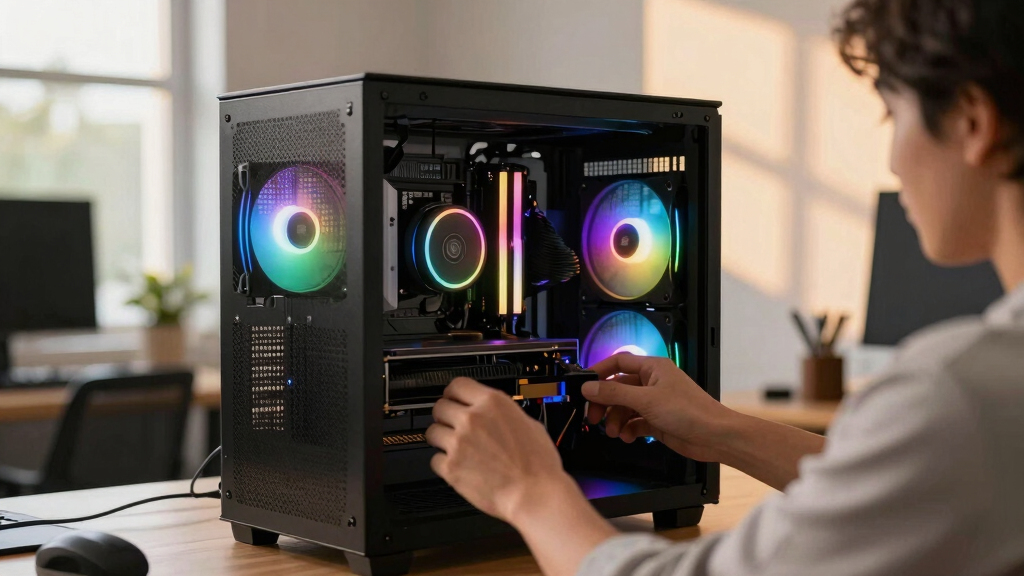
Build vs buy
an AI workstation.
The real question behind this whole series: do you pull the five heat-and-noise levers yourself, or buy a prebuilt where the vendor pulled them for you? And in 2026, the old “building is cheaper” rule has broken. Match your situation in Part 3.
Why Market Changes Alter the Build vs Buy Equation
The shift in component pricing and supply stability means that cost is no longer the sole factor in choosing between building or buying a workstation. Professionals and hobbyists must now consider the value of time, thermal management, warranty, and support. For some, the convenience and reliability of prebuilt systems with validated thermals and support may outweigh the cost savings of DIY, especially as component prices remain volatile and shortages persist.
As an affiliate, we earn on qualifying purchases.
Component Shortages and Price Spikes in 2026
Since 2024, the AI hardware market has experienced significant supply chain disruptions, leading to shortages of GPUs, DDR5 RAM, and SSDs. This has caused prices to surge, eroding the traditional cost advantage of DIY builds. Large vendors like Lambda, Puget, and BIZON have secured bulk supplies, enabling them to offer systems with validated thermals and extended warranties. Meanwhile, DIY builders face higher costs and longer wait times for parts, making the choice less straightforward than in previous years.
"The old rule that building is always cheaper no longer applies in 2026. Component shortages and price spikes have leveled the playing field, making prebuilt systems a competitive option for many."
— Thorsten Meyer, AI hardware expert
As an affiliate, we earn on qualifying purchases.
Unresolved Questions About Long-Term Cost Savings
It remains unclear whether component prices will stabilize or continue to rise in the near future. Additionally, the long-term durability and upgradeability of prebuilt systems compared to custom builds are still being evaluated, especially as new hardware generations emerge.
As an affiliate, we earn on qualifying purchases.
Upcoming Market Trends and Technological Developments
In the coming months, market analysts expect further fluctuations in component pricing and availability. Manufacturers may introduce new thermal management technologies and more modular prebuilt systems, potentially tipping the balance further. Users should monitor hardware supply trends and evaluate their own thermal and upgrade needs before making a decision.
professional AI workstation warranty
As an affiliate, we earn on qualifying purchases.
As an affiliate, we earn on qualifying purchases.
Key Questions
Is building my own AI workstation still cheaper in 2026?
Not necessarily. Due to component shortages and rising prices, prebuilt systems can now match or even undercut DIY costs for comparable configurations.
What are the main advantages of buying a prebuilt AI workstation?
Prebuilts offer plug-and-play convenience, validated thermals, warranties, and support, reducing setup time and risk of thermal issues under sustained load.
Can I upgrade a prebuilt AI workstation later?
It depends on the model, but many prebuilt systems allow upgrades to RAM, storage, and sometimes GPUs. However, some proprietary designs may limit expansion options.
What should hobbyists consider when building their own AI workstation?
Hobbyists should weigh their comfort with thermal tuning, time investment, and future upgrade plans against the potential cost savings and customization benefits.
How long will component shortages and price spikes last?
Market experts predict continued volatility into 2026, with stabilization uncertain until supply chains fully recover and new hardware releases occur.
Source: ThorstenMeyerAI.com
Halloween Picks
halloween
As an affiliate, we earn on qualifying purchases.