
📊 Full opportunity report: Acoustic Dampening, Placement, and the “Rig in the Closet” Setup on ThorstenMeyerAI.com — validation score, market gap, and execution plan.
TL;DR
This article explores proven methods for minimizing noise from high-power AI workstations, emphasizing placement strategies like moving rigs to another room and using sealed cabinets with ventilation. It highlights the importance of understanding airborne versus structure-borne noise and offers practical tips for achieving a quieter workspace.
Placing a high-power AI workstation in a separate room or closet significantly reduces noise in the primary workspace, according to experts. This approach is often more effective than acoustic foam or other treatments, especially when combined with proper ventilation.
Experts emphasize that the most effective way to reduce noise from a high-performance AI rig is to move it away from the workspace entirely. Placing the machine in another room or closet cuts down airborne noise significantly, as the sound no longer reaches the user directly. This method is particularly suited for AI inference setups, where the machine’s output can be accessed remotely via network protocols like SSH or API calls, making physical proximity unnecessary.
However, placing a rig in a confined space introduces the challenge of heat buildup. Sealed closets or cabinets can trap heat, causing temperatures to rise and potentially damaging hardware or triggering thermal throttling. To counter this, proper ventilation—such as passive vents or active exhaust fans—is essential. Purpose-built soundproof cabinets with temperature-controlled airflow are an effective but costly solution, combining noise suppression with heat dissipation. For DIY setups, adding rubber feet or anti-vibration pads can also mitigate structure-borne noise, which travels through solid surfaces rather than air.
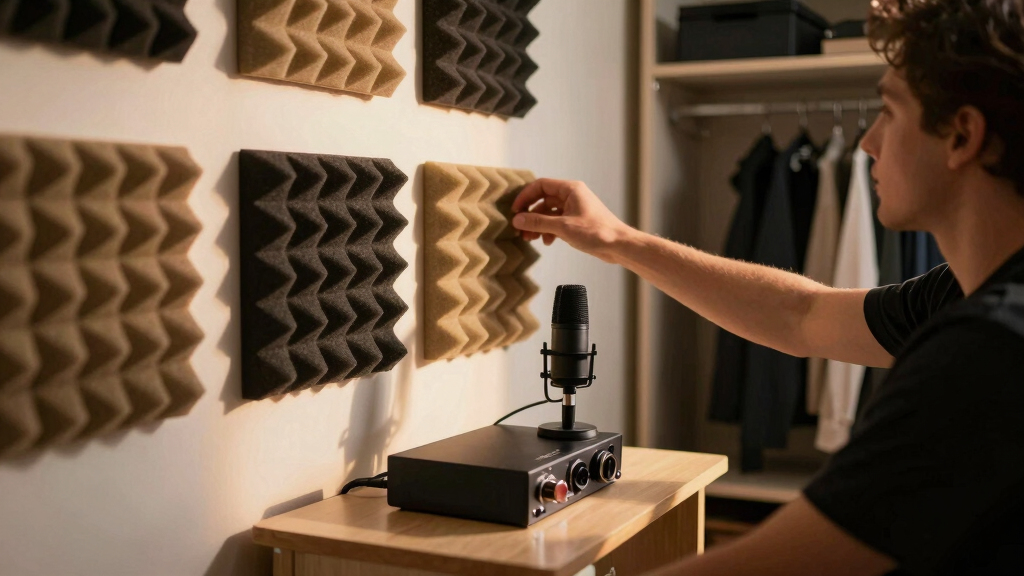
Once the rig is placed away from the workspace and the noise is minimized through placement and ventilation, additional acoustic treatment becomes less critical. Foam panels or reflectors are less effective than strategic placement and proper airflow management, according to industry sources.
Acoustic dampening
& the rig in the closet.
The most powerful noise fix isn’t a material — it’s a floor plan. A rig you can’t hear because it’s in another room beats any amount of foam. Tap the approaches in Part 1 to see what actually works.
(another room)
(levers 1–4)
(door / barrier)
(acoustic foam)
Contain the noise, not the heat
Why Placement and Ventilation Are Critical
Proper placement and ventilation are crucial because they address the root causes of noise and heat, rather than just muffling sound. Moving the rig to another room or closet allows for a quieter workspace, which can improve productivity and reduce noise pollution. Additionally, managing heat effectively prevents hardware damage and maintains performance, making this approach both practical and cost-effective compared to extensive acoustic treatment.
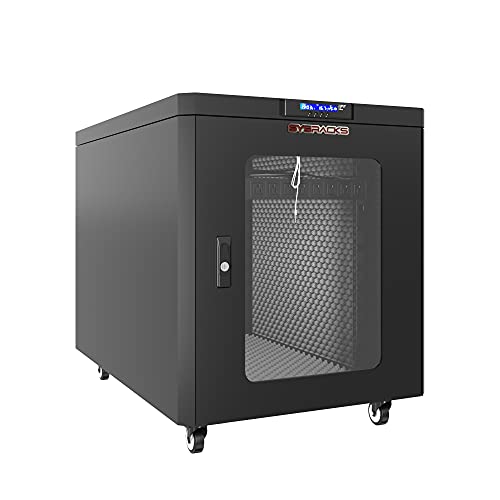
Sysracks Soundproof Server Rack Quiet - Acoustic Sound Proof Cabinet for Servers - Up to 36% Noise Reduction - Locking Server Enclosure - Silent Networking Cabinet - Noise Sound Dampening Box (15U)
- Rack Size: 15U Soundproof Cabinet (26x35x36 inches)
- Temperature Control: LED screen air control with 2 fans
- Adjustable Installation: U-Mark rails and shelf for varied equipment depth
As an affiliate, we earn on qualifying purchases.
As an affiliate, we earn on qualifying purchases.
The Evolution of Noise Management in AI Workstations
Traditionally, users relied heavily on acoustic foam and soundproofing materials to dampen noise from their workstations. However, experts now emphasize that the most effective method is to physically distance the machine from the user. This shift aligns with the rise of remote and network-based AI workflows, where the physical proximity of the hardware is less critical. The concept of placing rigs in closets or separate rooms has gained popularity as a practical solution, especially for users dealing with high-power GPUs generating significant heat and noise.
Previous approaches focused on passive noise absorption, but current best practices highlight the importance of airflow management and structural decoupling. Purpose-built soundproof cabinets with integrated cooling systems are now available, reflecting this understanding. The trend underscores that reducing noise is less about soundproofing and more about strategic placement and thermal management.
"The single most effective thing you can do about noise isn't to absorb it — it's to put distance between you and the source."
— Thorsten Meyer, AI workstation expert

Kisangel Thick Sponge Soundproof Enclosure Box, Black Sound Deadening Noise Reduction Barrier Generator Cover for Home Commercial Industrial Filter Shield, 11" X 9.8"
- Durable, Weather-Resistant Material: Resists moisture, dirt, and temperature changes
- Vibration Isolation for Pumps: Reduces mechanical vibrations to protect equipment
- Compact Space-Saving Design: Fits in tight spaces without compromising soundproofing
As an affiliate, we earn on qualifying purchases.
As an affiliate, we earn on qualifying purchases.
Remaining Questions About Long-Term Use and Safety
It is not yet clear how long-term use of a rig in a sealed closet impacts hardware longevity, as continuous heat buildup may pose risks. The optimal ventilation solutions for different environments and hardware configurations are still being tested, and the cost-effectiveness of purpose-built soundproof cabinets varies with setup size and noise levels.

Easy Cloud Computer Fan with AC Plug, 120mm Variable Speed Axial Muffin PC Fan with Controller 120V 110V 220V Small 12V Case Cooling for PC Server Cabinet DVR TV Router Receiver Xbox Greenhouse
- Adjustable Fan Speed: Customize cooling intensity as needed
- AC Power Compatibility: Connects directly to AC outlets
- Long-lasting Bearings: Dual-ball bearings last 50,000 hours
As an affiliate, we earn on qualifying purchases.
As an affiliate, we earn on qualifying purchases.
Next Steps for Noise Management in AI Workstations
Future developments may include more affordable, integrated cooling and soundproofing solutions tailored for home and small office setups. Ongoing research into thermal management and noise reduction will likely refine best practices, making quiet AI workstations more accessible. Users are advised to evaluate their specific heat and noise profiles and consider modular solutions that combine placement, ventilation, and acoustic treatment.

24 Pack 2” Thick Pyramid Acoustic Foam, Sound Proof Foam Panels for Walls
- Effective Sound Absorption: Reduces echo and reverberation
- High-Quality Material: Durable, flame-retardant acoustic foam
- Stylish Pyramid Design: Enhances sound diffusion and decor
As an affiliate, we earn on qualifying purchases.
As an affiliate, we earn on qualifying purchases.
Key Questions
Is placing my AI rig in a closet safe?
It can be safe if proper ventilation and cooling are maintained. Ensuring airflow and temperature control is essential to prevent hardware damage from heat buildup.
What are the best ways to ventilate a closet housing a high-power GPU?
Using passive vents combined with a quiet exhaust fan and possibly ducted airflow is recommended. Purpose-built soundproof cabinets with integrated cooling are also effective but more costly.
Does acoustic foam help if the rig is placed in another room?
No, acoustic foam mainly absorbs reflections within a room. Moving the rig away from the workspace is far more effective for noise reduction than foam treatments.
How do I prevent my hardware from overheating in a sealed space?
Ensure adequate ventilation with vents or fans, and monitor temperature levels regularly. Using temperature-controlled exhaust systems helps maintain safe operating conditions.
Source: ThorstenMeyerAI.com