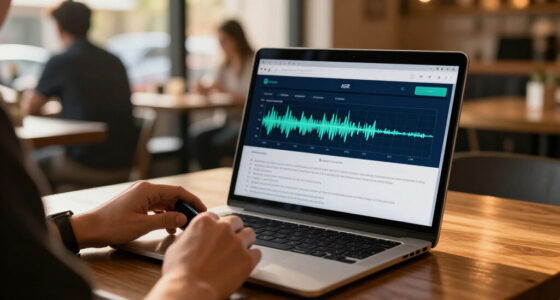
📊 Full opportunity report: The Walking App That Narrates What’s Along The Way on IdeaNavigator AI — validation score, market gap, and execution plan.

Get business pricing on tech for your team
- Business-only prices and quantity discounts
- Tax-exempt purchasing
- Multiple users, one account, clear invoices
TL;DR
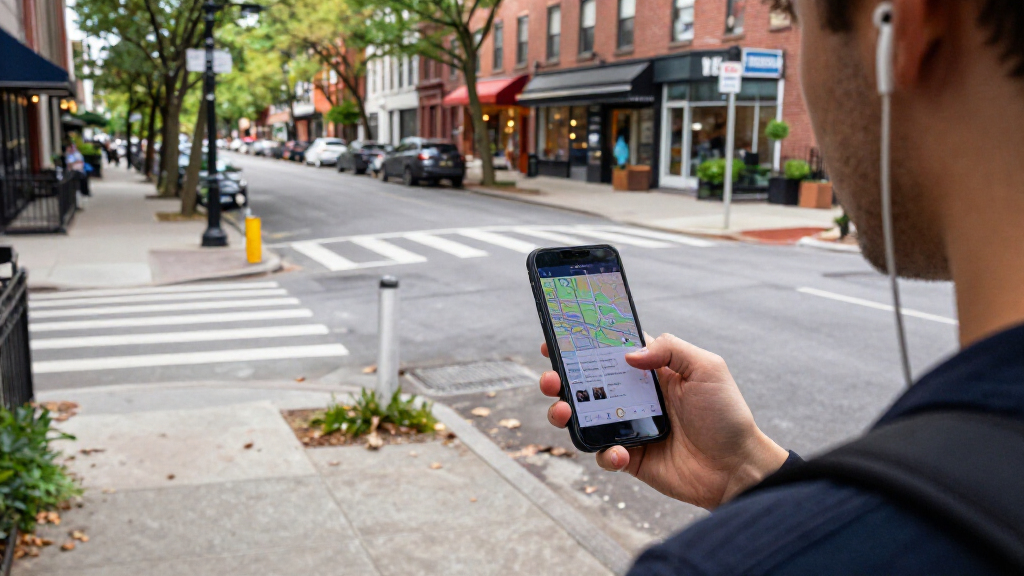
IdeaNavigator AI has outlined a proposed audio walking app that generates narration about places along a person’s route, including neighborhood streets beyond established tourist districts. The concept has not been presented as a launched product: its suggested next step is a two-city test measuring repeat use and checking narration accuracy.
IdeaNavigator AI has proposed testing an audio walking app that generates narration about streets, buildings and landmarks as a person walks, including in ordinary neighborhoods that traditional audio tours may not cover. The concept is a product proposal, not an announcement of an available app, and its suggested first test is to launch in two cities and measure repeat use and factual accuracy.
The proposed app would let a user start a walk and hear narration generated from the route, with information about local history, architecture and other details. The experience would respond as the walker reaches corners or landmarks rather than playing a fixed recording designed for a single tour. Suggested themed modes include history, architecture and nature, alongside the option to save favorite routes.
IdeaNavigator AI identifies its initial user as someone who wants their neighborhood or travel walks narrated. Its proposal argues that existing audio options leave a gap: podcasts generally are not tied to a listener’s location, while many tour apps focus on established landmark districts. That is the proposal’s assessment of the market, not independently supplied evidence about current products or consumer demand.
The proposed business model combines a consumer subscription with a licensing tier for tourism boards. To test whether the idea is useful, the proposal calls for a launch in two cities, tracking walks per week at week four and auditing narration accuracy on a sample of routes. No cities, prices, product team, launch schedule or test findings are specified.
The Walking App That Narrates What’s Along The Way
An idea for turning everyday routes into place-based audio. The proposed app would generate narration about streets, buildings and landmarks as someone walks—including neighborhood routes beyond established tourist districts.
Place-based audio, generated as you go
The concept links a person’s route with information about nearby places, then delivers spoken material as the walk unfolds. The experience is meant to react to corners and landmarks rather than follow one fixed tour recording.
Listen along the way
Start a walk and hear narration tied to streets, buildings and landmarks encountered on the route.
Choose a lens
Possible modes include local history, architecture and nature, with favorite routes available to save.
Go beyond landmarks
The proposal focuses on everyday neighborhoods and travel walks, not only famous attraction districts.
Between a podcast and a prepared tour
IdeaNavigator AI’s market rationale is that existing audio options may leave ordinary routes underserved. This is the proposal’s assessment, not independent evidence about current products or consumer demand.
- PodcastCan accompany a walk, but is generally not tied to the listener’s location.
- Content focusFollows an episode or series rather than nearby places.
- Prepared routeOften built around a specific destination and recorded in advance.
- CoverageMany tour apps focus on established landmark districts, according to the proposal.
- Route responsiveGenerates narration as a walker reaches nearby places.
- Neighborhood scaleAims to make ordinary streets part of the listening experience.
From a moving route to spoken stories
The concept depends on grounding generated narration in information about nearby places. No technical demonstration, named data providers or cost comparison is included in the proposal.
Start walking
A person begins a neighborhood or travel route.
Locate nearby places
The route connects with records about streets, buildings and landmarks.
Generate narration
Local history, architecture or other details become spoken content.
Listen and save
The walker hears stories along the way and may save favorite routes.
Repeat use and factual accuracy are the key checks
Do people come back?
Track walks per week through week four to get an early signal of repeat use. No retention threshold or user findings are provided.
Are the stories accurate?
Audit a sample of generated route narration. A sample check can reveal issues, but cannot establish reliability for every route or topic.
Can facts stay grounded?
Open questions include conflicting records, sparse local data, outdated details and how walkers can flag errors.
Run a test in two cities, track walks per week through week four, and review a sample of narration for factual accuracy. The proposal gives no city names, dates, sample size or pass criteria, and reports no completed pilot.
What has not been established
Is the app available now?
No launch is reported. The information describes a proposed product and validation plan, not an available service.
What would it narrate?
Possible subjects include local history, buildings and other details, with history, architecture and nature as suggested modes.
How might it make money?
The proposed model combines a consumer subscription with licensing for tourism boards. No prices, partners or agreements are specified.
What else needs an answer?
Offline use, battery and location permissions, narration frequency, repeat content and handling locations with limited data remain unspecified.
Source: IdeaNavigator AI · Proposal details as provided
Testing Audio Beyond Tourist Routes
The idea targets a different scale of place-based audio: not just a guided visit to a famous site, but the everyday route between home, a shop or a transit stop. If narration can be generated accurately and kept relevant as someone moves, it could make local audio content available in places where a producer might not otherwise record a dedicated tour. That is a potential benefit described by the proposal, not a demonstrated result.
The proposed test also addresses two practical risks. First, people may enjoy a narrated walk once without returning often enough to support a subscription. Measuring weekly walks at the fourth week would give an early signal of repeat use, although the proposal does not set a success threshold or explain how it would distinguish regular users from one-time visitors.
Second, location-based narration needs to be trustworthy. A story about a building or street can mislead if it is outdated, incorrectly matched to a location or generated from incomplete records. An accuracy audit could expose such problems, but a sample check would not by itself establish that every route or topic is reliable. The proposed model therefore depends on both retention and verification, not just the ability to generate audio.
Products Worth Considering

Bose QuietComfort Headphones (2nd Gen), Wireless Noise-Cancelling Over-Ear Headphones, Black

Jackery Explorer 500 v2 Portable Power Station, 512Wh, 500W

Bose SoundLink Flex (2nd Gen) Portable Bluetooth Speaker, Black
As an affiliate, we earn on qualifying purchases.
Why On-Demand Narration Is Proposed
IdeaNavigator AI’s rationale is that large language models can generate location-grounded narration using open data, including historical, architectural and place records. The proposal says this could reduce the per-route production costs associated with audio tours, which often require content to be prepared for specific destinations. No technical demonstration, named data providers or cost comparison accompanies the idea.
The suggested product would combine a person’s route with information about nearby places, then produce spoken material as the walk unfolds. That differs from a conventional recorded tour, where the route and narration are set in advance. It also differs from general audio such as a podcast, which may accompany a walk but does not necessarily respond to the walker’s location. The concept is framed around neighborhoods and travel, rather than only well-known attractions.
The proposal remains at the idea-and-validation stage in the information provided. It does not identify a company building the app, say that a prototype exists or report a partnership with a tourism board. The suggested two-city launch is a validation plan, not evidence that a pilot has already taken place.
Accuracy, Demand and Launch Details
There is no evidence in the proposal that an app has launched or that walkers have tested it. User demand remains unmeasured, and no retention figures, survey findings or results from a pilot are reported. The two-city test is described as a way to learn whether people return to the product, rather than as a completed study.
It is also unclear how the app would select and verify facts, handle locations with little open data, or respond when records conflict. The proposal does not specify how often narration would be generated, how it would avoid repeating information, or how users could flag an error. Those details matter because location-specific claims need dependable sourcing, especially when the app presents them while a person is moving through a place.
Other practical questions are unanswered, including whether the app would work without a reliable data connection, how it would manage battery and location permissions, and what a consumer subscription would cost. The proposal names tourism-board licensing as a possible revenue stream but does not identify interested partners or set out licensing terms. These are open product and commercial questions, not confirmed shortcomings of an operating service.
A Two-City Test Would Come First
The next step set out in the proposal is a test in two cities. It would track how many walks users take per week through week four and review a sample of the generated narration for accuracy. The stated measures could provide an initial read on repeat use and content quality; no dates, city choices, sample size or pass criteria are given.
Further reporting would be needed to establish whether a company has taken up the concept, whether a working product is being built and whether any tourism boards are considering a licensing arrangement. Until those details or test results emerge, the app should be understood as a proposed product opportunity, not a service whose performance has been established.
Source: IdeaNavigator AI
Key Questions
Is the walking app available now?
No launch is reported. The information describes a proposed app and a suggested validation plan, not an available service or confirmed product release.
What would the app narrate?
The concept calls for location-based narration about subjects such as local history, buildings and other details, with history, architecture and nature as possible themed modes.
How would the idea be tested?
The proposal recommends testing in two cities, measuring walks per week through the fourth week and auditing a sample of route narration for accuracy. It does not name the cities or provide results.
How might the app make money?
The suggested model is a consumer subscription plus licensing for tourism boards. No prices, partners or licensing agreements are reported.
Source: IdeaNavigator AI