

AI code generation tools can help you learn programming, prototype an idea, or add AI-assisted workflows to software development—but a book’s focus matters as much as its title. My best overall pick is Beyond Vibe Coding: From Coder to AI-Era Developer for its broad focus on adapting developer practice to AI-assisted work. AI-Assisted Coding for Beginners stands out for readers starting with Python, JavaScript, and SQL, while The Claude Code Operating Model is aimed at developers building repeatable team workflows. The main tradeoff is breadth versus hands-on focus: general AI guides cover more tools, while Claude Code books concentrate on one workflow. Read on for the full comparison and help matching a guide to your experience and goals.

Get business pricing on tech for your team
- Business-only prices and quantity discounts
- Tax-exempt purchasing
- Multiple users, one account, clear invoices
Key Takeaways
- Beyond Vibe Coding is the broadest fit for developers thinking about how AI changes their working practices, while several other titles focus on particular tools or beginner instruction.
- Claude Code books are not interchangeable: the lineup includes an everyday guide, beginner guides, an advanced guide, and a book focused on scalable operating practices.
- AI-Assisted Coding for Beginners is the clearest match for learners who want to study Python, JavaScript, and SQL alongside AI coding tools.
- Coding with AI For Dummies and ChatGPT and AI Tools for Beginners suit readers who want a general introduction, but their broad scope may offer less depth on a specific coding workflow.
- Vibe Coding Mastery leans toward prototyping and creative development, while AI-Assisted Software Development spans a wider software lifecycle that includes testing and productivity.
| Agentic Coding with Claude Code: A Practical Developer’s Handbook |  | Best for Practical Claude Code Workflows | Format: Book | Primary tool: Claude Code | Topics: Agentic workflows; software development; automation; scaling software projects | VIEW LATEST PRICE | See Our Full Breakdown |
| Beyond Vibe Coding: From Coder to AI-Era Developer |  | Best for Rethinking the Developer’s Role | Format: Book | Topic: Software development in the AI era | Stated focus: Moving from traditional coding toward AI-era development | VIEW LATEST PRICE | See Our Full Breakdown |
| Agentic Coding with Claude Code: Advanced AI-Assisted Development |  | Best for Production-Oriented Agentic Coding | Format: Book | Primary tool: Claude Code | Topics: AI-assisted software development; autonomous workflows | VIEW LATEST PRICE | See Our Full Breakdown |
| The Claude Code Operating Model: Build Scalable AI Coding Systems |  | Best for Scalable Claude Code Systems | Format: Book | Primary tool: Claude Code | Stated focus: Building scalable AI coding systems | VIEW LATEST PRICE | See Our Full Breakdown |
| AI-Assisted Coding for Beginners: Learn Python, JavaScript, and SQL with Coding Tools |  | Best for Beginners Learning Multiple Languages | Format: Not specified | Intended audience: Beginners | Programming languages: Python; JavaScript; SQL | VIEW LATEST PRICE | See Our Full Breakdown |
| Claude Code Made Easy for Beginners: A Practical Guide |  | Best for Claude Code Beginners | Topic: Claude Code and AI models | Skill level: Beginner | Named coding tool: Claude Code | VIEW LATEST PRICE | See Our Full Breakdown |
| Coding with AI For Dummies |  | Best for a Familiar, General Introduction | Series: For Dummies | Subject: Coding with artificial intelligence | Specific tools listed: Not specified in the available product data | VIEW LATEST PRICE | See Our Full Breakdown |
| Agentic Coding with Claude Code: The Everyday Developer’s Guide |  | Best for Everyday Agentic Development | Named tool: Claude Code | Subject: Agentic coding | Intended audience: Everyday developers | VIEW LATEST PRICE | See Our Full Breakdown |
| AI-Native Software Development Made Easy |  | Best for the Full Development Lifecycle | Subject: AI-native software development | Development approach: AI coding assistants and agentic IDEs | Coding topic: AI-assisted application development | VIEW LATEST PRICE | See Our Full Breakdown |
| A Simple Guide to AI Coding: Learn to Use AI Development Tools to Build Websites, Apps, and Software | 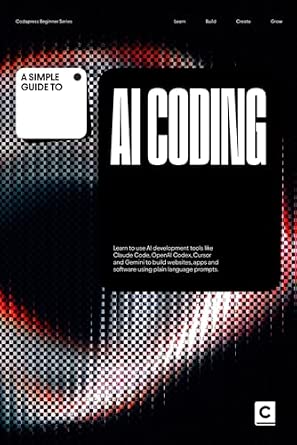 | Best for Comparing Multiple Coding Assistants | Topic: AI coding and development | Tools mentioned: Claude Code, OpenAI Codex, Cursor, and Gemini | Application areas: Websites, apps, and software | VIEW LATEST PRICE | See Our Full Breakdown |
| Vibe Coding Mastery: A 5-in-1 Guide to AI-Powered Prototyping and Creative Development |  | Best for Rapid Prototyping | Format: Guide | Guide structure: 5-in-1 | Primary focus: AI-powered prototyping | VIEW LATEST PRICE | See Our Full Breakdown |
| AI-Assisted Software Development: Generative AI, Coding Assistants, Automated Testing, Code Generation, and Developer Productivity |  | Best for Broad Developer Workflows | Format: Book | Series: Contemporary Software Engineering Series | Subject: Generative AI in software development | VIEW LATEST PRICE | See Our Full Breakdown |
| ChatGPT and AI Tools for Beginners: A Guide to Prompt Engineering, Generative Art, Code Generation, and Productivity |  | Best for AI-Curious Beginners | Format: Guide | Audience: Beginners | Named AI tool: ChatGPT | VIEW LATEST PRICE | See Our Full Breakdown |
| AI-Powered Developer: Build Great Software with ChatGPT and Copilot | 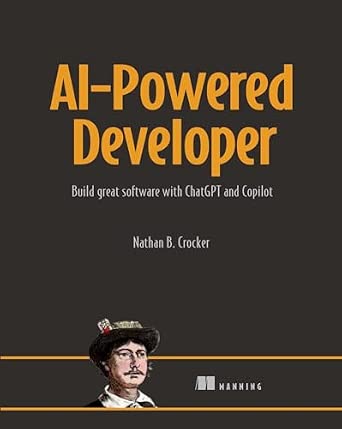 | Best for ChatGPT and Copilot Users | Format: Book | Named AI tool: ChatGPT | Named coding assistant: Copilot | VIEW LATEST PRICE | See Our Full Breakdown |
| AI code generation tool | Format |
|---|---|
| Agentic Coding with Claude Cod | Book |
| Beyond Vibe Coding: From Coder | Book |
| Agentic Coding with Claude Cod | Book |
| The Claude Code Operating Mode | Book |
| AI-Assisted Coding for Beginne | Not specified |
| Claude Code Made Easy for Begi | — |
| Coding with AI For Dummies | Not specified in the available product data |
| Agentic Coding with Claude Cod | — |
| AI-Native Software Development | — |
| A Simple Guide to AI Coding: L | — |
| Vibe Coding Mastery: A 5-in-1 | Guide |
| AI-Assisted Software Developme | Book |
| ChatGPT and AI Tools for Begin | Guide |
| AI-Powered Developer: Build Gr | Book |
More Details on Our Top Picks
Agentic Coding with Claude Code: A Practical Developer’s Handbook
Practical workflow guidance gives this handbook a clear role: it focuses on using Claude Code in the work of building, automating, and scaling software, rather than introducing AI coding in general. Compared with Beyond Vibe Coding: From Coder to AI-Era Developer, which is framed around a broader shift in how developers work, this title is more directly centered on Claude Code and agentic workflows. That focus may suit developers who already have a project in mind and want to connect AI assistance to real development tasks. The tradeoff is its narrower tool focus; readers seeking a survey of several coding assistants may find the scope limiting. The available details also do not specify prerequisites or how much implementation depth the book provides, so it may be harder to judge whether it fits a particular skill level.
Pros:- Centers on practical software development workflows rather than AI coding as an abstract topic.
- Connects Claude Code and agentic workflows with building and automating projects.
- Includes scaling software projects among its stated areas of focus.
Cons:- Its Claude Code focus may offer less value to readers choosing among multiple AI coding tools.
- The provided information does not specify skill prerequisites or the depth of its examples.
Best for: Developers who want a Claude Code-focused guide to applying agentic workflows to building, automating, or scaling software projects.
Not ideal for: Readers comparing several AI code generation tools or seeking a clearly described beginner curriculum, since the supplied details focus on Claude Code and do not state prerequisites.
- Format:Book
- Primary tool:Claude Code
- Topics:Agentic workflows; software development; automation; scaling software projects
- Stated focus:Building, automating, and scaling software projects
- Approach:Practical developer workflows
- Intended audience:Developers
Our verdict“Choose this handbook if you want practical, Claude Code-centered guidance for agentic software workflows rather than a broad introduction to AI coding.”
Beyond Vibe Coding: From Coder to AI-Era Developer
Developer mindset and changing practice are the stated center of this book: it addresses the move from traditional coding toward software development in the AI era. That makes it a different pick from Agentic Coding with Claude Code: A Practical Developer’s Handbook, which is explicitly tied to Claude Code workflows and project work. Readers looking for a broader framing of what it means to develop software alongside AI may prefer this title before committing to a specific tool. The limitation is that the available description gives no detail about languages, tools, exercises, or technical depth. Buyers seeking code-generation instructions they can apply immediately may find the scope difficult to evaluate, and those who already want hands-on Claude Code guidance may get a closer fit from the Claude-focused books in this roundup.
Pros:- Addresses the shift from traditional coding to software development in the AI era.
- Frames AI coding around the developer’s changing role rather than one named tool.
- Offers a contrasting perspective to the Claude Code-specific guides in this roundup.
Cons:- The provided description does not identify tools, languages, or concrete coding workflows.
- No information is supplied about audience level, technical depth, or project examples.
Best for: Traditional programmers who want a book centered on adapting their development approach to AI-assisted work before choosing a specific coding tool.
Not ideal for: Readers seeking named tools, language-specific tutorials, or clearly described hands-on projects, since those details are not provided.
- Format:Book
- Topic:Software development in the AI era
- Stated focus:Moving from traditional coding toward AI-era development
- Named coding tools:Not specified
- Programming languages:Not specified
- Project or exercise details:Not specified
Our verdict“Pick this book for a broad perspective on becoming an AI-era developer, but choose a tool-specific guide if you need concrete coding workflows.”
Agentic Coding with Claude Code: Advanced AI-Assisted Development
Autonomous workflows and production-ready projects distinguish this guide from the more broadly described Agentic Coding with Claude Code: A Practical Developer’s Handbook. Its stated attention to real development tools gives readers a clearer signal that the subject extends beyond prompting toward working with an actual software-development setup. That makes it a plausible fit for developers who want to explore Claude Code as part of production-oriented work, not just isolated code generation. The tradeoff is a potentially higher learning curve: autonomous workflows and production projects may be less accessible to someone still learning basic programming. The supplied details do not name the tools covered or explain project scope, so readers who need a detailed syllabus should verify that the content matches their stack and experience level.
Pros:- Covers autonomous development workflows with Claude Code.
- Emphasizes use of real development tools.
- Includes production-ready projects as a stated focus.
Cons:- The production-oriented scope may be demanding for readers new to programming.
- The supplied details do not identify the tools, languages, or projects covered.
Best for: Developers comfortable with software projects who want to study Claude Code’s autonomous workflows and its use alongside real development tools.
Not ideal for: New programmers who need a paced introduction to coding fundamentals, or buyers who require a specified tool list and project syllabus before choosing.
- Format:Book
- Primary tool:Claude Code
- Topics:AI-assisted software development; autonomous workflows
- Tools:Real development tools; specific tools not stated
- Project focus:Production-ready projects
- Intended audience:Not specified
Our verdict“Choose this guide if you already work on software projects and want a production-oriented Claude Code focus rather than a general AI-era overview.”
The Claude Code Operating Model: Build Scalable AI Coding Systems
System design and integration patterns set this book apart from the other Claude Code titles here. Rather than centering on practical project workflows like Agentic Coding with Claude Code: A Practical Developer’s Handbook or production projects like its advanced companion, it focuses on building scalable AI coding systems. Its named subjects—Skills, MCP, Hooks, agent orchestration, and SDK patterns—point toward readers who need to connect components and organize repeatable coding workflows. That systems focus can be a strong fit for developers building more than a one-off assistant setup, but it is also a narrower and likely more technical entry point than a beginner guide. The available description does not specify languages, sample implementations, or prerequisites, so readers should confirm the technical level suits their needs.
Pros:- Covers multiple Claude Code capabilities and integration patterns.
- Addresses scalable AI coding system design rather than only individual coding prompts.
- Names Skills, MCP, Hooks, agent orchestration, and SDK patterns as topics.
Cons:- The systems-oriented focus may be too advanced for newcomers to AI-assisted coding.
- The supplied details do not specify programming languages, example projects, or prerequisites.
Best for: Experienced developers or technical leads designing repeatable Claude Code systems that use integrations, hooks, and agent orchestration.
Not ideal for: Beginners seeking a first introduction to AI code generation or readers who only want help generating code for individual tasks.
- Format:Book
- Primary tool:Claude Code
- Stated focus:Building scalable AI coding systems
- Topics:Skills; MCP; Hooks; agent orchestration; SDK patterns
- Approach:System design and integration patterns
- Programming languages:Not specified
Our verdict“Choose this book when your goal is to design scalable Claude Code workflows, not simply to learn basic AI-assisted code generation.”
AI-Assisted Coding for Beginners: Learn Python, JavaScript, and SQL with Coding Tools
Learning fundamentals alongside AI tools makes this the clearest beginner choice in this group. Its stated coverage of Python, JavaScript, and SQL gives new learners several language areas to explore, while the emphasis on using coding tools wisely treats AI as part of learning rather than a substitute for it. That is a different starting point from The Claude Code Operating Model: Build Scalable AI Coding Systems, which is aimed at system design, and the Claude Code books that focus on agentic workflows. The breadth across three languages may help readers compare uses, but it can also mean less depth in any single one. The description does not state format, length, or how much instruction each language receives, so buyers should not assume a complete course in all three.
Pros:- Targets beginners rather than assuming prior programming experience.
- Covers Python, JavaScript, and SQL.
- Frames AI coding tools as part of the learning process.
Cons:- The supplied information does not specify the book’s format, length, or depth.
- Covering three languages may leave less room for detailed instruction in any one of them.
Best for: New programmers who want an introduction to Python, JavaScript, and SQL while learning how to use AI coding tools as study aids.
Not ideal for: Experienced developers seeking advanced Claude Code orchestration, production workflows, or a clearly specified in-depth course for one language.
- Format:Not specified
- Intended audience:Beginners
- Programming languages:Python; JavaScript; SQL
- Topic:AI-assisted coding
- Learning approach:Using coding tools as part of learning
- Length:Not specified
Our verdict“Choose this beginner guide for a multi-language introduction that treats AI as a learning aid, not for advanced Claude Code system building.”
Claude Code Made Easy for Beginners: A Practical Guide
Claude Code Made Easy for Beginners is the most direct starting point here for readers who want an introduction centered on one coding assistant. Its beginner focus and coverage of vibe coding, apps, tools, and agents connect basic exploration with examples of what AI-assisted development can be used to build. The guide also reaches beyond writing code to discuss workflow automation and business products, a broader scope than the tool comparison in A Simple Guide to AI Coding. That breadth may appeal to newcomers with practical project goals, but the available details do not name particular exercises, frameworks, or setup instructions. Readers seeking a developer-focused account of agentic work may prefer Agentic Coding with Claude Code: The Everyday Developer’s Guide; this title is positioned for beginners instead.
Pros:- Beginner-level focus is suited to readers new to Claude Code
- Covers tools, apps, agents, and projects rather than coding alone
- Connects AI-assisted development with workflow automation
- Includes business-product development among its topics
Cons:- Available details do not identify specific coding exercises or example projects
- The description does not specify supported models, setup steps, or technical prerequisites
- Its wide topic range may offer less depth on any single development workflow
Best for: New learners who want a beginner-oriented introduction to Claude Code, AI agents, and practical project ideas.
Not ideal for: Experienced developers seeking detailed implementation guidance, or readers who need verified examples, tool requirements, or a clearly described course structure.
- Topic:Claude Code and AI models
- Skill level:Beginner
- Named coding tool:Claude Code
- Topics covered:Vibe coding, apps, tools, agents, projects, and intelligent systems
- Workflow focus:Workflow automation
- Business focus:Launching business products
Our verdict“Choose this guide if you are new to Claude Code and want a broad, beginner-level view of how AI tools can support projects and workflows.”
Coding with AI For Dummies
Coding with AI For Dummies earns a place as the broadly framed option for readers who prefer a guide from a recognizable learning series. The available product details establish its subject—coding with artificial intelligence—but do not describe particular tools, projects, or lessons. That makes it harder to judge how directly it supports code generation than A Simple Guide to AI Coding, which explicitly names Claude Code, OpenAI Codex, Cursor, and Gemini. It may suit someone seeking a general entry point, but the thin description leaves buyers with less evidence about its technical depth or practical coverage. Compared with Claude Code Made Easy for Beginners, it also has no stated beginner level or coverage of agents and workflow automation.
Pros:- Clearly focuses on coding with artificial intelligence
- Part of the For Dummies learning series
- Broad framing may suit readers who have not settled on a specific AI coding tool
Cons:- Available product information does not identify tools or platforms covered
- No skill level, project examples, or technical topics are specified
- The limited description makes it difficult to compare its practical code-generation coverage
Best for: Readers who prefer a general AI-coding guide associated with the For Dummies learning series and do not need a specific tool or project focus.
Not ideal for: Buyers choosing a guide for a particular assistant, coding workflow, or stated skill level, since the available description provides no such details.
- Series:For Dummies
- Subject:Coding with artificial intelligence
- Specific tools listed:Not specified in the available product data
- Skill level:Not specified in the available product data
- Format:Not specified in the available product data
- Technical topics:Not specified in the available product data
Our verdict“Pick this if you want a broadly titled AI-coding guide from the For Dummies series and are comfortable with limited information about its contents.”
Agentic Coding with Claude Code: The Everyday Developer’s Guide
Agentic Coding with Claude Code: The Everyday Developer’s Guide is the most specifically positioned pick for developers interested in using Claude Code in agentic coding work. Its title signals a focus on developer workflows and AI agents, rather than the broad beginner survey offered by Claude Code Made Easy for Beginners. That makes it a plausible match for readers already comfortable with software development who want a guide framed around everyday use. The tradeoff is that the supplied description gives no details about chapters, techniques, coding languages, or project examples, so the title alone cannot confirm how practical or technically deep the guidance is. Readers wanting a wider view across several assistants may find A Simple Guide to AI Coding more relevant.
Pros:- Explicitly centers Claude Code and agentic coding
- Developer-oriented framing distinguishes it from beginner-focused guides
- Everyday-use positioning may appeal to practitioners seeking work-related guidance
Cons:- Available data does not describe methods, examples, or chapter coverage
- No supported languages, setup requirements, or skill level are specified
- Its stated focus is narrower than guides that cover several AI coding tools
Best for: Software developers looking specifically for a Claude Code guide framed around agentic coding in everyday development.
Not ideal for: Complete beginners or readers who need a confirmed list of tools, languages, examples, and technical subjects before choosing a guide.
- Named tool:Claude Code
- Subject:Agentic coding
- Intended audience:Everyday developers
- Specific languages:Not specified in the available product data
- Project examples:Not specified in the available product data
- Skill level:Not specified in the available product data
Our verdict“Choose this for a developer-oriented, Claude Code–centered guide to agentic coding, provided the limited content details meet your needs.”
AI-Native Software Development Made Easy
AI-Native Software Development Made Easy stands out for covering more than code generation: its stated scope includes coding, code review, testing, security, and deployment. That lifecycle view gives it a different purpose from Agentic Coding with Claude Code: The Everyday Developer’s Guide, which is explicitly centered on agentic coding with one tool. For readers who want to see how AI assistance fits across the stages of building an application, this broader coverage is a useful distinction. The tradeoff is that the description does not name specific assistants, agentic IDEs, or technical examples, so buyers cannot tell how tool-specific the advice is. Unlike A Simple Guide to AI Coding, it also does not list individual coding platforms.
Pros:- Covers software development beyond initial code generation
- Includes code review and testing topics
- Addresses security and deployment in the stated scope
- Includes AI coding assistants and agentic IDEs as subject areas
Cons:- The available description does not name specific coding assistants or IDEs
- No format, length, or skill level is provided
- The technical depth and practical examples are not specified
Best for: Developers who want a guide spanning AI-assisted coding, review, testing, security, and deployment rather than code generation alone.
Not ideal for: Readers who need a named tool-by-tool guide or concrete information about the book’s format, length, and technical examples.
- Subject:AI-native software development
- Development approach:AI coding assistants and agentic IDEs
- Coding topic:AI-assisted application development
- Testing topic:Testing
- Security topic:Software security
- Delivery topic:Deployment
Our verdict“Pick this if you want AI-assisted development guidance that reaches from writing and reviewing code through testing, security, and deployment.”
A Simple Guide to AI Coding: Learn to Use AI Development Tools to Build Websites, Apps, and Software
A Simple Guide to AI Coding is the clearest choice in this group for readers who want to learn across several named tools rather than commit to a Claude Code–only guide. It lists Claude Code, OpenAI Codex, Cursor, and Gemini and ties them to building websites, apps, and software. That cross-tool approach contrasts with Agentic Coding with Claude Code: The Everyday Developer’s Guide, whose stated focus is one assistant and agentic coding. The broad scope should help readers explore different ways to generate code, but the provided details do not explain how deeply each tool is covered or whether their workflows are compared directly. Those seeking guidance across review, testing, security, and deployment may find AI-Native Software Development Made Easy more lifecycle-focused.
Pros:- Names four AI development tools: Claude Code, OpenAI Codex, Cursor, and Gemini
- Applies AI coding to websites, apps, and software
- Multi-tool scope can help readers explore options before settling on a workflow
Cons:- The available description does not state how much coverage each tool receives
- No specific project examples, languages, or skill level are provided
- Its described scope does not list code review, testing, security, or deployment
Best for: Learners or independent builders who want an introduction to several AI development tools for making websites, apps, and software.
Not ideal for: Developers seeking deep guidance on one assistant, or a detailed end-to-end account of testing, security, and deployment.
- Topic:AI coding and development
- Tools mentioned:Claude Code, OpenAI Codex, Cursor, and Gemini
- Application areas:Websites, apps, and software
- Development approach:AI development tools
- Skill level:Not specified in the available product data
- Specific programming languages:Not specified in the available product data
Our verdict“Choose this if you want a multi-tool introduction to AI coding for websites, apps, and software rather than a guide centered on a single assistant.”
Vibe Coding Mastery: A 5-in-1 Guide to AI-Powered Prototyping and Creative Development
Vibe Coding Mastery is aimed at readers who want to turn ideas into rough working prototypes through conversation with AI, rather than start with a conventional coding course. Its focus on conversational coding, low-code approaches, and exploratory development makes it the most prototype-oriented choice here. Compared with AI-Powered Developer: Build Great Software with ChatGPT and Copilot, which names specific coding assistants, this guide’s supplied description emphasizes a broader creative workflow instead of particular tools. That can suit builders who want room to experiment, but the description does not identify languages, platforms, or concrete project examples, so buyers cannot tell how directly it supports a specific stack. Choose it for an idea-first approach to AI-assisted development; skip it if you need detailed tool instructions or a structured path through software engineering fundamentals.
Pros:- Centers on AI-powered prototyping and creative development workflows.
- Covers conversational coding, a useful approach for iterating through natural-language instructions.
- Includes low-code development approaches for readers who want to reduce manual coding.
- Its exploratory focus suits idea testing more than a traditional programming textbook.
Cons:- The available description does not name programming languages, AI platforms, or specific tools.
- No project examples or depth of instruction are specified, making practical coverage difficult to gauge.
- Its broad, exploratory focus may offer less structure than a software-development guide such as AI-Assisted Software Development.
Best for: Aspiring makers and product-minded beginners who want to explore conversational coding and low-code workflows for quick prototypes.
Not ideal for: Developers seeking language-specific instruction, detailed tool walkthroughs, or a clearly documented curriculum with project examples.
- Format:Guide
- Guide structure:5-in-1
- Primary focus:AI-powered prototyping
- Development focus:Creative development
- Coding approach:Conversational coding
- Development methods:Low-code approaches
- ASIN:B0FMC45XKH
Our verdict“Choose this guide if your main goal is experimenting with conversational, low-code prototyping rather than following tool-specific developer training.”
AI-Assisted Software Development: Generative AI, Coding Assistants, Automated Testing, Code Generation, and Developer Productivity
AI-Assisted Software Development covers more of the development cycle than the prototype-focused Vibe Coding Mastery. Its stated scope includes generative AI, coding assistants, code generation, automated testing, and developer productivity, so it is the clearest fit in this group for readers interested in how AI touches both writing and checking software. That breadth is its main advantage: the subject is not limited to generating snippets. The tradeoff is that the available product information lists topics but gives no detail about specific tools, languages, examples, or depth. Compared with AI-Powered Developer: Build Great Software with ChatGPT and Copilot, it signals wider coverage but less tool-specific guidance in its title and description. I’d choose it for a broad overview, not for a promised hands-on tutorial.
Pros:- Addresses code generation alongside other stages of software development.
- Includes coding assistants and automated testing, extending beyond prompt-to-code use.
- Connects AI tools with developer productivity as a separate topic.
- Identifies a software engineering series in its product data.
Cons:- The available description provides no details about examples, tools, languages, or teaching style.
- The wide subject list does not establish how deeply any single topic is covered.
- Its scope may be less immediately focused on prototyping than Vibe Coding Mastery.
Best for: Software developers and engineering learners who want an overview spanning AI code generation, coding assistants, automated testing, and productivity.
Not ideal for: Readers who need a verified, step-by-step guide for a named AI coding tool, programming language, or project.
- Format:Book
- Series:Contemporary Software Engineering Series
- Subject:Generative AI in software development
- Coding assistance:Coding assistants
- Code generation:Covered
- Testing:Automated testing
- Productivity:Developer productivity
- ASIN:B0HPFHQPDD
Our verdict“Pick this book for a broad view of AI across software development, while treating its specific tool guidance as unconfirmed from the available details.”
ChatGPT and AI Tools for Beginners: A Guide to Prompt Engineering, Generative Art, Code Generation, and Productivity
ChatGPT and AI Tools for Beginners makes sense for someone approaching AI as a set of everyday tools, with code generation presented alongside prompt engineering, generative art, and productivity. That broad introduction may feel more approachable than AI-Assisted Software Development, whose topics are framed around software engineering, including automated testing. The same breadth is a limitation for buyers focused on programming: the description does not show how much space code generation receives or whether it includes programming projects. It also does not identify languages or specific AI tools beyond ChatGPT and the general category of AI tools. I’d rank it as an entry point for curious newcomers, not as a substitute for dedicated coding instruction or the more developer-centered scope of AI-Powered Developer: Build Great Software with ChatGPT and Copilot.
Pros:- Explicitly targets beginners.
- Includes prompt engineering, which can help readers shape requests to AI tools.
- Covers code generation alongside generative art and productivity applications.
- Names ChatGPT while also addressing other AI tools.
Cons:- The broad mix of topics may leave limited room for detailed coding instruction.
- The available description does not specify programming languages, code projects, or tool walkthroughs.
- Its general AI scope is less developer-focused than AI-Assisted Software Development.
Best for: Newcomers who want a general introduction to ChatGPT and AI tools, including a first look at code generation alongside other applications.
Not ideal for: Learners whose main goal is structured programming practice, language-specific projects, or in-depth guidance for professional software development.
- Format:Guide
- Audience:Beginners
- Named AI tool:ChatGPT
- Additional tools:Other AI tools
- Prompting topic:Prompt engineering
- Code topic:Code generation
- Other topics:Generative art and productivity
- ASIN:B0DV3TLGH9
Our verdict“Choose this as a general AI introduction if code generation is one of several interests, not your sole learning goal.”
AI-Powered Developer: Build Great Software with ChatGPT and Copilot
AI-Powered Developer has the most direct tool pairing in this group: its title centers on building software with ChatGPT and Copilot. That makes it a more targeted pick for developers who want guidance tied to those named assistants than Vibe Coding Mastery, whose description focuses on conversational workflows and low-code exploration without naming platforms. The limitation is that little else is provided about the book, so its coverage of code generation, examples, supported languages, or testing cannot be verified from the supplied details. By comparison, AI-Assisted Software Development explicitly lists automated testing and developer productivity, while this title signals a narrower assistant-led focus. I’d consider it when ChatGPT and Copilot are already the tools of interest, but not assume it offers a complete AI development curriculum.
Pros:- Names ChatGPT and Copilot, giving the book a clear tool-centered focus.
- Frames AI use around building software rather than general productivity or creative applications.
- Its concise scope may appeal to readers already interested in these two assistants.
Cons:- The available product information gives no detail about chapters, examples, languages, or teaching approach.
- The title does not establish how deeply code generation or automated testing is covered.
- It names fewer areas of AI development than AI-Assisted Software Development.
Best for: Developers who specifically want a book framed around building software with ChatGPT and Copilot.
Not ideal for: Buyers seeking confirmed coverage of particular languages, testing workflows, project exercises, or a broad survey of AI development tools.
- Format:Book
- Named AI tool:ChatGPT
- Named coding assistant:Copilot
- Stated goal:Build software
- Product category:AI-powered developer guide
- ASIN:1633437612
Our verdict“Choose this if you want a ChatGPT-and-Copilot-centered software guide, but seek more detail before buying for language-specific or testing instruction.”

How We Picked
I compared these 14 books as learning resources for people choosing how to work with AI code generation tools, rather than treating them as interchangeable software products. The main criteria were audience fit, clarity of scope, relevance to coding tasks, practical usefulness, and how well each title’s stated focus helps a reader choose a learning path. I also looked at whether a book centers on a named tool such as Claude Code, addresses broader AI-era development, or introduces coding concepts to beginners.
The ranking favors books with a clear audience and a useful balance of coding practice and AI workflow guidance. Broad beginner titles remain useful entry points, but they rank below more specifically aligned options when the reader’s goal is to build a defined skill. Specialized Claude Code books rise for readers already committed to that tool, though their narrower scope makes them less suitable as general recommendations. Since the supplied titles do not provide verified details about edition contents or exercises, I base the comparison on their stated scope and avoid claiming features beyond that information.
| AI code generation tool | Format |
|---|---|
| Agentic Coding with Claude Cod | Book |
| Beyond Vibe Coding: From Coder | Book |
| Agentic Coding with Claude Cod | Book |
| The Claude Code Operating Mode | Book |
| AI-Assisted Coding for Beginne | Not specified |
| Claude Code Made Easy for Begi | — |
| Coding with AI For Dummies | Not specified in the available product data |
| Agentic Coding with Claude Cod | — |
| AI-Native Software Development | — |
| A Simple Guide to AI Coding: L | — |
| Vibe Coding Mastery: A 5-in-1 | Guide |
| AI-Assisted Software Developme | Book |
| ChatGPT and AI Tools for Begin | Guide |
| AI-Powered Developer: Build Gr | Book |
Factors to Consider When Choosing AI Code Generation Tools
Before choosing a book, decide what you want to be able to do after reading it. A guide for learning syntax with AI support serves a different purpose from one about integrating an agentic coding workflow into an existing team. These broader factors can help you judge whether a title’s scope matches your goal, even when several books use similar AI-focused language.
Match the book to your starting point
Choose between one tool and transferable skills
Look for code review and debugging guidance
Decide whether you need prototypes or production practices
Prototyping guides prioritize turning an idea into a visible result, which can be a strong fit for exploration and early product concepts. Production-oriented material has to address a wider set of concerns, such as testing, reliability, collaboration, and ongoing maintenance. Neither approach is automatically better; the right choice depends on what you are building and what stage you are in. A frequent mismatch is using a rapid-prototyping guide as the only resource for shipping software that others will depend on. If your project is exploratory, a creative workflow may be enough to get started. If you are responsible for a maintained application, look for broader development practices alongside generation techniques.
Check the scope before paying for breadth
Books with broad titles may cover prompting, coding, productivity, and other AI uses, while focused titles can spend more attention on a narrower development workflow. Breadth is useful if you are still deciding where AI fits into your work; it can be less useful when you need concrete guidance for a single language or tool. A collection described as a multi-part guide may also span several topics, so confirm that coding is central to the material rather than one section among many. Compare the promised audience and subject coverage with the problem you want to solve. Paying more for a wider scope only makes sense if you expect to use that range. When your goal is narrow, a clearly targeted guide may be the more efficient learning choice.
Frequently Asked Questions
Which book should I choose if I have never written code?
AI-Assisted Coding for Beginners is the most direct match if you want to learn Python, JavaScript, and SQL with AI tools in the mix. If you prefer a broad introduction to AI and prompting before focusing on programming, ChatGPT and AI Tools for Beginners may fit better. Check whether you want to learn coding fundamentals or explore several beginner-oriented AI uses. Generated examples can help you get started, but they do not replace learning how to read, test, and change code. Choose the guide whose scope matches the first project or language you want to tackle.
Which title is the best starting point for a developer who wants skills beyond one coding assistant?
Beyond Vibe Coding: From Coder to AI-Era Developer is the strongest broad starting point in this lineup because its stated focus is adapting development practice to the AI era rather than concentrating on a single named coding assistant. AI-Assisted Software Development is another fit if you want a wider view that includes testing and developer productivity. A tool-specific book can still be useful when you need concrete guidance for that assistant, but it may be less transferable. Before choosing, decide whether you need a general change in working approach or instruction for a particular workflow. That distinction matters more than a broad title alone.
Should I pick a Claude Code book if I already use another AI coding assistant?
Choose a Claude Code title if you specifically plan to learn that tool or want to compare its agentic approach with your current workflow. The books in this roundup range from beginner-oriented guides to advanced development and scalable operating practices, so select by experience level and intended use. If you mainly want habits that transfer between assistants, a broader AI-era development guide may be a better first choice. Tool-specific instruction can provide focus, but it may not address the details of your current assistant. You can also pair a general guide with a focused title if you need both transferable principles and tool-level direction.
Is a vibe-coding book enough to build software I can maintain?
A guide centered on vibe coding or prototyping can help you explore ideas and produce an early version, but that is not the same as preparing software for ongoing use. For maintainable work, you also need a way to review generated code, test behavior, understand dependencies, and revise the design as requirements change. Vibe Coding Mastery is explicitly oriented toward prototyping and creative development, while broader software-development titles indicate wider coverage. Treat a prototyping guide as one part of your learning plan if you expect to ship and support an application. The more other people depend on the software, the more attention you should give to testing and maintenance practices.
How do I choose between a general beginner guide and a focused workflow book?
Start with a general beginner guide if you need basic programming concepts, an introduction to AI assistance, or help deciding what to learn next. Choose a focused workflow book if you already know the basics and want guidance for a specific tool, development approach, or team process. A broad resource may introduce more topics but give less room to any one of them. A focused book can offer a clearer learning path while leaving gaps outside its subject. If you are unsure, pick the title that addresses your next real task and use a second resource later to cover the remaining gap.
Conclusion
Best overall: I recommend Beyond Vibe Coding: From Coder to AI-Era Developer for developers who want a broad view of working effectively with AI. Best for beginners: choose AI-Assisted Coding for Beginners if learning programming languages alongside AI tools is your priority; Coding with AI For Dummies is a more general entry point. Best premium-style, focused pick: The Claude Code Operating Model suits readers looking for a specialized approach to scalable AI coding practices, while Agentic Coding with Claude Code: Advanced AI-Assisted Development is better aligned with advanced individual workflows. Best value in scope: AI-Assisted Software Development brings several software-development themes together, including testing and productivity, for readers who want breadth. For creative prototyping, choose Vibe Coding Mastery; for a practical Claude Code introduction, pick Agentic Coding with Claude Code: The Everyday Developer’s Guide. Match the book to the work you want to do next, rather than choosing by AI terminology alone.