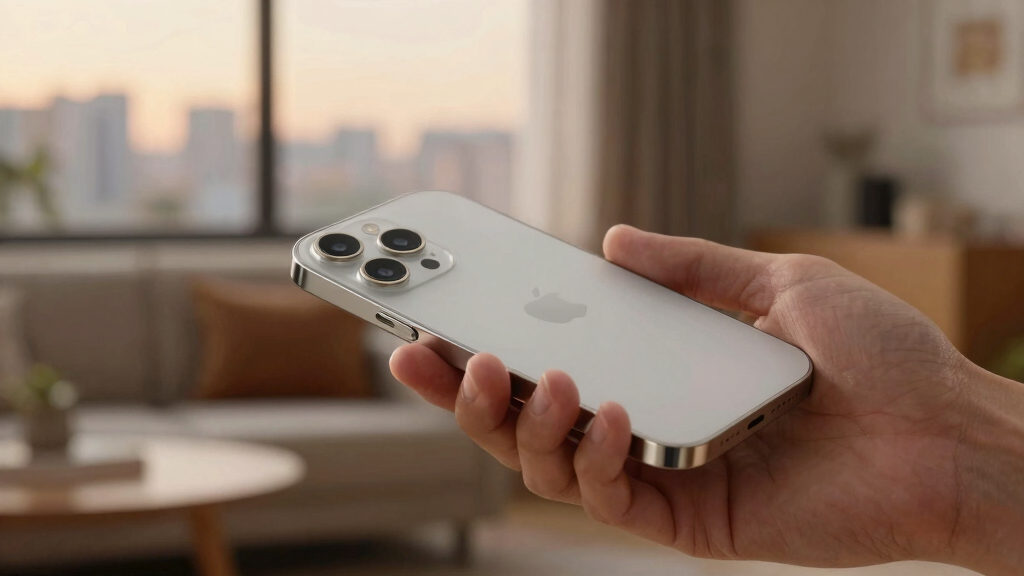

📊 Full opportunity report: Apple Is Reaching For Chinese Memory. Europe Doesn’t Even Have That Option. on ThorstenMeyerAI.com — validation score, market gap, and execution plan.
Open a free Amazon Business account
Business pricing, bulk buying and tax-exempt orders.
Create a free accountAs an affiliate, we earn on qualifying purchases.
TL;DR
Apple is lobbying U.S. authorities to purchase memory chips from Chinese manufacturer CXMT, highlighting Europe’s absence of domestic or Chinese options. This move underscores Europe’s dependency on external supply chains for semiconductors.
Apple is lobbying U.S. authorities for permission to buy memory chips from Chinese manufacturer CXMT, a company on the Pentagon’s blacklist. This development follows recent price increases on Macs and iPads, attributed to a global memory shortage. The move underscores Apple’s strategic options amid supply chain pressures and highlights Europe’s stark lack of alternatives in the memory chip market.
According to sources familiar with the matter, Apple’s lobbying efforts are aimed at securing approval from Washington to purchase chips from CXMT, a Chinese memory chip maker on the U.S. Pentagon’s blacklist. The company’s request comes shortly after it raised prices on its flagship products, citing a persistent global memory shortage that has driven up costs and constrained supply chains.
While Apple has alternative sources within the United States, such as Micron, and can lobby the U.S. government, it faces no such options in Europe. The European Union produces less than 10% of the world’s semiconductors by value and has virtually no domestic memory chip manufacturing capacity. The remaining global memory market is dominated by South Korean and East Asian firms like Samsung, SK Hynix, and Micron, none of which are European.
This dependency exposes Europe’s vulnerabilities, especially as global demand for high-performance memory, including HBM for AI applications, continues to surge. The shortage has already led to increased prices, with memory costs rising four to six times over recent quarters, impacting European consumers and industries.
Apple is reaching for Chinese memory. Europe doesn’t even have that option.
The shortage exposes America’s dependence — and Europe’s far more brutally. Apple has a domestic supplier, political weight, and the China option. Europe has no memory of its own, no seat at the table, no leverage on what counts.
- EU makes < 10% of the world’s semiconductors
- Effectively no DRAM, no HBM from Europe
- 3–4 memory makers worldwide — none European
- Pure price-taker: memory ~4× in 3 quarters
- ASML: EUV monopoly — no leading-edge chip without it
- Zeiss: precision optics, unrivalled worldwide
- imec · CEA-Leti · Fraunhofer: world-class research
- Infineon, NXP, STMicro: automotive · power · SiC
The shortage is a sovereignty test — Europe fails on supply but still holds the leverage in its hand. If even Apple can’t buy its way out, Europe’s answer isn’t to buy its way in, but to run two tracks: press the unique chokepoints as real leverage — and cut dependence wherever it can without Brussels: local-first, open weights, quantization, right-sized hardware. Bury the 20% dream, defend what’s yours, need less.
Implications of Apple’s Chinese Memory Strategy for Europe
This situation highlights Europe’s critical dependency on external suppliers for essential semiconductor components. Europe’s lack of domestic memory manufacturing and limited leverage in global supply chains mean it cannot replicate Apple’s options. The reliance on East Asian and U.S. firms makes Europe vulnerable to supply disruptions, price shocks, and geopolitical tensions. The episode underscores the urgency for Europe to develop its own capabilities or build strategic chokepoints to safeguard its technological sovereignty and economic resilience.
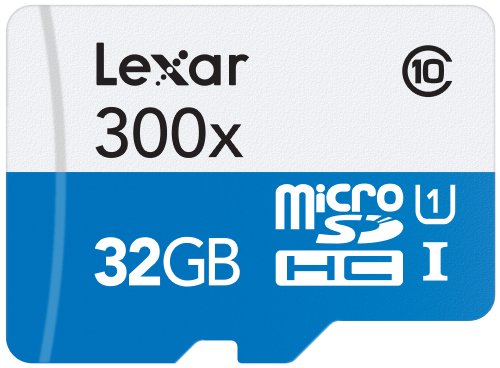
Lexar High-Performance MicroSDHC 300x 32GB UHS-I/U1 w/Adapter Flash Memory Card – LSDMI32GBB1NL300A
- Suitable for various devices: Tablets, sports camcorders, smartphones
- Fast media transfer: Captures, plays back, transfers 1080p, 3D, 4K videos
- High-speed UHS-I technology: Up to 300x (45MB/s) read, 20MB/s) write
As an affiliate, we earn on qualifying purchases.
As an affiliate, we earn on qualifying purchases.
Europe’s Semiconductor Manufacturing and Supply Chain Challenges
Europe produces less than 10% of the world’s semiconductors, with a shrinking number of domestic memory chip manufacturers. The global memory market is dominated by South Korean and East Asian firms, with no European companies playing a significant role. The EU’s efforts to boost local fabrication through initiatives like the Chips Act have faced delays and funding shortfalls, making autarky unfeasible in the near term.
Meanwhile, the U.S. and Asia maintain dominant positions in design and manufacturing, controlling critical supply chain chokepoints like ASML’s EUV lithography machines in the Netherlands. Europe’s strategic position is thus characterized by dependency on external manufacturing and design hubs, with limited influence over global prices or supply allocations.
“Europe is committed to building strategic resilience, but the current infrastructure and ecosystem are insufficient to meet the rising global demand for advanced memory chips.”
— European Commission official
European semiconductor supply chain products
As an affiliate, we earn on qualifying purchases.
As an affiliate, we earn on qualifying purchases.
Unclear Impact of U.S. Approval on European Supply Chains
It remains unclear whether Washington will approve Apple’s request to buy Chinese memory chips from CXMT, and what the broader implications might be for global supply chains. The potential for increased U.S.-China tensions or restrictions could further complicate Europe’s position, but specific outcomes are still uncertain.

CORSAIR Vengeance LPX DDR4 RAM 32GB (2x16GB) Up to 3200MHz CL16-20-20-38 1.35V Intel XMP AMD EXPO Computer Memory – Black (CMK32GX4M2E3200C16)
- Maximum Speed Note: Requires overclocking and BIOS adjustments
- High Performance Chips: Hand-sorted for overclocking potential
- Wide Compatibility: Optimized for Intel and AMD DDR4 motherboards
As an affiliate, we earn on qualifying purchases.
As an affiliate, we earn on qualifying purchases.
Next Steps in U.S.-China Tech Relations and European Response
The U.S. government’s decision on Apple’s lobbying efforts will be announced in the coming weeks. Meanwhile, Europe is expected to accelerate its own semiconductor initiatives, but significant capacity and technological gaps remain. The focus will likely be on developing strategic chokepoints and fostering regional innovation to reduce dependency.

The Silicon Value Chain: An Investor's Guide to Semiconductor Stocks — Foundries, Memory, HBM, and the AI Chip Boom (Value Chain Decoded Book 2)
As an affiliate, we earn on qualifying purchases.
As an affiliate, we earn on qualifying purchases.
Key Questions
Why is Apple seeking Chinese memory chips now?
Apple is seeking Chinese memory chips due to ongoing global shortages and rising costs, aiming to diversify supply sources and mitigate risks in its supply chain.
What does Europe’s lack of options mean for its tech industry?
Europe’s limited options make its tech industry vulnerable to supply disruptions, price increases, and geopolitical tensions, underscoring the need for strategic investment in local manufacturing and supply chain resilience.
Could Europe develop its own memory chip industry?
While possible in the long term, Europe’s current semiconductor ecosystem is underdeveloped, and building domestic capacity would require decades and hundreds of billions of euros.
How might U.S.-China tensions affect global chip supply chains?
U.S.-China tensions could lead to restrictions or bans on certain technology transfers, further complicating global supply chains and increasing Europe’s reliance on external sources.
What are Europe’s strategic options moving forward?
Europe could focus on strengthening its existing chokepoints, like ASML, and invest in regional innovation hubs, but achieving self-sufficiency remains a long-term challenge.
Source: ThorstenMeyerAI.com
Baby shower & registry season Picks
baby registry must-haves
As an affiliate, we earn on qualifying purchases.