
📊 Full opportunity report: Taalas Deal Signals AMD’s Interest In Silicon-Based AI Inference on IdeaNavigator AI — validation score, market gap, and execution plan.

Get business pricing on tech for your team
- Business-only prices and quantity discounts
- Tax-exempt purchasing
- Multiple users, one account, clear invoices
TL;DR
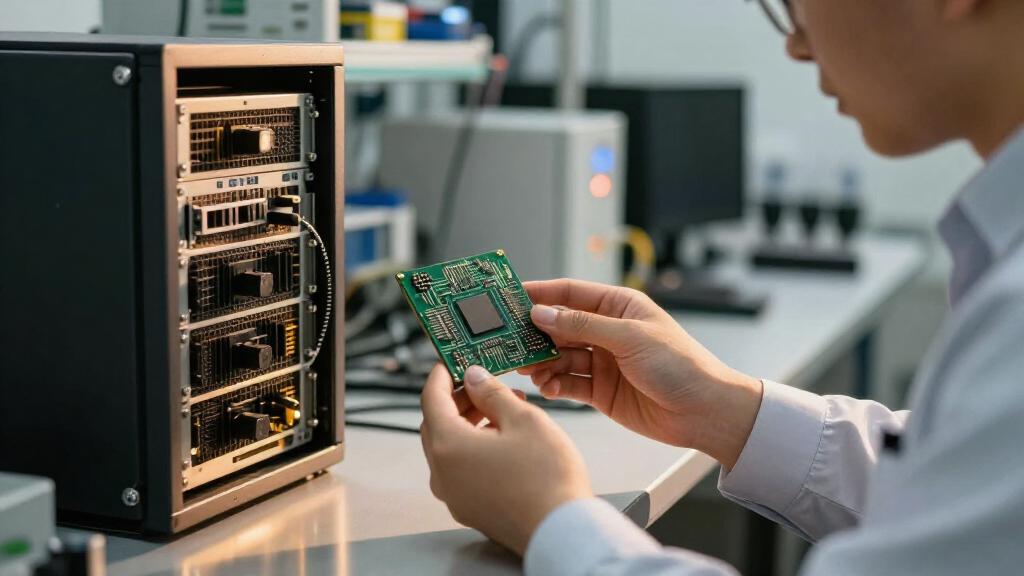
An IdeaNavigator AI brief describes AMD as acquiring Taalas to improve AI inference by embedding models in silicon. The brief provides no announcement, filing, deal terms or company statements to substantiate that claim, so the acquisition and its technical details remain unverified. It presents the item as a prompt for an AI-news monitoring product, not as a documented report of a confirmed transaction.
IdeaNavigator AI has circulated a business-idea brief describing AMD as acquiring Taalas to accelerate AI inference by etching models into silicon, but the brief supplies no deal announcement or supporting documentation. The claim should be treated as unverified: the material frames the item as an example for a proposed AI-news monitoring service, rather than providing reporting that establishes an acquisition.
The brief’s headline says AMD “acquires Taalas” and links the supposed deal to a specific approach: etching AI models into silicon to improve inference performance. It does not identify when the transaction supposedly occurred, whether it was completed or merely proposed, or the companies’ roles in any agreement. It also contains no purchase price, regulatory information, company statements, technical specifications or supporting links to an announcement or filing.
Instead, the document pitches an AI operations signal monitor for operations leads rolling out AI tools across small teams. The proposed service would watch Hacker News and other feeds for AI capability and policy developments, filter them for a particular job role, and produce short briefs explaining what changed, why it matters and what action to take. The alleged AMD-Taalas transaction is offered as a sample item the service might process.
The brief says Hacker News surfaced the item with an 88/100 signal. It does not define how that score is calculated, provide a comparison period or baseline, or clarify whether the number measures attention, relevance or confidence. It is therefore a rating reported by the brief, not evidence that a deal happened or that the technology delivers a particular performance gain.
AMD and Taalas deal claim remains unverified
An IdeaNavigator AI brief describes an acquisition tied to silicon-based inference, but provides no confirmation or supporting documentation.
What the brief claims
It links the alleged acquisition to embedding AI models in silicon to improve inference.
AMD acquires Taalas
The headline presents a deal, but the brief supplies no announcement, filing, or company statements.
Models etched in silicon
No technical details or evidence of inference gains are provided.
88/100 rating
The scoring method is undefined; the rating does not verify a deal or performance claim.
The proposed monitoring service
The deal story is an example for a suggested AI news product, not a documented transaction report.
Watch Hacker News and other sources for AI capability and policy developments.
Surface updates relevant to an operations lead rolling out AI tools.
Explain what changed, why it matters, and what action to consider.
Evidence still missing
The brief does not establish whether any transaction occurred or whether the proposed service has been tested.
- No confirmation from AMD or Taalas
- No date, terms, or regulatory record
- No independent reporting or technical data
- No evidence the monitor has launched
- No reported user test results
- Five-person validation is proposed, not completed
Why the Acquisition Claim Matters
If independently confirmed, an acquisition connecting AMD with Taalas and silicon-embedded models could matter to organizations evaluating the cost, speed and deployment options for AI inference. Hardware-level approaches can affect how models are run and what infrastructure buyers consider. But the brief offers no technical data or transaction details, so it does not establish that AMD has gained a new capability, that a product is forthcoming, or that customers will see faster or cheaper inference.
For operations teams, the more immediate point is the brief’s proposed filtering service. A role-specific alert could help staff distinguish developments that affect their tools or purchasing decisions from the broader stream of AI news. Yet this example also shows why such a product needs verification and clear sourcing: a concise alert can spread an unsupported deal claim just as efficiently as a confirmed announcement. Readers should check company communications and reliable reporting before acting on it.
Products Worth Considering

Bose QuietComfort Wireless Noise-Cancelling Headphones, Cypress Green

Apple Watch Series 10 GPS 46mm with Silver Aluminum Case and Blue Cloud Sport Loop

Sony WH-1000XM6 Wireless Noise-Canceling Headphones, Black
As an affiliate, we earn on qualifying purchases.
The Brief’s Monitoring Product
IdeaNavigator AI describes the proposed monitor as a way to address a problem for an operations lead rolling out AI tools across a small team: relevant capability and policy changes are scattered across news, forums and filings. Its suggested minimum product would track selected feeds, apply a role-based filter and turn each matching development into a short decision-oriented brief.
The document proposes a small validation exercise: deliver the brief, along with two other AI capability or policy items, to five people matching that job profile during the week, then check whether anyone changes a decision or forwards the material. That is a proposed test, not a reported result. The brief provides no evidence that the test has been run, that users have subscribed, or that the monitoring service has been built.
In that framing, the AMD-Taalas headline functions as an illustrative signal for a possible product, rather than a substantiated account of corporate activity. The distinction matters because the brief’s business case rests on spotting consequential developments early, while the item it uses has no cited confirmation in the material provided.
Deal Evidence Still Missing
The material does not establish whether AMD and Taalas have entered any transaction. It gives no date, terms, confirmation from either company, regulatory record or independent reporting. It is also unclear what “etching models in silicon” specifically means in this case, what inference improvements are claimed, or whether the phrase refers to an existing product, a planned technology or a simplified description.
The reported Hacker News score cannot settle those questions. The brief does not define the rating or show how it was derived, and the number should not be read as a measure of deal certainty or technical performance. The product proposal itself is also untested in the information provided: there are no user results, operational details or evidence that the monitor is available.
Verification Before Any Decision
The next step for readers is to look for direct confirmation from AMD or Taalas, or credible reporting that cites company statements or relevant filings. Until then, the acquisition and its stated inference rationale should be described as an unverified claim in a business-idea brief, not as a completed corporate deal.
For the proposed monitoring service, IdeaNavigator AI’s brief suggests testing demand with five operations leads and measuring whether the alerts prompt a decision or are shared with a colleague. It does not report that this test has begun or specify a schedule beyond saying it should be conducted “this week.” No outcome or product launch date is given.
Source: IdeaNavigator AI
Key Questions
Has AMD confirmed that it acquired Taalas?
No confirmation is provided in the IdeaNavigator AI brief. It includes no statement from AMD or Taalas, transaction filing or other documentation establishing an acquisition.
What does the brief say the deal would involve?
Its headline connects the alleged acquisition to etching models into silicon to improve AI inference. The brief gives no technical explanation or evidence of performance gains.
What is the 88/100 signal score?
The brief says Hacker News surfaced the item with an 88/100 signal. It does not explain the scoring method or provide a baseline, so the rating cannot be interpreted as proof of the claim.
Is the AI operations monitoring service available?
The brief proposes a monitoring product and a small user-validation exercise. It does not say the service has been built, launched or tested with customers.
Source: IdeaNavigator AI