
TL;DR

Get business pricing on tech for your team
- Business-only prices and quantity discounts
- Tax-exempt purchasing
- Multiple users, one account, clear invoices
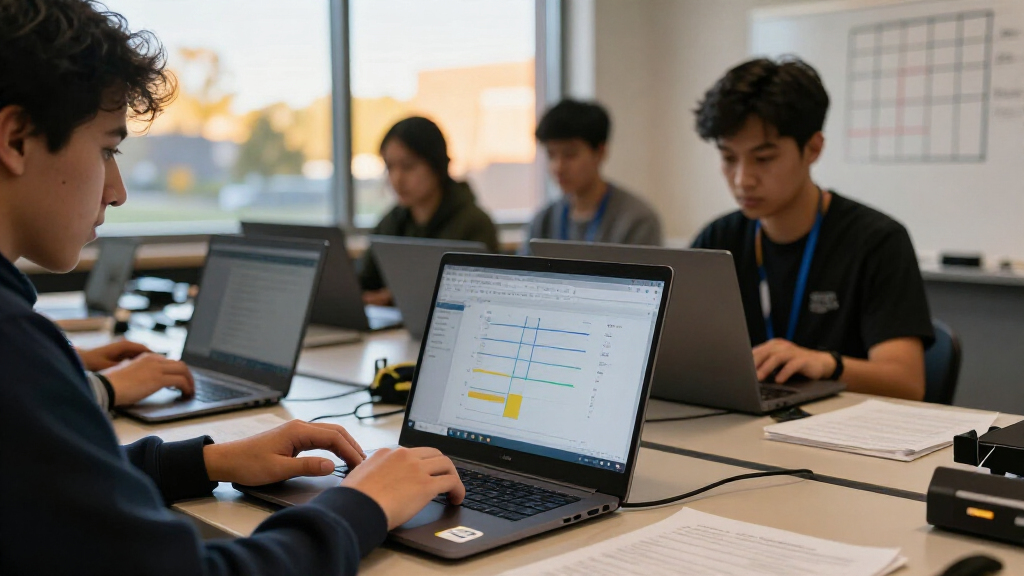
Students from Colorado took part in Google’s second annual Colorado Impact Hackathon in Boulder, partnering with CU Boulder and the Colorado Energy Office. The top projects proposed tools for home solar planning, battery coordination during wildfire-related shutoffs and predictive grid hardening; the source does not report deployments or measured results.
Student teams at Google’s second annual Colorado Impact Hackathon in Boulder developed concepts for a cleaner and more resilient Colorado electric grid, including an AI-assisted solar-planning app and proposals for battery coordination and targeted grid upgrades. Google said it held the event with the University of Colorado Boulder and the Colorado Energy Office; the published report does not say that any project has been deployed or tested in the field.
Google’s account, published by senior staff data scientist John Tribbia on October 29, 2026, describes the gathering as a student hackathon focused on how Colorado might build a clean, secure and resilient power system. Google named three project teams and ranked their proposals, but did not provide details about the number of participants, the judging process, or the technical work completed during the event.
SolarSnap, the first-place project, was described as an AI app that uses a phone camera to help homeowners identify a suitable setup for solar panels. Second-place Grid Watch was presented as an AI-managed battery network intended to maintain power during wildfire-related shutoffs while lowering electricity costs. Third-place Grid Guard proposed predictive capabilities to help target grid hardening.
Google also said Colorado Attorney General Phil Weiser and CU Boulder Vice Chancellor for Sustainability Andrew Mayock spoke at the event about innovation and the state’s clean-energy future. The report does not include direct quotations from either official or from the student teams, nor does it describe funding, follow-up support or plans to turn the concepts into products.
Student Ideas Meet Grid Risks
The projects focus on problems with practical stakes for households and electricity providers: how to plan home solar installations, maintain service when utilities shut power off during wildfire danger, and decide where grid infrastructure may need reinforcement. These are proposals from a student event, not evidence that the listed tools are ready for use or that they would deliver the intended outcomes.
The subjects also connect household energy choices with broader reliability concerns. An app that makes solar planning easier could help people explore installations, while a coordinated battery system could, in principle, support power access during planned shutoffs. Predictive tools for hardening infrastructure could help direct attention to vulnerable parts of a network. Each potential benefit would depend on technical performance, cost, access to reliable data and coordination with utilities and public agencies—details absent from Google’s account.
For readers, the immediate development is the collaboration itself: a technology company, a university and a state office brought students together around Colorado-specific energy challenges. Whether the concepts lead to measurable changes remains unknown. The hackathon report records rankings and project descriptions, but supplies no results, deployment commitments or independent evaluation.
Products Worth Considering

Jackery HomePower 3000 Portable Power Station with Two 200W Solar Panels

EcoFlow Smart Home Panel 2 Whole-Home Backup System Hub

Anker SOLIX S2000 Portable Power Station, 2,010Wh, 1,500W
As an affiliate, we earn on qualifying purchases.
How the Colorado Hackathon Worked
Google called the Boulder event the second annual Colorado Impact Hackathon and said it partnered with CU Boulder and the Colorado Energy Office. Its central prompt asked participants how to create a clean, secure and resilient electric grid in Colorado. That framing brought together issues represented by the three winning concepts: residential solar, wildfire-related power shutoffs and grid hardening.
The source is a Google company blog post by John Tribbia, dated October 29, 2026. It is the basis for the event date, partnerships, project descriptions and rankings in this report. Google characterizes such events as a way for students, public leaders and technologists to work together, but does not provide independent assessment of the hackathon or evidence that participation led to later implementation.
The project summaries are brief and do not specify whether the teams produced working software, prototypes, research plans or presentations. They also do not identify the students by name or give details about the data, hardware or institutional partners needed to move the ideas beyond the competition.
“How can we create a clean, secure, and resilient electric grid in Colorado?”
— Google, in its October 29, 2026, event report
From Concepts to Field Tests
Google’s report does not establish whether any of the three projects became a working prototype, whether the ideas were evaluated by utilities or regulators, or whether teams received support after the event. It provides no technical specifications, budgets, performance measurements, or independent verification of the proposed benefits.
It is also unclear how SolarSnap would assess a home’s solar suitability, what role a utility would play in Grid Watch, and what data Grid Guard would use to identify locations for hardening. The report does not say which students participated or give the number of teams. Accordingly, the projects should be understood as hackathon concepts as described by Google, not as confirmed grid solutions.
Whether Teams Continue Their Work
Google’s published account does not announce a next milestone, implementation schedule or follow-up program for the winning teams. It also does not say whether CU Boulder, the Colorado Energy Office, utilities or other organizations will review the proposals.
The next useful update would clarify whether any concept receives funding or technical support, moves into a prototype or pilot, or is assessed by an energy provider or public agency. Until a team or partner reports such progress—and provides evidence about cost, reliability and performance—the announced rankings mark the outcome of the hackathon, not a change to Colorado’s electricity system.
Key Questions
What happened at Google’s Colorado Impact Hackathon?
Google said students joined its second annual Colorado Impact Hackathon at its Boulder offices on October 29, 2026, in partnership with CU Boulder and the Colorado Energy Office. Teams developed concepts addressing electric-grid challenges.
Which project won first place?
SolarSnap placed first. Google described it as an AI app that uses a phone camera to help homeowners find a suitable solar-panel setup. The report does not say it is available to the public.
What did the other winning teams propose?
Second-place Grid Watch was described as an AI-managed battery network intended to help maintain power during wildfire shutoffs and reduce electricity costs. Third-place Grid Guard proposed predictive capabilities for targeted grid hardening.
Are the projects being used in Colorado?
Google’s report does not say that the projects have been deployed, tested or adopted by utilities. It describes them as hackathon proposals and gives no implementation plans or performance results.
Who organized the event with Google?
Google said it held the hackathon with the University of Colorado Boulder and the Colorado Energy Office. The report also says Colorado Attorney General Phil Weiser and CU Boulder Vice Chancellor for Sustainability Andrew Mayock spoke at the event.
Source: blog.google