
📊 Full opportunity report: Women’s Health Radar on IdeaNavigator AI — validation score, market gap, and execution plan.

Get business pricing on tech for your team
- Business-only prices and quantity discounts
- Tax-exempt purchasing
- Multiple users, one account, clear invoices
TL;DR
A women’s health digital radar is in development to identify early perimenopause symptoms via a mobile app. It targets women 40-58 and aims to connect them with covered care options. Validation is underway through a waitlist test.
The women’s health radar, a digital tool designed to detect early signs of perimenopause, is currently undergoing testing. This development aims to address the widespread issue of misdiagnosed or undiagnosed perimenopause symptoms, which often go untreated for years. The initiative targets women experiencing symptoms like sleep disruption, mood swings, hot flashes, and brain fog, offering a route to earlier diagnosis and treatment through a mobile app and digital symptom tracking.
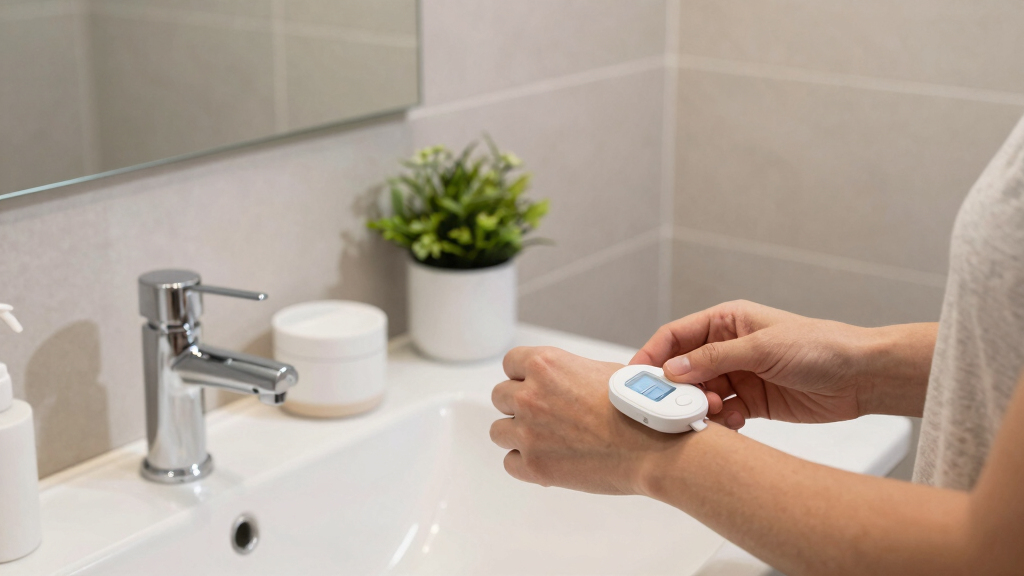
The women’s health radar is designed as a mobile application where women 40+ can log daily symptoms such as sleep quality, mood, menstrual cycles, hot flashes, and energy levels. Optional wearable device data may also be incorporated. Using rules and machine learning algorithms, the app compares logged symptoms against validated perimenopause symptom scales to detect early signals of the transition. When patterns suggest perimenopause, the app generates a shareable, clinician-ready symptom summary and suggests a route to covered telehealth or local menopause specialists.
This approach is positioned as a non-diagnostic educational tool, aiming to help women recognize potential perimenopause patterns early, rather than providing a formal diagnosis. The project is currently in a validation phase, with a 4-6 week waitlist test targeting women aged 40-55. Participants will complete a free ‘perimenopause symptom radar’ quiz, based on validated scales, and their engagement will be measured by tracking opt-ins for ongoing symptom monitoring and requests for clinician summaries or referrals. A successful signal is defined as more than 25% of quiz completers opting into ongoing tracking and over 10% requesting referrals or summaries, indicating sufficient user interest and engagement.
Impact on Early Detection and Women’s Healthcare
This development could significantly improve early detection of perimenopause, a period often marked by misdiagnosis or neglect. By enabling women to identify symptoms sooner and connect with covered healthcare services, the women’s health radar has the potential to reduce untreated symptoms that affect sleep, mood, and overall quality of life. It also offers a scalable, digital approach aligned with the growing femtech industry, which has seen rapid valuation increases and insurer coverage expansion. Early detection may lead to better health outcomes, reduced attrition at work, and lower long-term healthcare costs for women navigating menopause.
As an affiliate, we earn on qualifying purchases.
Growing Focus on Menopause and Digital Solutions
Perimenopause symptoms such as sleep disturbances, mood swings, and hot flashes are often dismissed or misattributed, leading to delayed diagnosis. Most primary-care providers receive limited training on menopause, which further complicates timely identification. Recently, menopause has shifted from a taboo topic to a prominent focus within femtech, with companies like Midi Health reaching a $1 billion valuation in February 2026. Major insurers now increasingly cover virtual menopause consultations, and digital tools leveraging wearable data, symptom scales, and AI pattern detection are emerging to facilitate earlier intervention. This context underscores the relevance of the women’s health radar as part of a broader industry shift toward accessible, tech-enabled menopause care.
“The goal is to create an early warning system that helps women and clinicians identify perimenopause before symptoms become severe.”
— an anonymous researcher
perimenopause symptom tracking app
As an affiliate, we earn on qualifying purchases.
As an affiliate, we earn on qualifying purchases.
Uncertainties in Validation and Adoption
It is not yet clear how accurately the women’s health radar will detect early perimenopause signals in broader populations. The validation phase is ongoing, and results are pending. Additionally, questions remain about user engagement over time, integration with healthcare providers, and how insurers will respond to scaling. The effectiveness of the app in diverse demographic groups and its impact on actual diagnosis rates are still to be determined.
menopause hot flash relief supplement
As an affiliate, we earn on qualifying purchases.
As an affiliate, we earn on qualifying purchases.
Next Steps for Validation and Scaling
The immediate next step is completing the 4-6 week waitlist validation test, analyzing user engagement, and assessing signal accuracy. If successful, developers plan to refine the app and expand testing to larger, more diverse populations. Further, they aim to establish partnerships with healthcare providers and insurers to facilitate coverage and integration into standard care pathways. Long-term, the goal is to launch a full version of the women’s health radar, with ongoing research into its impact on early diagnosis and treatment outcomes for women experiencing perimenopausal symptoms.
As an affiliate, we earn on qualifying purchases.
Key Questions
How does the women’s health radar work?
Women log daily symptoms such as sleep, mood, hot flashes, and cycles into a mobile app. The app uses rules and machine learning to compare patterns against validated scales, flagging early signals of perimenopause and generating a clinician-ready summary and referral suggestions.
Is this a diagnostic tool?
No, the app is positioned as an educational pattern detection tool, not a diagnostic device. It aims to help women recognize early signs and seek appropriate care.
Who can benefit from this radar?
Women aged 40-58 experiencing unexplained perimenopausal symptoms, along with healthcare providers and insurers interested in early intervention and reducing long-term health costs.
When will the full version be available?
The project is currently in validation testing, with a full launch contingent on successful results. Further updates are expected after the validation phase concludes.
Will this tool replace doctor visits?
No, it is designed to complement clinical care by providing symptom insights and facilitating timely referrals, not replacing professional diagnosis or treatment.
Source: IdeaNavigator AI
Halloween Picks
halloween
As an affiliate, we earn on qualifying purchases.