📊 Full opportunity report: Accessing Travel Info: Physical-Demand Details on IdeaNavigator AI — validation score, market gap, and execution plan.

Get business pricing on tech for your team
- Business-only prices and quantity discounts
- Tax-exempt purchasing
- Multiple users, one account, clear invoices
TL;DR
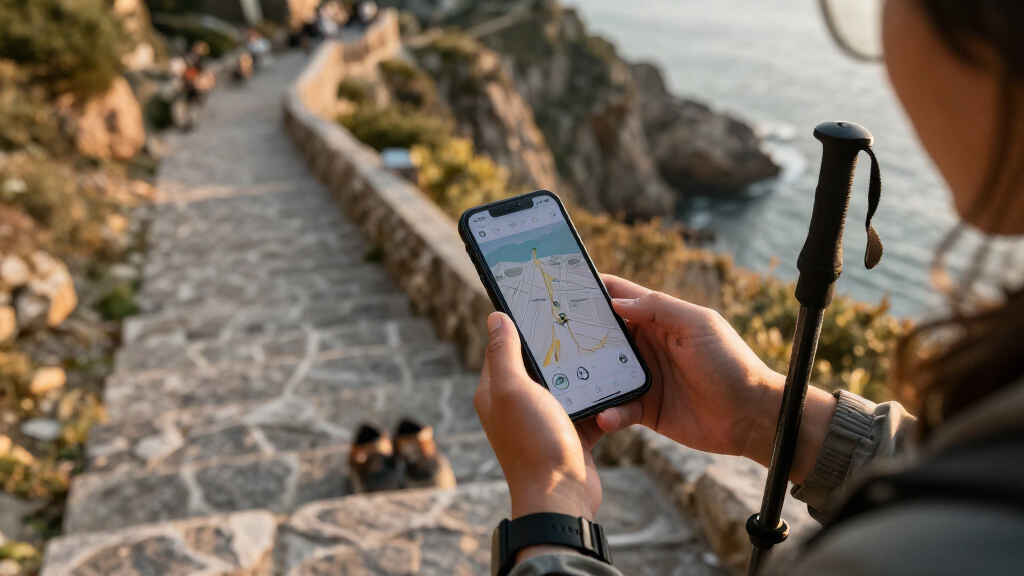
An IdeaNavigator AI proposal outlines a tool that would give tours and shore excursions detailed physical-demand profiles before booking. It is a product concept, not an announced or operating service; testing would involve rating 30 excursions for two operators and tracking guest and operational outcomes over one season.
IdeaNavigator AI has proposed a service that would show travelers the physical demands of tours and shore excursions before they book, replacing broad labels such as “moderate” with details including walking distance, stairs, surfaces and opportunities to sit. The concept is aimed initially at tour operators serving older guests and people who can walk but need to manage exertion; no operating product, customer results or launch date are reported.
The proposed profile would describe each itinerary using total walking distance, the longest stretch without a break, stair count, steepest gradient, surface type and time spent standing. It would also indicate whether seated rests and step-free alternatives are available. The purpose is to help a guest judge whether a specific tour fits their abilities, rather than infer the demands from a general category.
Under the suggested minimum version, a guide would record a real tour using a phone app, including a GPS track and stair count. Operators could then display an embeddable profile or badge on booking pages and let customers filter tours or complete a “can I do this?” self-check. The proposal distinguishes this effort-focused information from accessibility databases centered on measurements relevant to wheelchair use; the two types of information would address different needs.
The business model described is a subscription priced according to the number of rated products, alongside a one-time charge to assess an operator’s existing catalog. To test the idea, the proposal recommends rating 30 excursions for two operators with older customer bases, displaying the profiles for one season and comparing operational and customer indicators with the prior season.
Know the effort before you book Tour demand, made clearer
IdeaNavigator AI proposes detailed physical-demand profiles for tours and shore excursions. It is a product concept; no launch or customer results are reported.
What a profile could show
Specific itinerary details could help travelers judge whether a tour fits their needs.
Distance and breaks
Total walking distance and the longest stretch without a break.
Terrain and stairs
Stair count, steepest gradient and surface type.
Standing and options
Time spent standing, seated rests and step-free alternatives.
How the proposed tool works
The minimum version would gather tour details and put them where guests choose excursions.
A guide uses a phone app to capture a GPS track and stair count.
Operators could embed profiles on booking pages and let guests filter or complete a self-check.
Travelers compare practical demands instead of relying on a broad label such as “moderate.”
Different needs, different information
The proposal describes walking effort across an itinerary, alongside accessibility information focused on wheelchair use.
- Walking distance and uninterrupted stretches
- Stairs, gradients, surfaces and standing time
- Rest options and step-free alternatives
- Measurements relevant to wheelchair use
- Addresses a different set of access needs
- Could complement effort-focused details
A pilot is proposed, not reported
The suggested test would compare outcomes with the prior season.
| Test plan | What would be tracked |
|---|---|
| 30 excursions for two operators | On-tour incident reports |
| Profiles shown for one season | Guides’ reports of guests falling behind |
| Compare with prior season | Refund requests and reviews mentioning strenuous activity |
More Detail Before Excursion Day
For travelers, itinerary-level information could make it easier to decide whether a tour is manageable before paying, particularly when a broad label does not reveal a long walk, stairs or extended standing. That matters for people with mobility, heart, lung or joint limitations who may be able to walk some distance but need to pace themselves or take breaks. The proposed details could also help travelers compare excursions on practical demands rather than relying on a single rating.
Operators could use the same information to set clearer expectations and help guests choose suitable alternatives. The proposal identifies possible measures of benefit: on-tour incident reports, guides’ reports of guests falling behind, refund requests and post-trip reviews mentioning that an activity was too strenuous. These are proposed evaluation measures, not evidence that the tool has reduced incidents, refunds or complaints.
Clearer descriptions could affect both booking decisions and the work guides do on the day. But the value of the service would depend on whether profiles are accurate, current and understandable, and whether travelers use them. The suggested one-season test would provide an initial comparison for two operators; the supplied material does not report that such a test has begun or establish how its results would be interpreted.
Products Worth Considering

Bose TV Speaker Compact Soundbar with Bluetooth and HDMI-ARC, Black

Jackery Explorer 2000 v2 Portable Power Station with Two 200W Solar Panels

Bose TV Speaker (2nd Gen) – Compact Soundbar with Bluetooth and HDMI‑ARC Connectivity, Clear Dialogue, Dolby Atmos, Deep Bass, Remote Contro
As an affiliate, we earn on qualifying purchases.
Accessibility Rules and Market Signals
The proposal cites the European Accessibility Act, which it says has applied since June 28, 2025. For services within its scope, the law requires accessibility information for air, bus, rail and waterborne passenger services, including information about vehicles, surrounding infrastructure and the built environment. The proposal presents this as part of the policy setting for accessible travel; it does not establish that the Act requires the specific walking-effort ratings described here, or that every tour operator falls within its scope.
It also points to Wheel the World’s reported $11 million Series A funding round in February 2026 as a signal of investment in verified accessibility information. The proposal says that company’s data focuses on wheelchair-related property measurements, while the suggested product would grade walking effort across an itinerary. The funding is a market signal cited in the proposal, not proof that buyers will adopt this separate service.
The initial customer segment is deliberately narrow: product and operations leads at river cruise lines, alumni travel programs and small-group tour companies whose guests skew 60 and older. The proposed problem is that terms such as “moderate” or “some walking” may not tell a customer about cobblestones, a flight of stairs or prolonged standing. These examples describe the gap the proposal seeks to address; no individual incident or operator case is documented in the supplied material.
Pilot Results and Coverage Remain Unknown
The available details describe a product opportunity and test plan, not a confirmed launch. It is unclear whether any operator has agreed to participate, who would develop or maintain the app, what the subscription would cost, or when a pilot might start. No customer interviews, booking data or results from rated excursions are provided.
The method for producing consistent ratings also remains unspecified. A phone-based GPS track and stair count could capture some features, but the proposal does not explain how steep gradients, uneven surfaces, standing time, rest availability or route changes would be checked across different guides and locations. It also gives no rating scale or process for updating profiles when an itinerary changes.
Nor is there evidence yet that the information would change booking choices or reduce incidents, guide workload, refunds or negative reviews. The suggested comparison with the previous season would need to account for differences in tours, customer mix and reporting practices. The European Accessibility Act’s application to particular services and operators would also depend on scope; the proposal does not offer a legal assessment.
Two-Operator Test Is Proposed
The next step described is a pilot with two operators and 30 existing excursions. Each profile would be shown on booking pages for one season, with outcomes compared against the prior season. The proposal names incident reports, guide-flagged stragglers, refund requests and review mentions of strenuous activity as measures to track.
No timetable, participating companies or decision criteria have been announced in the material provided. A test would need to establish how ratings are recorded and kept current, and whether guests can use the information to make informed choices without treating a profile as a medical assessment or guarantee of suitability. Until a pilot is reported, the concept’s commercial demand and effect on guest and operator outcomes remain unverified.
Source: IdeaNavigator AI
Key Questions
Is a physical-demand rating service already available?
The material describes a proposed product and a possible pilot. It does not say that the service has launched or identify an existing booking platform using these profiles.
What would a tour’s profile include?
Proposed details include walking distance, longest uninterrupted walk, stairs, gradient and surface type, along with standing time, seated-rest availability and step-free alternatives.
Who is the proposed service for?
The initial target is tour and shore-excursion operators serving many older travelers, including people who can walk but need to manage distance, exertion or access to breaks.
Has the proposed tool been shown to reduce incidents or refunds?
No results are provided. The proposal suggests tracking incidents, guide-flagged guests, refunds and review mentions during a one-season test, but does not report that the test has taken place.
Does the European Accessibility Act require these specific ratings?
The proposal says the Act requires in-scope passenger services to provide accessibility information. It does not establish that the law requires this particular itinerary-level physical-effort profile, or that every tour operator is covered.
Source: IdeaNavigator AI