
📊 Full opportunity report: Device Security Checker For Remote Teams' Mixed Hardware on IdeaNavigator AI — validation score, market gap, and execution plan.

Get business pricing on tech for your team
- Business-only prices and quantity discounts
- Tax-exempt purchasing
- Multiple users, one account, clear invoices
TL;DR
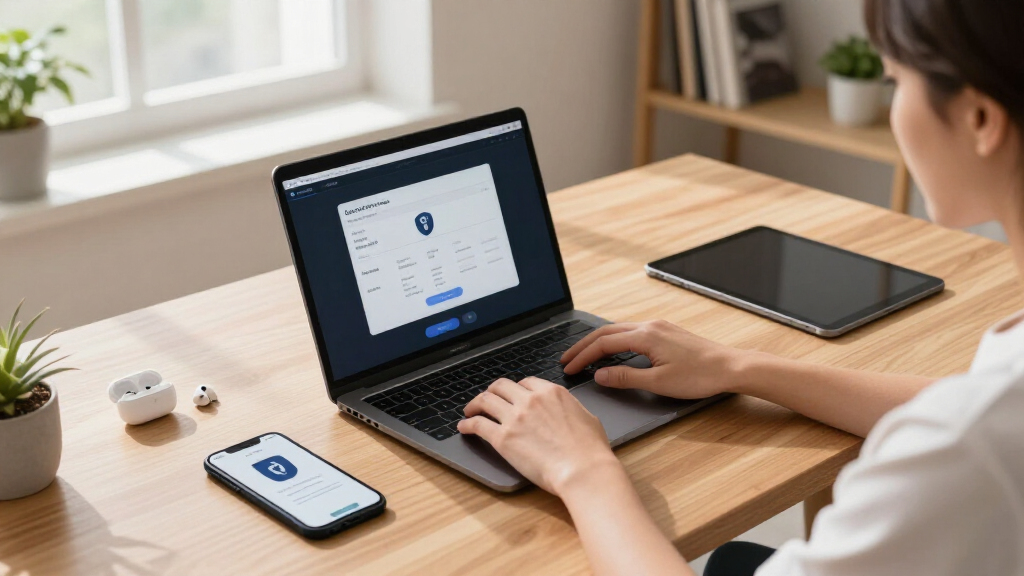
A lightweight device security checker is in pilot testing for remote teams with mixed hardware. It provides a non-intrusive way to verify device security posture, addressing compliance gaps.
A new lightweight device security checker is being tested with a small group of remote startups to verify device encryption, OS updates, and security settings. This tool aims to help companies comply with standards like SOC 2 without relying on invasive management solutions. The initiative addresses a growing compliance challenge for remote teams with diverse, employee-owned hardware.
The security checker is a voluntary, lightweight agent employees install on their personal devices, including Macs, Windows laptops, and unmanaged phones. It scans for key security indicators such as disk encryption, OS updates, screen lock status, and password manager presence. The tool then reports a pass/fail status to a team dashboard, providing actionable self-remediation instructions without remote control capabilities.
This approach was developed in response to increased regulatory scrutiny, such as SOC 2 audits, which now often require evidence of device security. Heavyweight mobile device management (MDM) solutions are seen as too invasive for employee-owned devices, creating a verification gap. The new tool aims to fill this gap with minimal disruption, offering a scalable, per-device subscription model with compliance report exports available on paid tiers.
Initial deployment involves ten remote startups facing upcoming SOC 2 audits. The goal is to measure device enrollment rates, assess the accuracy of posture reports accepted by auditors, and refine the tool based on user feedback. The pilot aims to demonstrate that a simple, voluntary agent can significantly improve security posture visibility across diverse hardware environments.
Implications for Remote Device Security Compliance
This development addresses a critical gap in remote workforce security management. As more companies adopt flexible, employee-owned devices, traditional management tools become less effective or too invasive. The lightweight agent offers a practical solution for verifying security standards, which could streamline compliance processes and reduce audit risks for SMBs.
By enabling companies to verify device security without remote control or invasive management, this approach could lead to broader adoption of security best practices among remote teams. It also aligns with emerging regulatory expectations, making it a potentially valuable tool for organizations seeking to meet standards like SOC 2 while respecting employee privacy.
device security checker for remote teams
As an affiliate, we earn on qualifying purchases.
As an affiliate, we earn on qualifying purchases.
Growing Need for Non-Invasive Device Security Tools
Remote work has expanded significantly over recent years, leading to increased reliance on personal devices for company data access. Many organizations lack visibility into the security status of these devices, which often run outdated OS versions, lack encryption, or have weak security configurations. Traditional enterprise mobility management (EMM) and mobile device management (MDM) solutions are often too invasive for employee-owned devices, creating resistance and compliance gaps.
Recent regulatory frameworks, such as SOC 2, emphasize the importance of verifying endpoint security, but existing solutions are either too complex or require full device control. Recognizing this, some startups and security vendors are exploring lightweight, voluntary agents that can assess security posture without intrusive management. Initial efforts have shown promise, but widespread adoption remains limited.
This pilot aims to validate whether such a tool can effectively fill the verification gap, providing a scalable, easy-to-deploy solution that aligns with both security standards and employee privacy concerns.
employee device security verification tool
As an affiliate, we earn on qualifying purchases.
As an affiliate, we earn on qualifying purchases.
Uncertainties About Adoption and Auditor Acceptance
It is not yet clear how widely remote startups will adopt the voluntary agent or how effective it will be in diverse hardware environments. Additionally, whether auditors will accept the posture reports as sufficient evidence remains to be confirmed through ongoing pilot testing. The scalability of the solution for larger organizations and its integration with existing compliance workflows are still under evaluation.
non-invasive device security software
As an affiliate, we earn on qualifying purchases.
As an affiliate, we earn on qualifying purchases.
Next Steps in Pilot Deployment and Validation
The pilot will expand to additional startups over the next few months, focusing on measuring device enrollment rates, user experience, and report acceptance by auditors. Based on initial feedback, developers plan to refine the agent’s capabilities and dashboard interface. If successful, the tool could be commercialized for broader SMB markets, with plans for integrations into existing compliance and endpoint security platforms.
personal device encryption verification
As an affiliate, we earn on qualifying purchases.
As an affiliate, we earn on qualifying purchases.
Key Questions
How does the device security checker work?
The tool involves a voluntary, lightweight agent installed on employee devices that scans for encryption, OS updates, screen locks, and password management. It reports a security posture to a dashboard without remote control or invasive management.
Will this tool replace traditional MDM solutions?
No, it is designed as a complementary, non-intrusive verification method for employee-owned devices, especially where heavy management is impractical or unwanted.
Can this help with compliance audits like SOC 2?
Yes, the tool aims to provide verifiable security posture reports that can serve as evidence during audits, reducing manual verification efforts.
Is this approach secure and privacy-friendly?
Yes, since it only reports on security posture without remote control or data collection beyond security status, it is designed to respect employee privacy.
When will this tool be available commercially?
The pilot is ongoing, with potential commercial availability expected after successful validation and refinement over the coming months.
Source: IdeaNavigator AI
Halloween Picks
halloween
As an affiliate, we earn on qualifying purchases.