
TL;DR
European countries are moving toward controlling AI-based software that interprets sensor data, reducing reliance on foreign systems. This shift signifies a new focus on sovereignty in intelligence exploitation. The development is confirmed through recent contracts and technological trends, but full operational details remain unclear.
European institutions are increasingly investing in domestically controlled AI exploitation software, a move that shifts sovereignty over intelligence, surveillance, and reconnaissance (ISR) capabilities from foreign providers to local control. This development confirms a strategic focus on building autonomous, software-driven sensor interpretation systems that can operate independently of external jurisdictions, a shift driven by technological, political, and economic factors.
Recent contracts signed by European agencies demonstrate a clear move toward developing and deploying independent AI-based exploitation software. These systems are designed to analyze data from advanced sensors, such as radar constellations and wide-area cameras, which are capable of imaging through adverse weather conditions and covering entire urban areas. The contracts mark a departure from reliance on foreign software solutions, emphasizing local control over the entire sensor-to-decision pipeline.
Experts note that the physical sensors—such as synthetic aperture radar (SAR) and wide-area motion imagery (WAMI)—are now highly advanced and widespread, with multiple European nations procuring satellite constellations and sensor networks. However, the critical bottleneck has been the software layer that interprets this torrent of data. The recent moves indicate a strategic effort to develop proprietary exploitation software that can operate independently, ensuring sovereignty over intelligence processing.
According to sources close to the contracts, the European push is also motivated by concerns over regulatory and security issues, especially as capability measurement itself begins to serve as a classified national-security instrument. The new software aims to enable real-time, autonomous decision-making, reducing dependence on external providers and foreign jurisdictions.
Implications for European Sovereignty in ISR
This shift signifies a major step in Europe’s effort to gain full control over its ISR capabilities. By developing and deploying proprietary AI exploitation software, European nations aim to reduce reliance on foreign technology providers, thereby strengthening their national security and technological sovereignty. It also signals a broader trend toward autonomous, software-driven intelligence systems that can operate independently of external influence, which could reshape global ISR markets and alliances.
Furthermore, this development raises questions about regulatory frameworks, standardization, and the potential for a new technological divide in intelligence capabilities. The move toward domestically controlled AI systems could influence international norms and diplomatic relations, especially concerning data security and technology transfer.
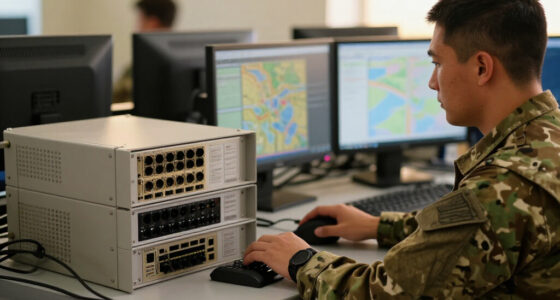
AI exploitation software for surveillance
As an affiliate, we earn on qualifying purchases.
As an affiliate, we earn on qualifying purchases.
Rise of Autonomous Sensor-Software Integration in Europe
Over recent years, sensor technology has advanced rapidly, with constellations of radar satellites and wide-area imaging systems becoming more prevalent. Countries like Germany, Poland, Portugal, and Greece are now acquiring their own satellite constellations, shifting the lower layers of ISR infrastructure into national control. However, the software layer that interprets sensor data has lagged behind, remaining largely dependent on foreign solutions.
In spring, recent contracts confirmed a strategic pivot: European institutions are funding and deploying exploitation software that is not controlled from outside jurisdictions. This marks a significant milestone in the evolution of ISR, as the software layer becomes the new sovereign ground—an area still largely unclaimed but increasingly critical for autonomous decision-making. Experts argue that this trend reflects a broader recognition that the true power in ISR lies in the ability to interpret and act on sensor data independently.
“The software that reads the sensor data is the new sovereign ground, and it remains substantially unclaimed, but the strategic importance is clear.”
— an anonymous researcher
As an affiliate, we earn on qualifying purchases.
Unresolved Questions About Implementation and Regulation
Details remain unclear regarding the full operational capabilities of the newly contracted software, including its real-time decision-making autonomy and integration with existing sensor networks. It is also uncertain how regulatory frameworks will evolve to oversee these autonomous systems, especially given the classified nature of capability measurement and the potential for these technologies to shift geopolitical balances.
Further, it is not yet confirmed how quickly these systems will be deployed at scale or how they will perform under operational conditions, leaving some questions about readiness and effectiveness open.
As an affiliate, we earn on qualifying purchases.
Next Steps in Developing and Deploying Autonomous ISR Software
The immediate next steps involve the deployment and testing of the contracted exploitation software within European ISR systems. Monitoring will focus on operational performance, integration with sensor networks, and regulatory compliance. Additionally, further contracts and collaborations are expected as European nations accelerate development to achieve full autonomy in sensor data interpretation, aiming for operational readiness within the next 12-24 months.
Experts anticipate increased transparency and standardization efforts to accompany technological advancements, with potential public evaluations and international discussions shaping future norms.
radar and satellite image processing software
As an affiliate, we earn on qualifying purchases.
As an affiliate, we earn on qualifying purchases.
Key Questions
What are the main advantages of developing independent AI exploitation software?
Developing independent AI exploitation software enhances sovereignty over ISR capabilities, reduces reliance on foreign providers, and allows for tailored, real-time decision-making aligned with national security interests.
Which European countries are leading this development?
Countries like Germany, Poland, Portugal, and Greece are actively procuring and developing their own sensor and software systems, signaling a coordinated regional effort.
How might this shift impact international intelligence cooperation?
This move toward domestically controlled systems could complicate international cooperation, especially with allies relying on external software solutions, but it also enhances Europe’s strategic independence.
When are these new systems expected to be operational?
Operational deployment and testing are expected within the next 12 to 24 months, with further contracts anticipated to expand capabilities.
What are the potential risks of autonomous sensor-to-decision systems?
Risks include regulatory challenges, potential technical failures, and the need for robust oversight to prevent misuse or unintended escalation of autonomous decisions.
Source: ThorstenMeyerAI.com