
🔍 Read the full analysis: AI Automation Data Backup Checklist 2026 on ThorstenMeyerAI.com

Get business pricing on tech for your team
- Business-only prices and quantity discounts
- Tax-exempt purchasing
- Multiple users, one account, clear invoices
TL;DR
ThorstenMeyerAI.com published a 2026 checklist for people building backup routines around AI tools and automation projects. It describes six equipment roles, names several product picks, and emphasizes that buyers should verify compatibility, keep separate copies and test restores.
ThorstenMeyerAI.com’s 2026 AI automation backup checklist lays out six equipment categories for protecting project files and workflow data, including network storage, portable drives, power protection and labeling. The guide names specific products in several categories, but frames them as role-based options rather than a single complete backup solution, and tells readers to check compatibility and test file recovery before relying on a setup.
The checklist covers a network-attached storage device, portable solid-state drive, hardware-encryption USB drive, uninterruptible power supply, external hard drive dock and barcode label printer. The source names the UGREEN NASync DXP4800 Pro 4-Bay for the network-storage category and the Samsung T9 4TB Portable SSD for portable storage. It lists an Apricorn Aegis Padlock drive in the encrypted USB category, but its product name is truncated in the source material.
Rather than treating the list as a fixed package, the guide recommends matching each tool to a specific recovery job, an approach also covered in this AI automation security checklist. It advises readers to inventory their data, devices and backup locations, estimate how much data they need to retain, and check whether their computers, drives, network and backup software work together. It also says the NAS enclosure and storage drives are separate considerations, and that usable capacity depends on the chosen drive configuration.
The source stresses that storage is not the same as a verified backup. It cautions against treating a network-attached storage device or one portable drive as the only copy, and recommends keeping important copies separate from the systems they protect. Readers are advised to run a small backup and test a restore using the applications and file types they actually rely on.
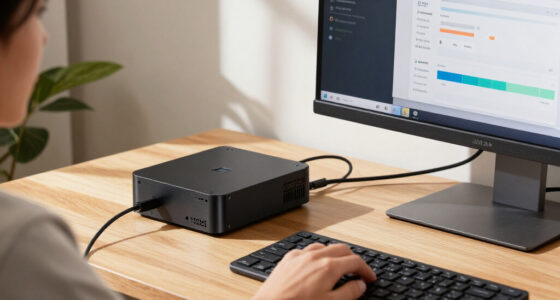
UGREEN NASync DXP4800 Pro 4-Bay Network Attached Storage

This 4-bay NAS is engineered for IT professionals and power users, featuring an Intel Core i3-1315U processor and 8GB of DDR5 RAM for smooth virtualization and Docker workflows. It supports up to 144TB of total storage with dual M.2 PCIe 4.0 slots and offers high-speed connectivity via 10GbE and 2.5GbE ports.
Pros:
- High-performance Intel Core i3 processor with expandable DDR5 RAM supports heavy multitasking and virtualization.
- Blazing-fast network speeds with dual ports (10GbE + 2.5GbE) reaching up to 1.25GB/s.
- Massive storage flexibility with support for up to 144TB and dual M.2 SSD cache slots.
- Robust security features including local AI processing, Data Vault encryption, and TV SD certification.
Cons:
- Hard drive rotational speed is limited to 7200 RPM, which may be slower than enterprise-grade 10k/15k RPM drives.
- Requires separate purchase of hard drives as none are included.
Best for: People who want network-accessible storage for multiple devices
Not ideal for: Anyone seeking a complete backup plan from one device alone
Bottom line: Choose the NAS only after checking drive needs, network fit, and how you will maintain a separate recoverable copy.
Keeping Automation Data Recoverable
AI tools and automation projects can rely on working files, configuration assets and other data spread across devices. Losing those files through device failure, accidental deletion or a power interruption can disrupt work; the checklist’s central point is that buying storage alone does not establish a reliable recovery process.
Its advice has practical implications for small-office and home setups: a central NAS can make files available across a network, but a copy connected to the same network may not cover every kind of loss. Portable media can add another destination, but leaving it attached or carrying it with the protected computer can reduce its usefulness as a separate copy. Separate storage and restore testing help readers identify gaps before they need to recover files.
The guide also cautions against buying overlapping equipment without a clear backup role. For readers, that makes the checklist a planning aid rather than a guarantee of protection: the appropriate setup depends on the data, the workflow, the software and the risks the user is trying to address.
Six Tools, Different Backup Jobs
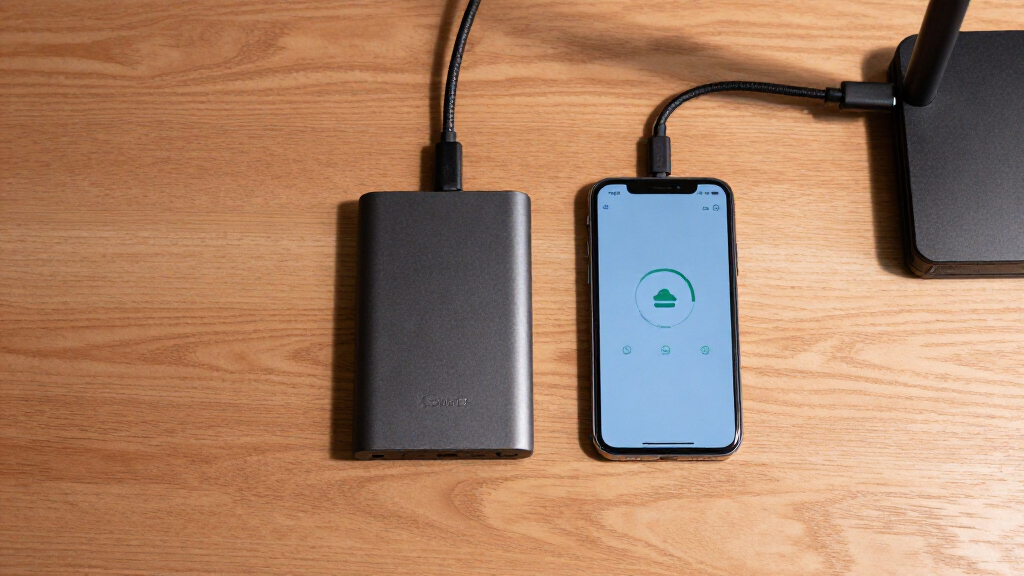
The checklist organizes equipment by role instead of presenting one all-in-one recommendation. Its NAS section focuses on network access, drive support, capacity planning and permissions. The portable SSD section points readers to check the stated USB 3.2 Gen 2×2 connection against their computer, cable and port, and to consider whether they need multiple dated versions of their files.
For the hardware-encrypted USB option, the source identifies an Apricorn Aegis Padlock model with a stated 2TB capacity, but the product name is incomplete. It advises verifying the exact model, connection, operating-system support and access controls. It also notes that encryption does not by itself provide a dependable backup process: users need a way to copy files and regain access if credentials are forgotten.
The source includes an uninterruptible power supply, external drive dock and barcode label printer among the categories, but the supplied material does not provide a named product for those slots. It says the label-printer section offers selection advice without naming a pick. Its product-by-product guidance is therefore partial in the available source, rather than a complete set of specific recommendations.
“A backup is only useful if it can be recovered.”
— ThorstenMeyerAI.com checklist
Product Details Still Need Checking
The source does not provide an independent product comparison, test results, prices or evidence that the named products are suitable for every user. It also does not state a publication date beyond framing the checklist for 2026. The available text ends during the hardware-encrypted USB section, so full guidance for that category and the later UPS, drive-dock and label-printer sections is not present.
The Apricorn product name is truncated, and the source does not give a model number that would resolve the ambiguity. Buyers would need to confirm the exact product and its current specifications. The checklist also does not prescribe a particular backup schedule, retention period, off-site arrangement or software. Those choices remain dependent on each reader’s equipment, data volume and recovery needs.
Check Setup Before Relying
The immediate next step for readers is to map the files and devices they need to protect, then confirm that each proposed product works with their operating system, network, drives and backup application. Before buying, they should verify full model names and specifications, including the truncated Apricorn listing, and determine how much usable capacity their chosen configuration provides.
After setup, the checklist calls for a small backup and restore test using representative files and applications. Users should confirm the backup completed, check that recovered files open as expected, and decide where disconnected copies will be stored. The source gives no deadline or scheduled follow-up; its practical endpoint is a routine that is periodically tested and updated as workflows and data needs change.
Key Questions
What does the 2026 checklist cover?
It covers six categories: network storage, portable SSDs, encrypted USB drives, UPS units, external drive docks and barcode label printers. The source names products in some categories, but not all.
Which products does the source name?
It names the UGREEN NASync DXP4800 Pro 4-Bay Network Attached Storage and Samsung T9 4TB Portable SSD. It also lists an Apricorn Aegis Padlock hardware-encrypted drive, but the supplied product name is truncated and should be checked against the exact model.
Can a NAS be the only backup?
The checklist advises against relying on a NAS alone. A network-connected copy may not protect against every kind of loss, so it recommends planning a separate backup destination.
How can users check that a backup works?
Run a small backup using representative files and applications, then restore those files and confirm they open correctly. The checklist says to test restores periodically, not just assume a completed backup job is recoverable.
Source: ThorstenMeyerAI.com