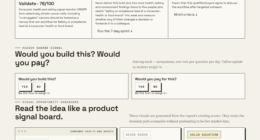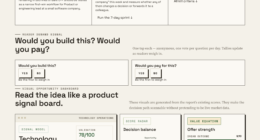

📊 Full opportunity report: Signal: Memory Is The Quieter Chokepoint — And Seoul Just Said So Out Loud on ThorstenMeyerAI.com — validation score, market gap, and execution plan.
TL;DR
South Korea’s SK hynix publicly acknowledged a critical memory shortage driven by surging AI demand, with no new capacity coming online in 2026. This shortage affects global supply chains and geopolitical stability.
South Korea’s SK hynix has publicly confirmed that there will be no meaningful new memory capacity coming online in 2026, amid a surge in AI demand. This acknowledgment, made by SK hynix chairman Chey Tae-won at a recent press briefing, underscores a looming supply crunch that could impact the global semiconductor industry and geopolitical stability.
During a briefing at the Korea Chamber of Commerce and Industry’s Jeju Forum, Chey Tae-won stated that customers are requesting 60 to 100 percent more AI memory in 2027 than they are consuming this year. With AI now accounting for over half of total semiconductor consumption, he estimated demand growth at a minimum of 50–60 percent.
He emphasized that no significant new capacity will be available in 2026, describing the supply side as lacking meaningful expansion. This imbalance is causing what Chey called near-chaotic lobbying from corporate and government actors, with some nations treating memory access as a matter of economic security.
SK hynix has responded by accelerating plans for new capacity, including moving the Yongin mega-cluster’s first clean room to February 2027 and investing over $14.5 billion in related infrastructure. However, none of this capacity will arrive before 2027, leaving a ‘gap year’ in supply.
Models get the headlines.
Memory is the chokepoint.
SK Group’s chairman at the Jeju Forum, per The Korea Herald: customers want 60–100% more AI memory in 2027, governments now treat memory access as economic security — and no company has meaningful new capacity arriving next year.
The gap, in his own numbers
customer requests to SK hynix vs this year. AI already consumes over half of all semiconductors; total demand growth floored at 50–60%.
“No company has meaningful new capacity coming online next year.” The gap year is already locked in — fabs don’t move faster than physics.
Result, per Chey: near-chaotic lobbying — no longer just from companies. Foreign governments are intervening for domestic industries; next, governments pressure governments.
Tighter than the chokepoints you worry about
SK hynix’s race against its own warning
Company figures and projections as announced — none of it lands in 2026.
Half true: unified-memory Apple Silicon doesn’t queue for HBM — a fleet you own is insulated from allocation politics, and owned hardware converts supply-chain risk into sunk cost.
The other half: LPDDR and HBM share DRAM wafer economics — chipflation reaches workstation memory too, and training compute stays fully hostage. Local inference changes who feels the shortage, not whether it exists.
Week tie-in: if memory demand grows into capacity that doesn’t exist, doing the job in 3B parameters on memory you already own isn’t aesthetics — it’s engineering under constraint.

Lexar OC DDR5 RAM 1x8GB 6000MHz CL38 288-Pin UDIMM Desktop Memory
Blazing 6000MT/s Speed, CL38 Low Latency- Delivers up to 6000MT/s with ultra-low CL38 latency for fluid, responsive multitasking…
As an affiliate, we earn on qualifying purchases.
As an affiliate, we earn on qualifying purchases.
Implications of Memory Shortage for AI and Geopolitics
This development matters because the memory supply crunch could slow AI progress, increase hardware costs, and intensify geopolitical tensions. The concentration of memory capacity among three firms—SK hynix, Samsung, and Micron—amplifies risks of supply disruptions and strategic leverage by these companies and their governments.
As demand outpaces supply, prices are expected to remain high, which could lead to ‘chipflation’ affecting consumer electronics and enterprise systems. The warning from SK hynix’s chairman signals a potential shift in the global semiconductor landscape, where memory access becomes a strategic battleground.

Samsung 8GB DDR5 5600MHz PC5-44800 CL46 SODIMM 1Rx16 Single Rank 1.1V 262-Pin Laptop RAM Memory M425R1GB4BB0-CWM, 1 Module
Samsung DDR5 Memory RAM | Part Number: M425R1GB4BB0-CWM
As an affiliate, we earn on qualifying purchases.
As an affiliate, we earn on qualifying purchases.
Memory Market Concentration and Capacity Outlook
Currently, SK hynix holds approximately 58% of the global HBM revenue, with Samsung and Micron sharing the remainder, according to Counterpoint Research. This tight oligopoly means that any supply disruptions have outsized impacts. The industry has experienced two consecutive years of demand exceeding guidance, fueling fears of shortages.
In response, SK hynix announced significant investments, including a new HBM-focused plant in Cheongju and capacity expansions in Yongin. Yet, these projects will not be operational before 2027, leaving a critical capacity gap during 2026. The industry’s physics suggest that this shortage will influence both high-end AI training and inference markets, especially as demand for high-bandwidth memory grows rapidly.
“No company has meaningful new capacity coming online next year.”
— Chey Tae-won, SK hynix Chairman

A-Tech 128GB Kit (4x32GB) DDR5 5600MHz PC5-44800 ECC UDIMM 2Rx8 (EC4 9×4) Dual Rank 1.1V ECC Unbuffered DIMM 288-Pin Server, Workstation RAM Memory Upgrade Modules
A-Tech RAM Memory compatible for select DDR5 Servers & Workstations ONLY; (*NOT COMPATIBLE WITH Desktop/Laptop Computers or PCs…
As an affiliate, we earn on qualifying purchases.
As an affiliate, we earn on qualifying purchases.
Unconfirmed Aspects of Capacity and Geopolitical Impact
It remains unclear how quickly SK hynix and other suppliers can accelerate capacity expansions and whether geopolitical tensions will lead to further restrictions or strategic stockpiling. The precise impact on global supply chains and prices in 2026 is still uncertain.
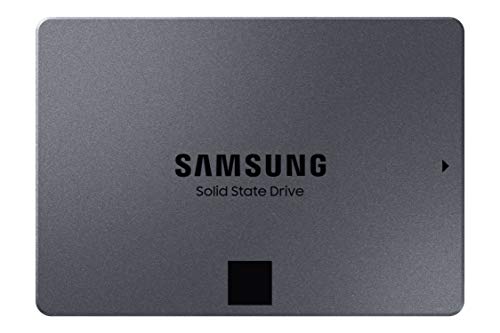
SAMSUNG 870 QVO SATA III SSD 8TB 2.5" Internal Solid State Drive, Upgrade Desktop PC or Laptop Memory and Storage for IT Pros, Creators, Everyday Users, MZ-77Q8T0B
Go Big, Do More: The 870 Qvo Is Samsung’S Latest 2Nd Generation Qlc Ssd With Up To 8Tb…
As an affiliate, we earn on qualifying purchases.
As an affiliate, we earn on qualifying purchases.
Next Steps in Capacity Expansion and Industry Response
SK hynix plans to finalize new capacity projects in early 2027, with some infrastructure already under review. Industry watchers will monitor whether these expansions can meet the surging demand and how governments might intervene to secure memory supplies. Further announcements and policy actions are expected in the coming months.
Key Questions
Why is memory capacity so critical for AI development?
Memory, especially high-bandwidth memory (HBM), is essential for training and inference in AI systems. Limited capacity can bottleneck AI performance and increase costs, affecting progress and deployment.
What are the geopolitical implications of this memory shortage?
As memory supply becomes a strategic resource, nations may impose export controls, stockpile memory, or support domestic capacity expansion, heightening geopolitical tensions and supply chain risks.
How will this shortage affect consumer electronics and data centers?
High memory prices and limited supply could lead to increased costs for consumer devices, servers, and data centers, potentially slowing innovation and increasing operational expenses.
Can existing hardware mitigate the impact of the shortage?
Yes. Hardware with integrated memory, such as Apple Silicon, is less affected by external memory supply constraints. However, large-scale AI training and inference still depend heavily on high-bandwidth memory capacity.
Source: ThorstenMeyerAI.com