📊 Full opportunity report: Organize Social Media Management Around Tasks, Teams, And Workflow on IdeaNavigator AI — validation score, market gap, and execution plan.

Get business pricing on tech for your team
- Business-only prices and quantity discounts
- Tax-exempt purchasing
- Multiple users, one account, clear invoices
TL;DR
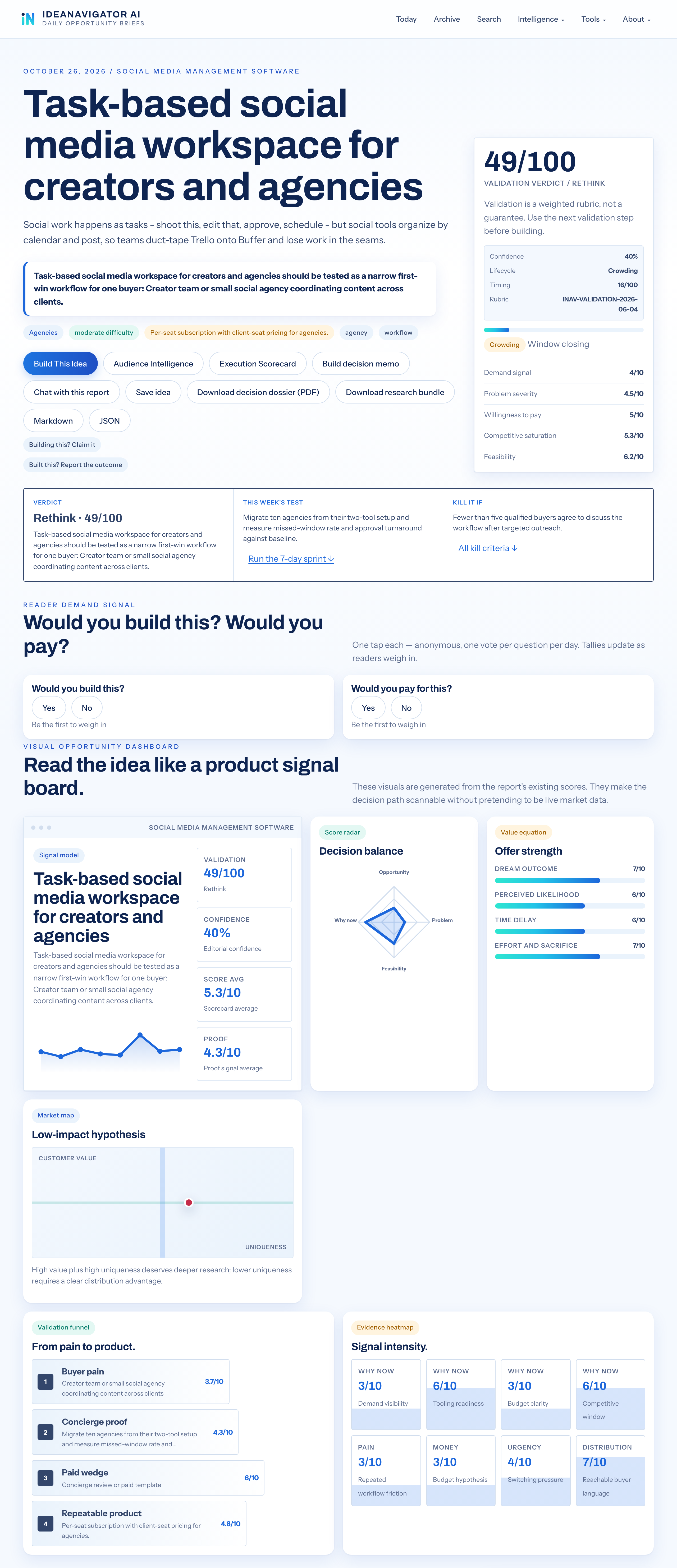
IdeaNavigator AI has outlined a product opportunity for a social media workspace organized around post-production tasks, team workflows and client approvals. The proposal recommends testing it with 10 agencies, but provides no evidence yet that the product has been built or that it improves workflow outcomes.
IdeaNavigator AI has outlined a product proposal for a social media workspace that would organize each post as a task moving through briefing, asset creation, editing, approval and scheduling. The concept targets creator teams and small social agencies managing content across clients; it is a proposed product direction, not a reported launch or a proven solution.
The proposal describes a workflow in which a post is more than a calendar entry: it carries its brief, creative assets, edits and approval status through to publication. Its suggested minimum version would include task stages, client-facing approval links, asset versioning and scheduling triggered once a post is approved. The intended result is a single pipeline from idea to published post, rather than separate tools for project tracking and social scheduling.
IdeaNavigator AI frames the problem as a mismatch between how social content is produced and how many social tools are organized. Teams carry out work such as shooting, editing and securing approvals, while scheduling products commonly center on calendars and posts. The proposal says teams may bridge that gap with a project-management tool alongside a scheduler, leaving handoffs and work status split between systems.
The suggested commercial model is a per-seat subscription, with a separate client-seat pricing approach for agencies. For validation, the proposal recommends moving 10 agencies from their existing two-tool arrangements and measuring missed publishing windows and approval turnaround against each agency’s baseline. No baseline figures, trial results or customer commitments are included.
Aiming to Close Workflow Gaps
The concept focuses on a practical coordination issue: a post can be ready creatively but still be delayed by unclear ownership, scattered feedback or an approval that has not reached the person scheduling it. Bringing task stages, versions, client review and scheduling together could make those handoffs easier to see. That is the product’s proposed value, not an outcome demonstrated by testing.
For small agencies, the question is whether keeping work in one system reduces missed publishing windows and time spent chasing approvals enough to justify another subscription. Client access and pricing could also affect adoption: a setup that is simple for an internal team may be harder to manage across multiple clients, each with different reviewers and permissions. The proposed test metrics address timing, but do not by themselves establish whether users would pay or keep using the product.
Products Worth Considering

Jackery Explorer 300 Portable Power Station, 292Wh

Jackery Explorer 2000 v2 Portable Power Station with Two 200W Solar Panels

Bose SoundLink Flex Bluetooth Speaker (2nd Gen), Portable Waterproof Speaker, Black
As an affiliate, we earn on qualifying purchases.
From Calendars to Production Tasks
Social media management software has traditionally emphasized planning and publishing posts, while general project tools are used to assign work and track progress. The IdeaNavigator AI proposal places the opportunity between those categories: it would treat the production process for each post as the organizing unit and connect that process to publishing.
The proposal argues that rising content demands have made team workflows more complex, but supplies no market figures or independent evidence for the scale of that change. Its rationale is that existing scheduling products have not fully addressed the work-management layer, leaving teams to combine a scheduler with a general-purpose task board. The suggested initial customer is deliberately narrow—creator teams or small agencies handling several clients—rather than every social media user.
This is an opportunity assessment, not an announcement from a named software company. It does not identify a product team, development schedule or existing platform integration. The proposal’s suggested agency trial is a way to test the idea before expanding its scope.
Product and Trial Details Await
No built product, launch date or test findings are identified in the proposal. It is not clear whether any agencies have agreed to participate, what tools they would migrate from, or how missed publishing windows and approval turnaround would be defined and recorded. A meaningful comparison would depend on collecting a baseline for each participating agency and using the same measurement method during the trial.
Other open questions include how the workspace would connect to social platforms, which channels it would support, and how client permissions, notifications and asset history would work. The proposal does not provide a price, a detailed technical plan or evidence that the suggested client-seat model matches agencies’ budgets. Its claims about workflow gaps and content demands should be understood as the rationale for the idea, not independently verified market findings.
Testing With Agency Teams
The next step proposed is a pilot with 10 agencies that currently coordinate work across a project tool and a social scheduler. A trial could compare missed-window rates and approval turnaround before and after migration, while also recording how much setup and client coordination the new workflow requires.
No pilot start date or results have been announced in the available information. Until a test is reported, the central question remains whether an integrated task-to-publication workflow improves measurable outcomes enough to support sustained use and per-seat pricing.
Source: IdeaNavigator AI
Key Questions
Is the task-based workspace available now?
No availability is reported. The information describes a proposed product, without a launch date or confirmation that it has been built.
Who is the proposed product for?
Its initial target users are creator teams and small social agencies coordinating content across clients.
What would the workspace include?
The proposed minimum version would give each post stages for briefing, assets, editing, approval and scheduling, alongside client approval links, asset versioning and scheduling after approval.
How would the idea be tested?
IdeaNavigator AI proposes migrating 10 agencies from two-tool workflows and comparing missed publishing windows and approval turnaround with baseline measurements. No completed test or results are reported.
Source: IdeaNavigator AI