📊 Full opportunity report: Vertigo relief app on IdeaNavigator AI — validation score, market gap, and execution plan.

Get business pricing on tech for your team
- Business-only prices and quantity discounts
- Tax-exempt purchasing
- Multiple users, one account, clear invoices
TL;DR
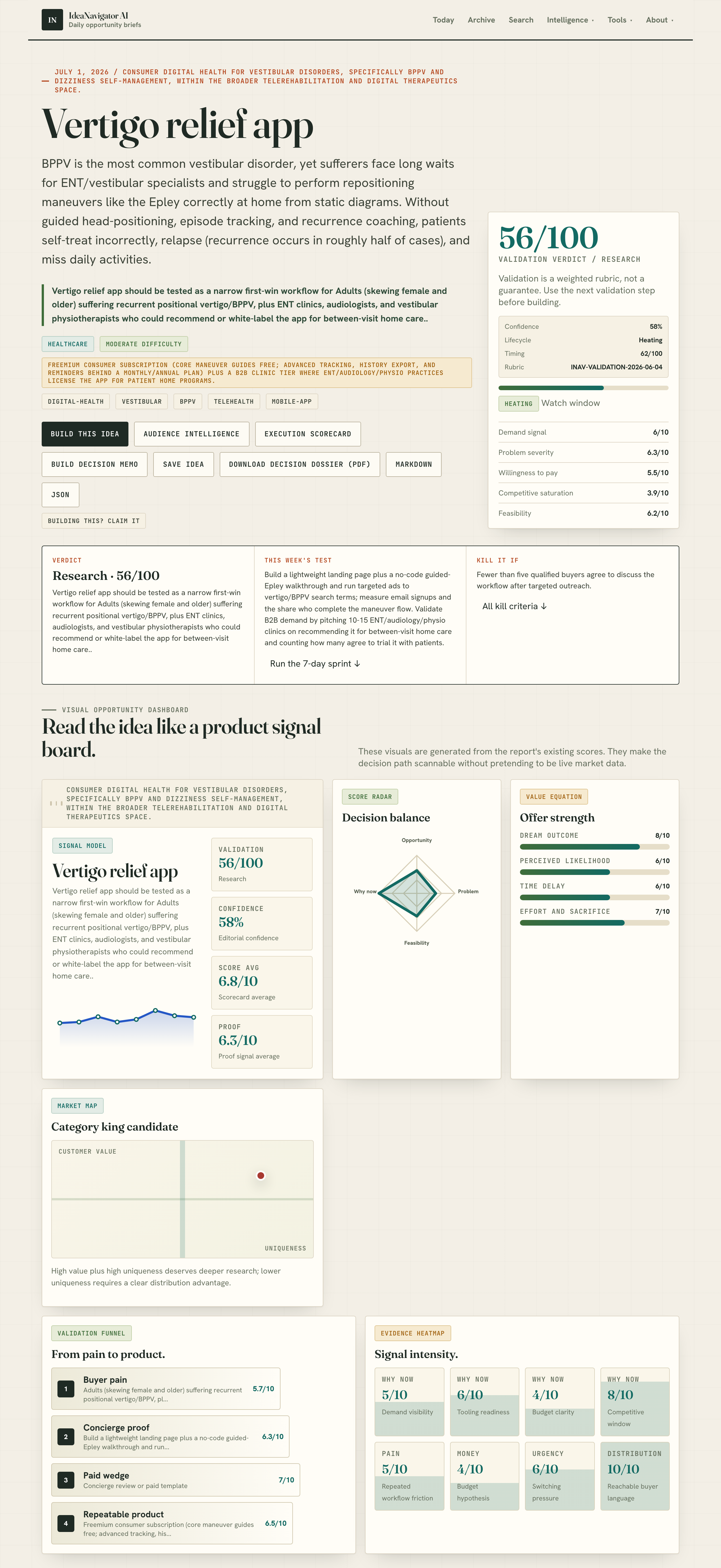
A proposed vertigo relief app is in development to guide adults with BPPV through repositioning maneuvers using motion sensors. It aims to improve self-treatment, reduce relapses, and support clinics. Validation and pilot testing are upcoming.
A new vertigo relief app is being developed to guide adults suffering from benign paroxysmal positional vertigo (BPPV) through repositioning maneuvers using real-time motion sensors, aiming to improve self-treatment accuracy and reduce recurrence rates. The app is designed for potential use by patients at home and could be recommended by ENT clinics, audiologists, and vestibular physiotherapists, who may also white-label it for clinical workflows. This development responds to the long-standing challenge of patients performing maneuvers like the Epley correctly without supervision, which often leads to relapse. You can explore how to improve decision-making with The Question No To-Do App Can Answer.
The app will feature a screening tool to assess BPPV candidacy, including a safety survey and optional motion-sensor self-check. It will guide users through step-by-step animated instructions for maneuvers such as the Epley and Brandt-Daroff, supplemented by audio cues and gyroscope-based head-angle feedback to ensure proper execution. Additionally, it will log dizziness episodes, triggers, and symptom severity over time, enabling users and clinicians to track progress.
This initiative is motivated by the increased adoption of telehealth and home-based rehabilitation accelerated by COVID-19, along with advancements in smartphone sensors capable of precise motion tracking. The digital vestibular rehabilitation market was valued near USD 498 million in 2024 and is projected to grow at approximately 13.5% annually through 2033, reflecting rising acceptance among providers and payers.
Potential Impact on Self-Management and Clinical Practice
This app could significantly improve the quality of self-treatment for BPPV, reducing the likelihood of incorrect maneuvers and subsequent relapses, which occur in about half of cases. By enabling patients to perform maneuvers confidently at home, it may decrease wait times for specialist care and support ongoing symptom management. Moreover, the app’s integration into clinical workflows could streamline patient monitoring and follow-up, enhancing overall vestibular care.
BPPV vertigo repositioning maneuver app
As an affiliate, we earn on qualifying purchases.
As an affiliate, we earn on qualifying purchases.
Growing Market and Technological Advances in Vestibular Care
Benign paroxysmal positional vertigo (BPPV) is the most common vestibular disorder, frequently leading to dizziness and balance issues, especially among older adults and women. Traditionally, treatment involves in-clinic repositioning maneuvers, which require specialized training and are often performed incorrectly by patients at home. The shift toward telehealth, driven by the COVID-19 pandemic, has increased demand for digital solutions that support at-home care.
Recent technological improvements in smartphones, including high-accuracy gyroscopes and motion sensors, now enable real-time head-position measurement, creating opportunities for guided self-treatment apps. The digital therapeutics market for vestibular disorders is expanding, with market estimates near USD 498 million in 2024 and expected growth driven by payer acceptance and consumer demand for accessible, effective self-care tools.
“The integration of motion sensors into a guided app could revolutionize how patients manage BPPV at home, reducing relapse rates and improving quality of life.”
— an anonymous researcher
vestibular rehabilitation motion sensor device
As an affiliate, we earn on qualifying purchases.
As an affiliate, we earn on qualifying purchases.
Validation and Adoption Challenges for the App
It is not yet confirmed how effectively the app will guide users through maneuvers or how well it will be adopted by clinics and patients. Validation through pilot testing, user feedback, and clinical trials remains pending. Additionally, regulatory approval, reimbursement pathways, and integration into existing clinical workflows are still in development stages.
As an affiliate, we earn on qualifying purchases.
Upcoming Testing, Validation, and Market Entry Plans
Developers plan to launch a lightweight landing page and a no-code prototype of the maneuver guidance to gather user signups and measure engagement. Pilot testing with targeted vertigo search audiences will assess usability and efficacy. Concurrently, efforts to pitch ENT and audiology clinics for trial adoption will determine clinical interest. The goal is to refine the app based on feedback and prepare for broader commercialization in 2024.
As an affiliate, we earn on qualifying purchases.
Key Questions
How does the vertigo relief app work?
The app guides users through repositioning maneuvers like the Epley using animated instructions, audio cues, and real-time head-angle feedback from smartphone gyroscopes. It also logs symptoms and episodes for tracking.
Can this app replace professional treatment?
No. The app is intended as a self-management tool to supplement clinical care. It includes disclaimers and prompts users to consult healthcare providers for red-flag symptoms or persistent issues.
Who is the target user for this app?
The primary target is adults, especially women and older individuals, suffering recurrent BPPV. Clinics and healthcare providers may recommend or white-label the app for patient use between visits.
When will the app be available for testing?
Developers plan to launch a prototype for user testing and validation in 2024, with broader deployment contingent on pilot results and regulatory considerations.
What are the main challenges facing this app’s development?
Key challenges include validating the app’s guidance accuracy, gaining clinical and patient acceptance, navigating regulatory pathways, and establishing reimbursement models.
Source: IdeaNavigator AI
Fall Picks
fall essentials
As an affiliate, we earn on qualifying purchases.